and Law Program Science, Technology – författare
Visar alla böcker från författaren and Law Program Science, Technology. Handla med fri frakt och snabb leverans.
6 produkter
Ensuring the Quality of Data Disseminated by the Federal Government
Workshop Report
Av National Research Council, Policy and Global Affairs m. fl.
Häftad, 2003
701 kr
Lägg i varukorg
The National Academies Science, Technology, and Law Program convened three workshops focusing on specific aspects of OMB's "Guidelines for Ensuring and Maximizing the Quality, Objectivity, Utility, and Integrity of Information Disseminated by Federal Agencies." The workshops were intended to assist …
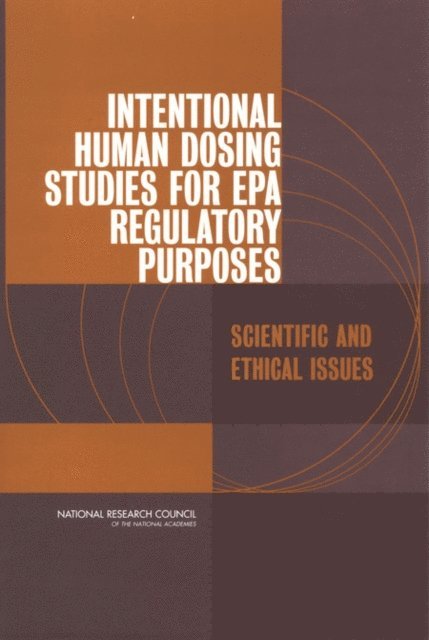
Intentional Human Dosing Studies for EPA Regulatory Purposes
Scientific and Ethical Issues
Av Committee on the Use of Third Party Toxicity Research with Human Research Participants, and Law Program Science, Technology m. fl.
E-bok, 2004
953 kr
Lägg i varukorg
The EPA commissioned The National Academies to provide advice on the vexing question of whether and, if so, under what circumstances EPA should accept and consider intentional human dosing studies conducted by companies or other sources outside the agency (so-called third parties) to gather …
Ensuring the Quality of Data Disseminated by the Federal Government
Workshop Report
Av Ad Hoc Committee on Ensuring the Quality of Government Information, and Law Program Science, Technology m. fl.
E-bok, 2003
624 kr
Lägg i varukorg
The National Academies Science, Technology, and Law Program convened three workshops focusing on specific aspects of OMB''s "Guidelines for Ensuring and Maximizing the Quality, Objectivity, Utility, and Integrity of Information Disseminated by Federal Agencies." The workshops were intended to …
Ensuring the Quality of Data Disseminated by the Federal Government
Workshop Report
Av Ad Hoc Committee on Ensuring the Quality of Government Information, and Law Program Science, Technology m. fl.
E-bok, 2003
468 kr
Lägg i varukorg
The National Academies Science, Technology, and Law Program convened three workshops focusing on specific aspects of OMB''s "Guidelines for Ensuring and Maximizing the Quality, Objectivity, Utility, and Integrity of Information Disseminated by Federal Agencies." The workshops were intended to …
Intentional Human Dosing Studies for EPA Regulatory Purposes
Scientific and Ethical Issues
Av Committee on the Use of Third Party Toxicity Research with Human Research Participants, and Law Program Science, Technology m. fl.
E-bok, 2004
650 kr
Lägg i varukorg
The EPA commissioned The National Academies to provide advice on the vexing question of whether and, if so, under what circumstances EPA should accept and consider intentional human dosing studies conducted by companies or other sources outside the agency (so-called third parties) to gather …
Intentional Human Dosing Studies for EPA Regulatory Purposes
Scientific and Ethical Issues
Av National Research Council, Policy and Global Affairs m. fl.
Häftad, 2004
869 kr
Tillfälligt slut
The EPA commissioned The National Academies to provide advice on the vexing question of whether and, if so, under what circumstances EPA should accept and consider intentional human dosing studies conducted by companies or other sources outside the agency (so-called third parties) to gather …