André Elias Mazawi – författare
Visar alla böcker från författaren André Elias Mazawi. Handla med fri frakt och snabb leverans.
8 produkter
8 produkter
Inbunden, Engelska, 2024
1 999 kr
Skickas inom 10-15 vardagar
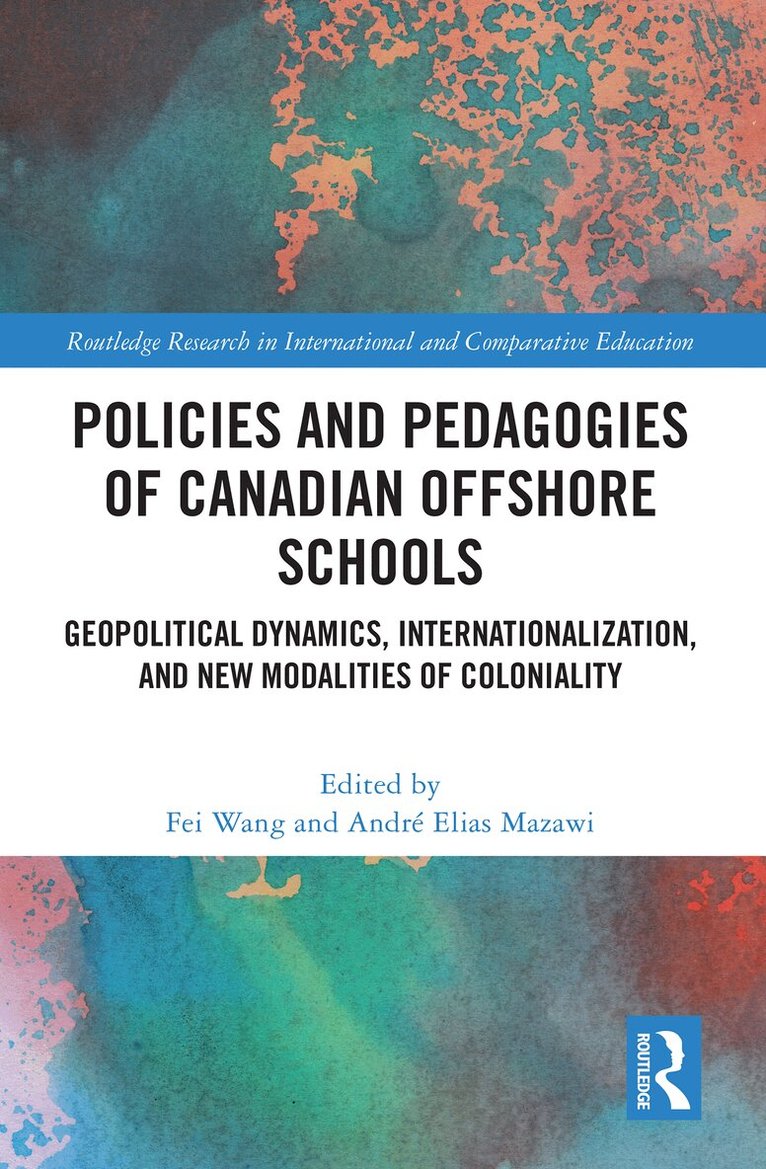
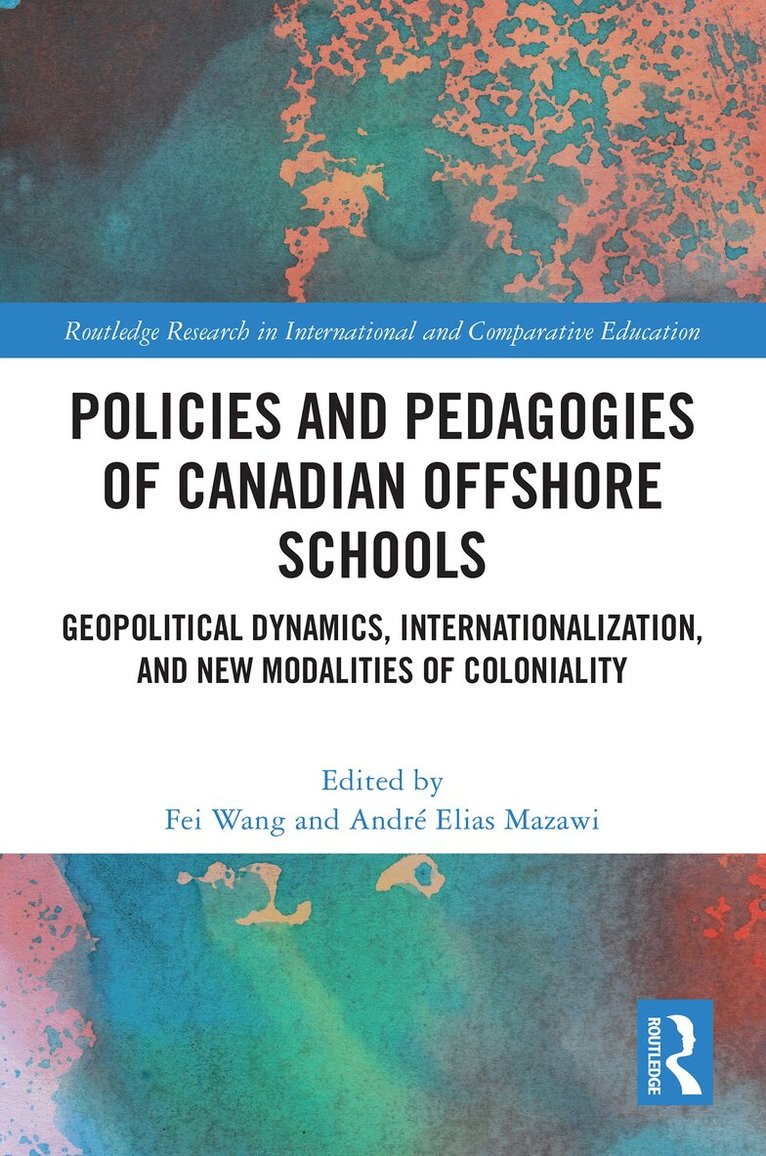
This book critically examines the international, geopolitical, policy, institutional, and curricular challenges facing Canadian offshore school programs. Bringing together scholars and practitioners concerned with addressing the pedagogical, organizational, curriculum, and policy aspects of this transnational mode of schooling, it represents a ground-breaking exploration of K-12 offshore schools within the wider contexts of global geopolitics and forms of soft power.The book examines the vulnerability that arises from having to manoeuvre political, social, geopolitical, and economic policy simultaneously in both the host and home-licencing countries. It delves into conflicts within the context of neoliberal economic agendas, neocolonial and geopolitical interests, and social class reproduction within host countries. The book is the first scholarly space that questions how international educational initiatives are affected by emerging global threats, such as the recent Covid pandemic. Additionally, it unpacks the question of citizenship and its intersections with social class, immigration, and sociocultural dynamics. It explores how these intersections forge new paths not only to mobility but also to new configurations of power and new spaces of politics and identity. With a range of reflexive, empirical, and theoretical contributions that cover every aspect of offshore schools, the book reassesses the trope of globalization dominated by Eurocentric perspectives. It decompartmentalizes diverse perspectives and insights on the internationalisation of schooling opportunities, and provides an overview of the challenges and possibilities open to offshore schools in different cultural contexts, making it the first comprehensive body of research on this type of schooling.This book will be of great value to researchers, faculty, scholars, and postgraduate students working across international and comparative education. It will be particularly useful to those interested in the intersections betweeneducation and geopolitically situated forms of soft power.
Häftad, Engelska, 2025
648 kr
Skickas inom 10-15 vardagar
This book critically examines the international, geopolitical, policy, institutional, and curricular challenges facing Canadian offshore school programs. Bringing together scholars and practitioners concerned with addressing the pedagogical, organizational, curriculum, and policy aspects of this transnational mode of schooling, it represents a ground-breaking exploration of K-12 offshore schools within the wider contexts of global geopolitics and forms of soft power.The book examines the vulnerability that arises from having to manoeuvre political, social, geopolitical, and economic policy simultaneously in both the host and home-licencing countries. It delves into conflicts within the context of neoliberal economic agendas, neocolonial and geopolitical interests, and social class reproduction within host countries. The book is the first scholarly space that questions how international educational initiatives are affected by emerging global threats, such as the recent Covid pandemic. Additionally, it unpacks the question of citizenship and its intersections with social class, immigration, and sociocultural dynamics. It explores how these intersections forge new paths not only to mobility but also to new configurations of power and new spaces of politics and identity. With a range of reflexive, empirical, and theoretical contributions that cover every aspect of offshore schools, the book reassesses the trope of globalization dominated by Eurocentric perspectives. It decompartmentalizes diverse perspectives and insights on the internationalisation of schooling opportunities, and provides an overview of the challenges and possibilities open to offshore schools in different cultural contexts, making it the first comprehensive body of research on this type of schooling.This book will be of great value to researchers, faculty, scholars, and postgraduate students working across international and comparative education. It will be particularly useful to those interested in the intersections betweeneducation and geopolitically situated forms of soft power.
Inbunden, Engelska, 2020
1 629 kr
Skickas inom 10-15 vardagar
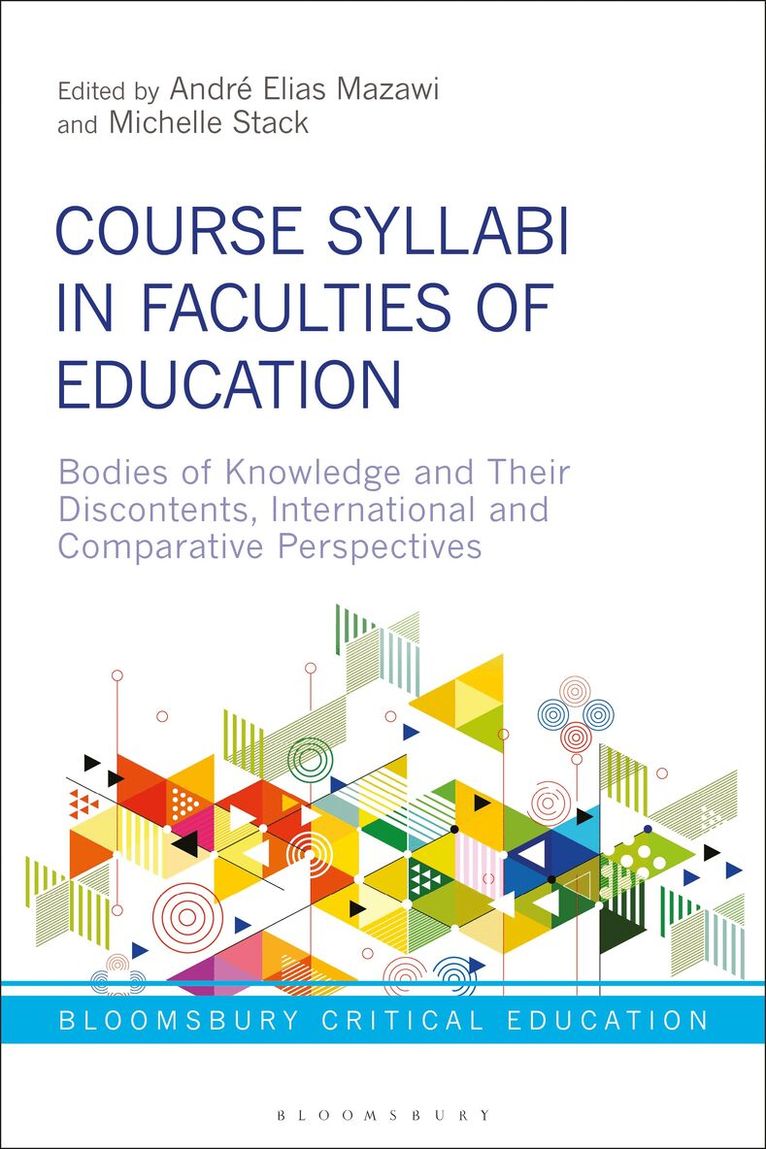
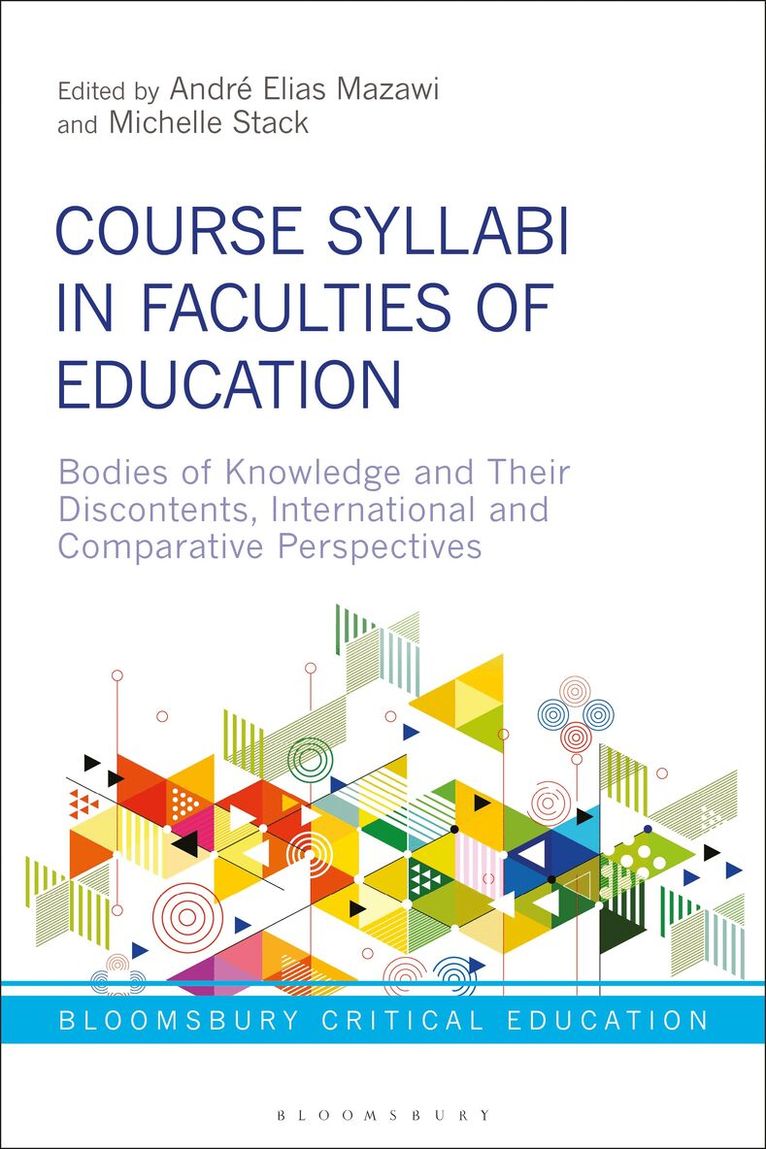
Course Syllabi in Faculties of Education problematizes one of the least researched phenomena in teacher education, the design of course syllabi, using critical and decolonial approaches. This book looks at the struggles that scholars, policy makers, and educators from a diverse range of countries including Australia, Canada, India, Iran, Palestine, Qatar, Saudi Arabia, the USA, and Zambia face as they design course syllabi in higher education settings. The chapter authors argue that course syllabi are political constructions, representing intense sites of struggles over visions of teacher education and visions of society. As such, they are deeply immersed in what Walter Mignolo calls the “geopolitics of knowledge”. Authors also show how syllabi have become akin to contractual documents that define relations between instructors and students Based on a set of empirically grounded studies that are compared and contrasted, the chapters offer a clearer picture of how course syllabi function within distinct socio-political, economic, and historical contexts of practice and teacher education.
E-bok
PDF, Engelska, 2020471 kr
Läs direkt efter köp
Course Syllabi in Faculties of Education problematizes one of the least researched phenomena in teacher education, the design of course syllabi, using critical and decolonial approaches. This book looks at the struggles that scholars, policy makers, and educators from a diverse range of countries including Australia, Canada, India, Iran, Palestine, Qatar, Saudi Arabia, the USA, and Zambia face as they design course syllabi in higher education settings. The chapter authors argue that course syllabi are political constructions, representing intense sites of struggles over visions of teacher education and visions of society. As such, they are deeply immersed in what Walter Mignolo calls the “geopolitics of knowledge”. Authors also show how syllabi have become akin to contractual documents that define relations between instructors and students Based on a set of empirically grounded studies that are compared and contrasted, the chapters offer a clearer picture of how course syllabi function within distinct socio-political, economic, and historical contexts of practice and teacher education.
E-bok
Engelska, 2020471 kr
Läs direkt efter köp
Course Syllabi in Faculties of Education problematizes one of the least researched phenomena in teacher education, the design of course syllabi, using critical and decolonial approaches. This book looks at the struggles that scholars, policy makers, and educators from a diverse range of countries including Australia, Canada, India, Iran, Palestine, Qatar, Saudi Arabia, the USA, and Zambia face as they design course syllabi in higher education settings. The chapter authors argue that course syllabi are political constructions, representing intense sites of struggles over visions of teacher education and visions of society. As such, they are deeply immersed in what Walter Mignolo calls the “geopolitics of knowledge”. Authors also show how syllabi have become akin to contractual documents that define relations between instructors and students Based on a set of empirically grounded studies that are compared and contrasted, the chapters offer a clearer picture of how course syllabi function within distinct socio-political, economic, and historical contexts of practice and teacher education.
Häftad, Engelska, 2021
439 kr
Skickas inom 10-15 vardagar
Course Syllabi in Faculties of Education problematizes one of the least researched phenomena in teacher education, the design of course syllabi, using critical and decolonial approaches. This book looks at the struggles that scholars, policy makers, and educators from a diverse range of countries including Australia, Canada, India, Iran, Palestine, Qatar, Saudi Arabia, the USA, and Zambia face as they design course syllabi in higher education settings. The chapter authors argue that course syllabi are political constructions, representing intense sites of struggles over visions of teacher education and visions of society. As such, they are deeply immersed in what Walter Mignolo calls the “geopolitics of knowledge”. Authors also show how syllabi have become akin to contractual documents that define relations between instructors and students Based on a set of empirically grounded studies that are compared and contrasted, the chapters offer a clearer picture of how course syllabi function within distinct socio-political, economic, and historical contexts of practice and teacher education.
E-bok
Engelska, 2017866 kr
Läs direkt efter köp
The World Yearbook of Education 2010 volume, Education and the Arab ''World'': Political Projects, Struggles, and Geometries of Power, strives to do justice to the complex processes and dynamics behind the world of Arab education. Western interest in all things �Arab� has greatly increased over the course of the decade, but this interest runs the risk of forgetting that the Arab world is positioned within wider contexts of regional, geopolitical, and global processes. This volume examines Arab education in a range of contexts � regional, diasporic, and trans-national � to better understand how the field of Arab education is formed through local, regional, geopolitical and global engagements and resonances. In doing so, contributors from a range of disciplines open critical conversations about the intersections of history, culture, geopolitics, policy, and education. The World Yearbook of Education 2010 offers new conceptual and empirical approaches that deal with some of the often-neglected aspects of the study of Arab education: contested political projects; struggles towards emancipation, recognition and liberation; and a larger concern for social justice, equity, and political inclusion. Andr�lias Mazawi is associate professor in the Department of Educational Studies at the University of British Columbia, Vancouver, BC, Canada. He is also an associate fellow at the Euro-Mediterranean Centre for Educational Research at the University of Malta.Ronald G. Sultana is professor in the Department of Education Studies at the University of Malta, where he also leads the Euro-Mediterranean Centre for Educational Research. He is the founding editor of the Mediterranean Journal of Educational Studies.
E-bok
PDF, Engelska, 2017866 kr
Läs direkt efter köp
The World Yearbook of Education 2010 volume, Education and the Arab ''World'': Political Projects, Struggles, and Geometries of Power, strives to do justice to the complex processes and dynamics behind the world of Arab education. Western interest in all things �Arab� has greatly increased over the course of the decade, but this interest runs the risk of forgetting that the Arab world is positioned within wider contexts of regional, geopolitical, and global processes. This volume examines Arab education in a range of contexts � regional, diasporic, and trans-national � to better understand how the field of Arab education is formed through local, regional, geopolitical and global engagements and resonances. In doing so, contributors from a range of disciplines open critical conversations about the intersections of history, culture, geopolitics, policy, and education. The World Yearbook of Education 2010 offers new conceptual and empirical approaches that deal with some of the often-neglected aspects of the study of Arab education: contested political projects; struggles towards emancipation, recognition and liberation; and a larger concern for social justice, equity, and political inclusion. Andr�lias Mazawi is associate professor in the Department of Educational Studies at the University of British Columbia, Vancouver, BC, Canada. He is also an associate fellow at the Euro-Mediterranean Centre for Educational Research at the University of Malta.Ronald G. Sultana is professor in the Department of Education Studies at the University of Malta, where he also leads the Euro-Mediterranean Centre for Educational Research. He is the founding editor of the Mediterranean Journal of Educational Studies.