Andrea Guerrini - Böcker
Visar alla böcker från författaren Andrea Guerrini. Handla med fri frakt och snabb leverans.
4 produkter
4 produkter
1 853 kr
Skickas inom 10-15 vardagar
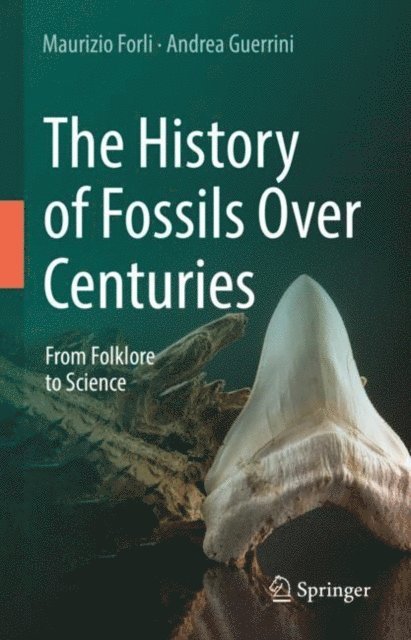
This book discusses the history of invertebrate fossil understanding and classification by exploring fossil studies between the 15th and 18th centuries. Before the modern age, the understanding of fossil findings went through several phases. The treatment by philologists, philosophers and historians of natural sciences involved religious, sometimes folkloristic, aspects before scientific ones. This work showcases and assesses these original findings by carrying out a bibliographical, and above all iconographical research, aimed at finding the first printed images of the objects that we now know as fossils. From here, the authors provide an understanding of the true nature of fossils by analyzing them through modern academic viewpoints, and describing each fossil group from a paleontological and taxonomic point of view, retracing their treatment in the course of the centuries.As a point of reference for each fossil group treated, the authors have considered indispensable the use of ancient prints as evidence of the first iconographic sources dedicated to fossils, starting from those in the late fifteenth century, dedicated to the most common groups of invertebrates without neglecting a necessary exception, the ichthyodontolites, fundamental in the discussion in Italy on the interpretation of the organic origin of fossils, and from the end of the sixteenth century to about half of the eighteenth century. The abundant iconographic apparatus used, often unpublished or specially reworked, is essential and functional to the understanding of the various aspects addressed, a visual complement to the text and vice versa, designed and used taking its cue from the need imposed on early scholars to document their discoveries visually. Among the chosen images there is no shortage of original attributions to fossil finds that have been poorly understood or misidentified until now.The English translation ofthis book from its Italian original manuscript was done with the help of artificial intelligence (machine translation by the service provider DeepL.com). A subsequent human revision of the content was done by the authors.
1 853 kr
Skickas inom 10-15 vardagar
This book discusses the history of invertebrate fossil understanding and classification by exploring fossil studies between the 15th and 18th centuries. Before the modern age, the understanding of fossil findings went through several phases. The treatment by philologists, philosophers and historians of natural sciences involved religious, sometimes folkloristic, aspects before scientific ones. This work showcases and assesses these original findings by carrying out a bibliographical, and above all iconographical research, aimed at finding the first printed images of the objects that we now know as fossils. From here, the authors provide an understanding of the true nature of fossils by analyzing them through modern academic viewpoints, and describing each fossil group from a paleontological and taxonomic point of view, retracing their treatment in the course of the centuries.As a point of reference for each fossil group treated, the authors have considered indispensable the use of ancient prints as evidence of the first iconographic sources dedicated to fossils, starting from those in the late fifteenth century, dedicated to the most common groups of invertebrates without neglecting a necessary exception, the ichthyodontolites, fundamental in the discussion in Italy on the interpretation of the organic origin of fossils, and from the end of the sixteenth century to about half of the eighteenth century. The abundant iconographic apparatus used, often unpublished or specially reworked, is essential and functional to the understanding of the various aspects addressed, a visual complement to the text and vice versa, designed and used taking its cue from the need imposed on early scholars to document their discoveries visually. Among the chosen images there is no shortage of original attributions to fossil finds that have been poorly understood or misidentified until now.The English translation ofthis book from its Italian original manuscript was done with the help of artificial intelligence (machine translation by the service provider DeepL.com). A subsequent human revision of the content was done by the authors.
Private Investments in the European Water Sector
A Country Overview Based on Utilities’ Performance
Häftad, Engelska, 2026
767 kr
Kommande
This book is addressed to water stakeholders, primarily Water Economic Regulators (WERs) and investors. It examines the performance of a selected panel of privately owned utilities in the European water sector with the primary aim of assessing the industry's appeal to private investors. This includes analyzing trends in rates of return, and identifying key drivers such as profitability, rates of return, and financial leverage. Additionally, the report delineates the risk profiles of the selected countries. The observed measures also help identify the impact of certain institutional variables, including country characteristics and water governance structures, by clustering countries based on the presence of an independent national regulator. Furthermore, the scope of operation is examined, differentiating between companies that offer only water services and those that operate under an integrated business model encompassing both water and wastewater management.The selected panel comprises 32 entities operating in 10 countries, serving approximately 50.5 million inhabitants, which represents around 10% of the combined population of Europe, England, and Wales. Given that a significant portion of the European population is served by municipalities or state-owned companies, this rate can be considered fairly representative.
534 kr
Skickas inom 10-15 vardagar
This book describes the water sector as it is structured in Italy. The first part describes the legal framework which rules the sector in Italy, its evolution since the last 20 years, and its weaknesses. The second part describes the governance of Italian water utilities, distinguishing full public-owned companies from public-private partnership and private companies. The third part reports insights on water utilities performance to enquire the presence of economies by scope, scale and density in the Italian water sector, and to verify the presence of any differences in terms of efficiency and tariffs among public and private firms. The fourth part describes the investment policies carried out by water utilities, observing the total amount of per capita investments and the actual realization of planned investments. The fifth part describes if and how utilities applied water conservation practices to incentive the sustainable water use.