Andrea J Nichols – författare
Visar alla böcker från författaren Andrea J Nichols. Handla med fri frakt och snabb leverans.
5 produkter
5 produkter
1 783 kr
Skickas inom 3-6 vardagar
Sex Trafficking in the United States is a unique exploration of the underlying dynamics of sex trafficking. This comprehensive volume examines the common risk factors for those who become victims, and the barriers they face when they try to leave. It also looks at how and why sex traffickers enter the industry. A chapter on buyers presents what we know about their motivations, the prevalence of bought sex, and criminal justice policies that target them. Sex Trafficking in the United States describes how the justice system, activists, and individuals can engage in advocating for victims of sex trafficking. It also offers recommendations for practice and policy and suggestions for cultural change. Andrea J. Nichols approaches sex-trafficking-related theories, research, policies, and practice from neoliberal, abolitionist, feminist, criminological, and sociological perspectives. She confronts competing views of the relationship between pornography, prostitution, and sex trafficking, as well as the contribution of weak social institutions and safety nets to the spread of sex trafficking.She also explores the link between identity-based oppression, societal marginalization, and the risk of victimization. She clearly accounts for the role of race, ethnicity, immigrant status, LGBTQ identities, age, sex, and intellectual disability in heightening the risk of trafficking and how social services and the criminal justice and healthcare systems can best respond. This textbook is essential for understanding the mechanics of a pervasive industry and curbing its spread among at-risk populations. Please visit our supplemental materials page (https://cup.columbia.edu/extras/supplement/sex-trafficking-united-states) to find teaching aids, including PowerPoints, access to a test bank, and a sample syllabus.
604 kr
Skickas inom 3-6 vardagar
Sex Trafficking in the United States is a unique exploration of the underlying dynamics of sex trafficking. This comprehensive volume examines the common risk factors for those who become victims, and the barriers they face when they try to leave. It also looks at how and why sex traffickers enter the industry. A chapter on buyers presents what we know about their motivations, the prevalence of bought sex, and criminal justice policies that target them. Sex Trafficking in the United States describes how the justice system, activists, and individuals can engage in advocating for victims of sex trafficking. It also offers recommendations for practice and policy and suggestions for cultural change. Andrea J. Nichols approaches sex-trafficking-related theories, research, policies, and practice from neoliberal, abolitionist, feminist, criminological, and sociological perspectives. She confronts competing views of the relationship between pornography, prostitution, and sex trafficking, as well as the contribution of weak social institutions and safety nets to the spread of sex trafficking.She also explores the link between identity-based oppression, societal marginalization, and the risk of victimization. She clearly accounts for the role of race, ethnicity, immigrant status, LGBTQ identities, age, sex, and intellectual disability in heightening the risk of trafficking and how social services and the criminal justice and healthcare systems can best respond. This textbook is essential for understanding the mechanics of a pervasive industry and curbing its spread among at-risk populations. Please visit our supplemental materials page (https://cup.columbia.edu/extras/supplement/sex-trafficking-united-states) to find teaching aids, including PowerPoints, access to a test bank, and a sample syllabus.
Crime, Corrections, and the COVID-19 Pandemic
Responses and Adaptations in the U.S. Criminal Justice System
Häftad, Engelska, 2025
261 kr
Skickas inom 7-10 vardagar
Analyses of crime and justice in an unprecedented timeWhile COVID-19 lockdowns affected nearly everyone worldwide, feelings of anxiety and fear were exacerbated for those already entangled in the criminal justice system. Scholars recognized the unique opportunity to study crime and the justice system’s response during this period, though they soon realized that determining the pandemic’s effects would be a complicated, nuanced process.Crime, Corrections, and the COVID-19 Pandemic features analyses and findings from more than thirty contributors in eleven essays. The collection examines the multifaceted social, economic, cultural, legislative, and policy responses to COVID-19 and their impacts on crime and justice. It also explores how professionals across the criminal justice system—police officers, campus police officers, attorneys, judges, correctional staff, and community supervision agents—adapted to unprecedented challenges.The book provides real-world evidence of how unconventional solutions and groundbreaking practices were implemented in response to a global crisis. Contributors analyze how incarcerated individuals, their families, and their supervisors dealt with the fear of transmission, medical care, and death. Their findings, which are necessarily dependent on timing, place, measurement, and operationalization, include both change and stasis, both negative and positive outcomes. For instance, while minor and property-related offenses initially declined, violent crimes like homicide and intimate partner violence increased. Drug usage patterns changed, leading to a rise in opioid overdoses, and despite the rise in digital interactions, there was no significant difference in self-reported cybervictimization. Furthermore, rates of gang-related crimes did not decrease. Policy and public health responses reshaped criminal activities, influencing the methods and motivations behind theft, child and elder abuse, and other offenses. This volume includes in-depth examinations of certain often-overlooked crimes, such as labor trafficking, and provides direct insights into the job challenges faced by criminal justice professionals, from probation personnel to labor rights advocates.Emerging innovations in health risk management within correctional facilities led to increased awareness and focus on specific types of crime. Responses to the pandemic revealed significant challenges, such as burnout among justice system personnel, difficulties in adapting and innovating, and challenges in providing services to vulnerable populations.Through diverse perspectives and empirical approaches ranging from advanced statistical analysis to qualitative interviews, Crime, Corrections, and the COVID-19 Pandemic offers a comprehensive exploration of the complexities that affect research results. It showcases the resilience and innovation within the criminal justice field and details the challenges professionals in this area tackled during a universally trying time, presenting valuable lessons for future crises.
Sex Trafficking and Commercial Sexual Exploitation
Prevention, Advocacy, and Trauma-Informed Practice
Häftad, Engelska, 2017
677 kr
Skickas inom 5-8 vardagar
This is the first comprehensive text to critically analyze the current research and best practices for working with children, adolescents, and adults involved in sex trafficking and commercial sexual exploitation (CSE). With a unique, research-based focus on practice, the book synthesizes the key areas related to working with victims of sex trafficking/CSE including prevention, identification, practice techniques, and program design as well as suggested interagency, criminal justice, and legislative responses. Best practices are examined through an intersectional, trauma-informed lens that adheres to principles of cultural competency.Highlights include:Integrates a trauma-informed lens in practice, program design, and interagency responses.Uses an intersectional approach to examine identity-based oppression such as race, class, sex, LGBTQ identities, age, immigration status, and intellectual disabilities.Highlights the importance of cultural competency in practice and program design, prevention and outreach efforts, and interagency and criminal justice system responses.Reviews the different types of sex trafficking and CSE, the physiological and psychological effects, various risk factors, and the distinct needs of survivors to encourage practitioners to tailor interventions to the specific needs of each client.Examines the role of social workers and practitioners in interagency, legislative, and criminal justice responses to sex trafficking.Takes a broad societal perspective by examining the role of macro-level risk factors facilitating sex trafficking victimization.The book analyzes the commonly reported indicators of sex trafficking/CSE, how to conduct a screening with potential victims, and direct practice techniques with various populations including evidence-based trauma treatments. Other chapters guide the reader in implementing trauma-informed programming in a variety of organizational settings, advocating for sex trafficking and CSE survivors within the criminal justice system, and implementing effective prevention and outreach programs in schools and community organizations.Intended as a text for upper-division courses on sex or human trafficking, interventions with women, trauma interventions, violence against women, or gender and crime taught in social work, psychology, counseling, and criminal justice, this book is also an ideal resource for practitioners working with victims of sex trafficking and CSE in a variety of settings including child protective services, the criminal justice system, health care, schools, and more.
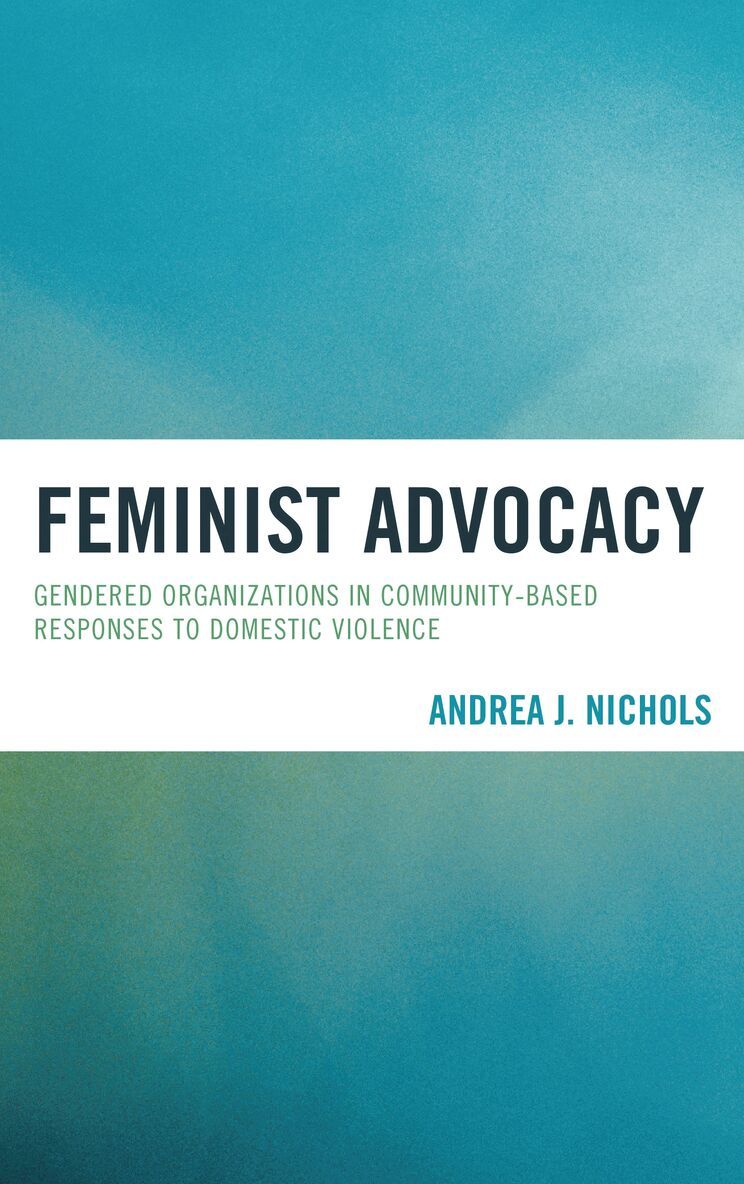
Feminist Advocacy
Gendered Organizations in Community-Based Responses to Domestic Violence
Häftad, Engelska, 2015
608 kr
Skickas inom 10-15 vardagar
Feminist Advocacy: Gendered Organizations in Community-based Responses to Domestic Violence examines victim advocacy through a gendered organizations perspective. This monograph draws from in-depth interviews with twenty-six domestic violence victim advocates to examine their experiences with gendered policies and practices in the justice system, child protective services, and shelters. Andrea J. Nichols explores justice system interventions related to pro-arrest, dual arrest, no-drop prosecution, protective orders, and the actions of police and judges. In addition, she examines policies and practices related to child protective services that negatively affect battered women, such as charges for failure to protect and lost custody. Nichols also explores the most contentiously debated shelter policies, including curfew, confidentiality, substance abuse, entrance requirements, admitting adolescent boys, and mandatory classes. Drawing from advocates’ narratives of their experiences, Feminist Advocacy bears significant implications for policy and practice in community-based responses to domestic violence. This book will prove especially valuable to anyone who studies or works in the fields of social work, human services, criminal justice, or criminology, including advocates, practitioners, students, academic researchers, and those interested in intimate partner violence.