2 473 kr
Skickas inom 10-15 vardagar
2 473 kr
Skickas inom 10-15 vardagar
753 kr
Skickas inom 10-15 vardagar
881 kr
Läs direkt efter köp
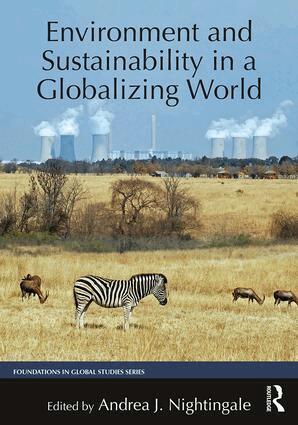
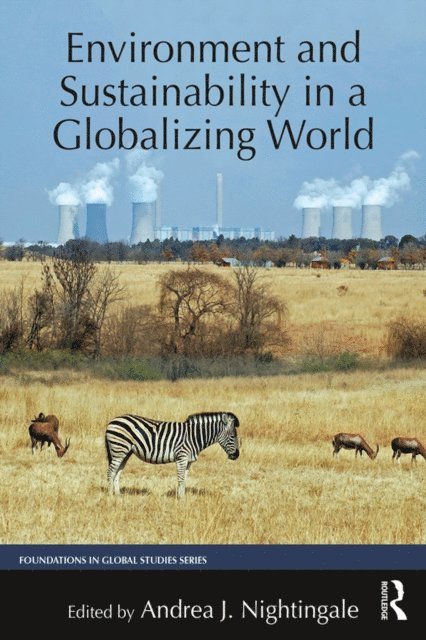
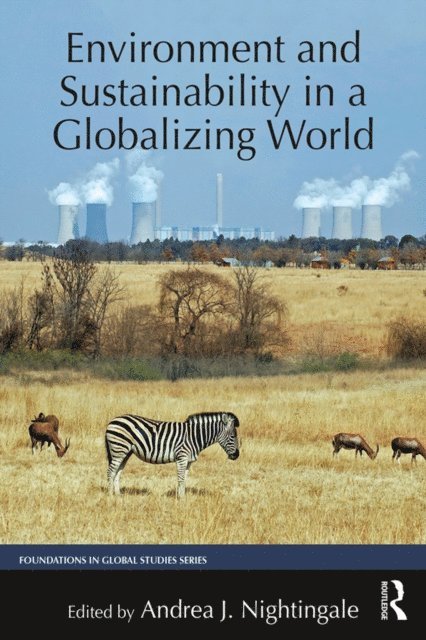
From the Foundations in Global Studies series, this student-friendly text follows a two-pronged approach to help readers understand the globalizing processes relating to environment and sustainability, which are examined in a range of disciplines, including environmental studies, geography, global studies, political science, international affairs, comparative politics, and other disciplines. First, it presents foundational material that gives students the conceptual underpinnings required for rigorous analysis. Following the Introduction and Overview, Part One presents a brief historical overview of the concerns revolving around environmental sustainability in the modern era. The text then covers key concepts and theoretical constructs that define the global context for sustainable environmental practices, such as the key thinkers and theories pertaining to sustainable environmental practice, and the key international agencies and treaties involved in global discussions. The first part then explores the various models and ways to measure sustainability, the range of environmental domains at play in the sustainability dialogue, and the controversies surrounding them. Part Two employs case studies to examine theory and practice at work in particular situations. The case studies have been selected with an eye toward comprehensiveness of coverage across disciplines and across regions.
872 kr
Läs direkt efter köp
From the Foundations in Global Studies series, this student-friendly text follows a two-pronged approach to help readers understand the globalizing processes relating to environment and sustainability, which are examined in a range of disciplines, including environmental studies, geography, global studies, political science, international affairs, comparative politics, and other disciplines. First, it presents foundational material that gives students the conceptual underpinnings required for rigorous analysis. Following the Introduction and Overview, Part One presents a brief historical overview of the concerns revolving around environmental sustainability in the modern era. The text then covers key concepts and theoretical constructs that define the global context for sustainable environmental practices, such as the key thinkers and theories pertaining to sustainable environmental practice, and the key international agencies and treaties involved in global discussions. The first part then explores the various models and ways to measure sustainability, the range of environmental domains at play in the sustainability dialogue, and the controversies surrounding them. Part Two employs case studies to examine theory and practice at work in particular situations. The case studies have been selected with an eye toward comprehensiveness of coverage across disciplines and across regions.
320 kr
Skickas inom 11-20 vardagar
Working within cultural institutions creates a core tension: how can you stay independent while trying to change the very systems you’re part of? In But Not Of - Practices of Commoning in Art and Infrastructure explores that tension by mapping out how “commons” can exist both outside and inside the structures of cultural production.
With contributions from Andrea J. Nightingale, Andrea Thal, Bianca Schick, Binna Choi, Chris Lee, Clara Balaguer, Dalia Maini, Josh Plough, Lorenzo Gerbi, Madhumita Nandi, Maren Bang, Nina Martin, Noam Youngrak Son, Noura Alkhalili, Pete Fung, Peter Linebaugh, Simon Fairlie, Wojciech Matejko, and Yin Aiwen, this collection goes beyond the usual critiques of institutions. It connects cultural commoning to wider histories of social struggle – from the privatization of common land in Britain to the destruction of Palestinian shared farming systems under colonial rule. The book looks at the spaces around institutions as both fragile commons and practical foundations for change.
Through essays, real-world examples, and fiction, these cultural organizers, writers, and artists from different fields and places tackle this tension head-on. How do collectives survive budget cuts and political crackdowns? How do Indigenous ways of knowing challenge institutional ideas about sharing and care? Can circulation and debt be turned into tools for redistribution? And how can speculation and science fiction help us practice autonomy even within systems that limit it?
Instead of just talking about autonomy, this collection pushes for real strategies. It gives cultural organizers a crucial framework for navigating conflicting values — especially now, when the same institutions can fund both decolonial art and genocide.