Andrei Lankov - Böcker
Visar alla böcker från författaren Andrei Lankov. Handla med fri frakt och snabb leverans.
5 produkter
5 produkter
153 kr
Skickas
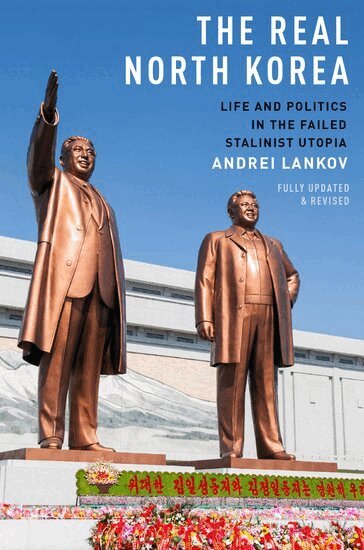
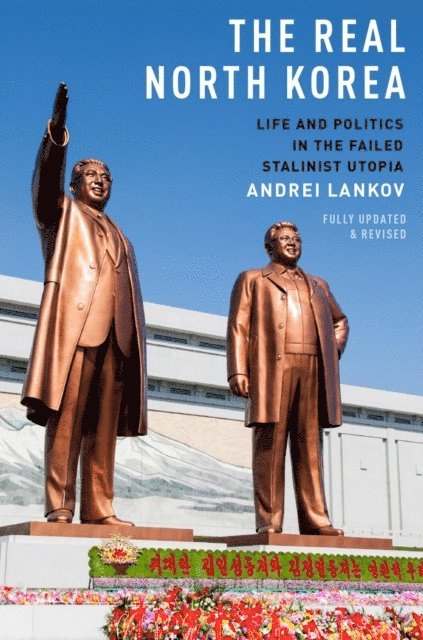
Andrei Lankov has gone where few outsiders have ever been. A native of the former Soviet Union, he lived as an exchange student in North Korea in the 1980s. He has studied it for his entire career, using his fluency in Korean and personal contacts to build a rich, nuanced understanding. In The Real North Korea, Lankov substitutes cold, clear analysis for the overheated rhetoric surrounding this opaque police state. After providing an accessible history of the nation, he turns his focus to what North Korea is, what its leadership thinks, and how its people cope with living in such an oppressive and poor place. He argues that North Korea is not irrational, and nothing shows this better than its continuing survival against all odds. A living political fossil, it clings to existence in the face of limited resources and a zombie economy, manipulating great powers despite its weakness. Its leaders are not ideological zealots or madmen, but perhaps the best practitioners of Machiavellian politics that can be found in the modern world. Even though they preside over a failed state, they have successfully used diplomacy-including nuclear threats-to extract support from other nations. But while the people in charge have been ruthless and successful in holding on to power, Lankov goes on to argue that this cannot continue forever, since the old system is slowly falling apart. In the long run, with or without reform, the regime is unsustainable. Lankov contends that reforms, if attempted, will trigger a dramatic implosion of the regime. They will not prolong its existence.Based on vast expertise, this book reveals how average North Koreans live, how their leaders rule, and how both survive.
424 kr
Skickas inom 5-8 vardagar
Andrei Lankov has gone where few outsiders have ever been. A native of the former Soviet Union, he lived as an exchange student in North Korea in the 1980s. He has studied it for his entire career, using his fluency in Korean and personal contacts to build a rich, nuanced understanding. In The Real North Korea, Lankov substitutes cold, clear analysis for the overheated rhetoric surrounding this opaque police state. After providing an accessible history of the nation, he turns his focus to what North Korea is, what its leadership thinks, and how its people cope with living in such an oppressive and poor place. He argues that North Korea is not irrational, and nothing shows this better than its continuing survival against all odds. A living political fossil, it clings to existence in the face of limited resources and a zombie economy, manipulating great powers despite its weakness. Its leaders are not ideological zealots or madmen, but perhaps the best practitioners of Machiavellian politics that can be found in the modern world. Even though they preside over a failed state, they have successfully used diplomacy-including nuclear threats-to extract support from other nations. But while the people in charge have been ruthless and successful in holding on to power, Lankov goes on to argue that this cannot continue forever, since the old system is slowly falling apart. In the long run, with or without reform, the regime is unsustainable. Lankov contends that reforms, if attempted, will trigger a dramatic implosion of the regime. They will not prolong its existence.Based on vast expertise, this book reveals how average North Koreans live, how their leaders rule, and how both survive.
414 kr
Skickas inom 5-8 vardagar
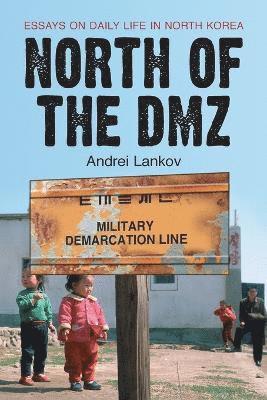
The Kim dynasty has ruled North Korea for over 60 years. Most of that period has found the country suffering under mature Stalinism characterized by manipulation, brutality and tight social control. Nevertheless, some citizens of Kim Jong Il's regime manage to transcend his tyranny in their daily existence. This book describes that difficult but determined existence and the world that the North Koreans have created for themselves in the face of oppression. Many features of this world are unique and even bizarre. But they have been created by the citizens to reflect their own ideas and values, in sharp contrast to the world forced upon them by a totalitarian system. Opening chapters introduce the political system and the extent to which it permeates citizens' daily lives, from the personal status badges they wear to the nationalized distribution of the food they eat. Chapters discussing the schools, the economic system, and family life dispel the myth of the workers' paradise that North Korea attempts to perpetuate. In these chapters the intricacies of daily life in a totalitarian dictatorship are seen through the eyes of defectors whose anecdotes constitute an important portion of the material. The closing chapter treats at length the significant changes that have taken place in North Korea over the last decade, concluding that these changes will lead to the quiet but inevitable death of North Korean Stalinism.
1 646 kr
Skickas inom 10-15 vardagar
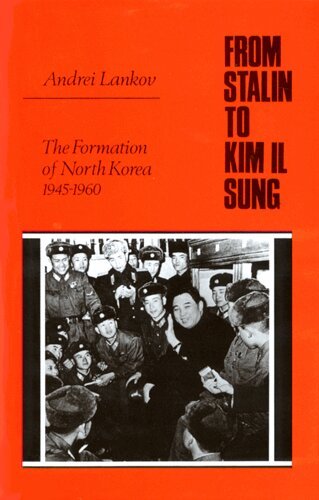
To understand how North Korea has survived as the worlds last Stalinist regime despite international isolationand at enormous human costs to its peopleone must look at how its political system was created. The countrys foundations were laid in the late 1940s and 1950s as a result of interaction between the Soviet Stalinist model, imposed from outside, and local traditions.Andrei Lankov traces the formation of the North Korean state and the early years of Kim Il Sungs rule, when the future "Great Leader" and his entourage were consolidating their power base. Surveying the situation in North Korea after 1945, Lankov explores the internal composition of the ruling elite, the role of the Soviets, and the uneasy relations between various political groups. He also focuses on how in 1956 Kim Il Sung defeated the only known attempt to oust him and thereby established absolute personal rule beyond either Soviet or Chinese control.The book is based on previously secret Soviet documents from Russian archives, as well as interviews with Russian and Korean participants.
236 kr
Skickas inom 7-10 vardagar
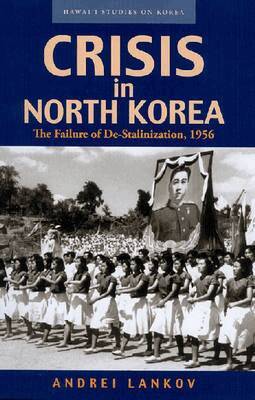
North Korea remains the most mysterious of all Communist countries. The acute shortage of available sources has made it a difficult subject of scholarship. Through his access to Soviet archival material made available only a decade ago, contemporary North Korean press accounts, and personal interviews, Andrei Lankov presents for the first time a detailed look at one of the turning points in North Korean history: the country’s unsuccessful attempts to de-Stalinize in the mid-1950s. He demonstrates that, contrary to common perception, North Korea was not a realm of undisturbed Stalinism; Kim Il Sung had to deal with a reformist opposition that was weak but present nevertheless.Lankov traces the impact of Soviet reforms on North Korea, placing them in the context of contemporaneous political crises in Poland and Hungary. He documents the dissent among various social groups (intellectuals, students, party cadres) and their attempts to oust Kim in the unsuccessful “August plot” of 1956. His reconstruction of the Peng-Mikoyan visit of that year—the most dramatic Sino-Soviet intervention into Pyongyang politics—shows how it helped bring an end to purges of the opposition. The purges, however, resumed in less than a year as Kim skillfully began to distance himself from both Moscow and Beijing. The final chapters of this fascinating and revealing study deal with events of the late 1950s that eventually led to Kim’s version of “national Stalinism.” Lankov unearths data that, for the first time, allows us to estimate the scale and character of North Korea’s Great Purge.Meticulously researched and cogently argued, Crisis in North Korea is a must-read for students and scholars of Korea and anyone interested in political leadership and personality cults, regime transition, and communist politics.