
Andrés Fabián Henao Castro – författare
Visar alla böcker från författaren Andrés Fabián Henao Castro. Handla med fri frakt och snabb leverans.
3 produkter
3 produkter
Inbunden, Engelska, 2021
1 122 kr
Skickas
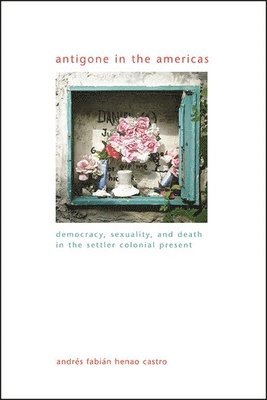
Argues for a decolonial reinterpretation of Sophocles' classical tragedy, Antigone, that can help us to rethink the anti-colonial politics of militant mourning in the Americas.Sophocles's classical tragedy, Antigone, is continually reinvented, particularly in the Americas. Theater practitioners and political theorists alike revisit the story to hold states accountable for their democratic exclusions, as Antigone did in disobeying the edict of her uncle, Creon, for refusing to bury her brother, Polynices. Antigone in the Americas not only analyzes the theoretical reception of Antigone, when resituated in the Americas, but further introduces decolonial rumination as a new interpretive methodology through which to approach classical texts. Traveling between modern present and ancient past, Andrés Fabián Henao Castro focuses on metics (resident aliens) and slaves, rather than citizens, making the feminist politics of burial long associated with Antigone relevant for theorizing militant forms of mourning in the global south. Grounded in settler colonial critique, black and woman of color feminisms, and queer and trans of color critique, Antigone in the Americas offers a more radical interpretation of Antigone, one relevant to subjects situated under multiple and interlocking systems of oppression.
Häftad, Engelska, 2022
500 kr
Skickas inom 5-8 vardagar
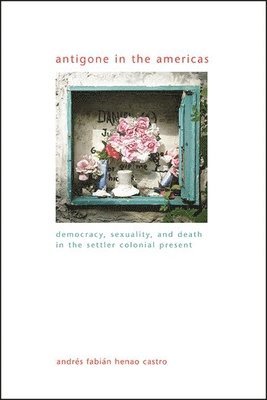
Argues for a decolonial reinterpretation of Sophocles' classical tragedy, Antigone, that can help us to rethink the anti-colonial politics of militant mourning in the Americas.Sophocles's classical tragedy, Antigone, is continually reinvented, particularly in the Americas. Theater practitioners and political theorists alike revisit the story to hold states accountable for their democratic exclusions, as Antigone did in disobeying the edict of her uncle, Creon, for refusing to bury her brother, Polynices. Antigone in the Americas not only analyzes the theoretical reception of Antigone, when resituated in the Americas, but further introduces decolonial rumination as a new interpretive methodology through which to approach classical texts. Traveling between modern present and ancient past, Andrés Fabián Henao Castro focuses on metics (resident aliens) and slaves, rather than citizens, making the feminist politics of burial long associated with Antigone relevant for theorizing militant forms of mourning in the global south. Grounded in settler colonial critique, black and woman of color feminisms, and queer and trans of color critique, Antigone in the Americas offers a more radical interpretation of Antigone, one relevant to subjects situated under multiple and interlocking systems of oppression.
Inbunden, Engelska, 2022
1 319 kr
Skickas inom 10-15 vardagar
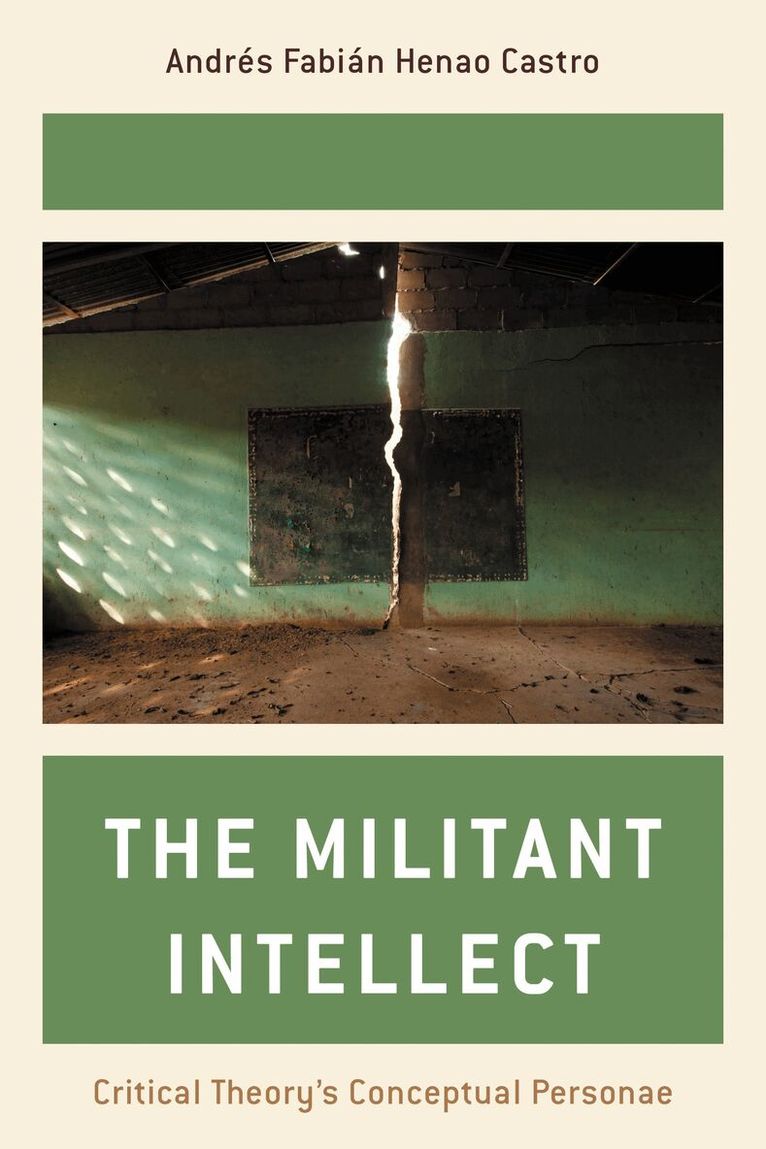
The Militant Intellect offers a way of rethinking the relationship between critical theory and politics. How does critical theory become self-conscious of its own relation to politics? How does it contribute to change the world through its reinterpretation of it? These are some of the questions that drive The Militant Intellect. In this book Andrés Fabián Henao Castro argues that critical theory cultivates the militancy of the general intellect by training that intellect to work towards the intersectional and structural death of the colonist and thus to envision at the same time the materialization of that feminist decolonial communist queer marronage world that constitutes its horizon. Henao Castro borrows and expands on Gilles Deleuze and Félix Guattari’s idea of conceptual persona to qualify the intellectual labor of critical theory as an undisciplined field, that performs its labor through the creation of conceptual personae capable of subjectivizing critical thought. Doing so, The Militant Intellect argues for the indispensable reinterpretation of Plato’s Philosopher Sovereign, Karl Marx’s Communist, Frantz Fanon’s Rebel, Jacques Derrida’s Specter, Gayatri Spivak’s Subaltern, Saidiya Hartman’s Wayward Life, Jacques Rancière’s Ignorant Schoolmaster, Judith Butler’s Antigone/Ismene, and Jordy Rosenberg’s Fox as compelling personifications of intellectual militancy for the general intellect to have new scripts capable of cultivating the virtuosity of its more revolutionary performances.