Andrés Zamora – författare
Visar alla böcker från författaren Andrés Zamora. Handla med fri frakt och snabb leverans.
5 produkter
5 produkter
Del 13 - Contemporary Hispanic and Lusophone Cultures
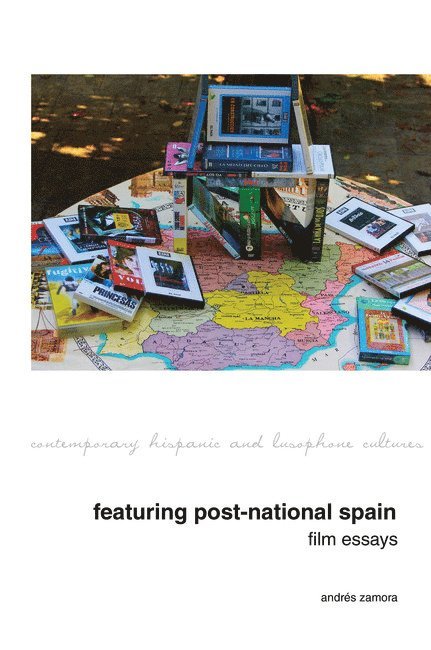
Featuring Post-National Spain. Film Essays.
Inbunden, Engelska, 2016
2 211 kr
Skickas inom 5-8 vardagar
In the last quarter of the twentieth century a considerable number of Spanish films were involved in the task of essaying the nation, that is, of attempting to make it or make it over, of trying to reshape a national identity inexorably dictated by General Francisco Franco up to his death. The book explores four major issues in this regard: 1) the filmic negotiations of the borders of the nation, focusing particularly on the debated and controversial development of Basque cinema vis-à-vis the films produced in the rest of Spain; 2) the persistence of the old obsession with violence, thought of as an inescapable native trait, in a large amount of post-dictatorial films; 3) the newfound insatiable appetite for cinematic travelling, for going out and coming in through all possible variations of the road and travel movie genres; 4) and the vindication of the mother qua a benign emblem of the land and its people, of the nation. There is a narrative in Spanish cinema, taken as a collective discourse, which ties together these four cinematic topoi and proposes a nation whose specificity must be precisely its impurity—difference within as essence—a hybrid nation located in temporal and spatial rendezvous of past and present, tradition and novelty, centre and margin, inside and outside, on and beyond.
Del 13 - Contemporary Hispanic and Lusophone Cultures
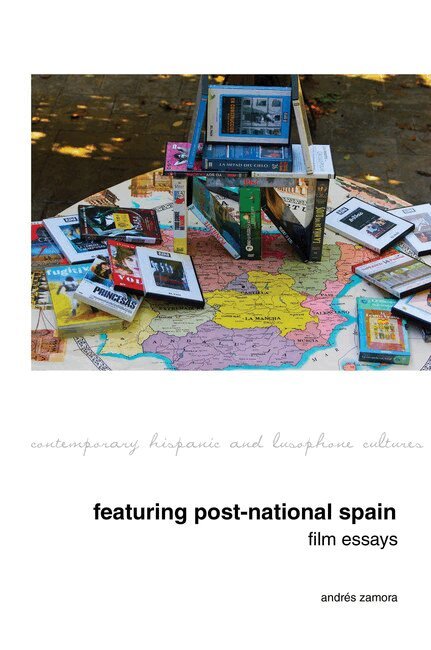
Featuring Post-National Spain. Film Essays.
Häftad, Engelska, 2021
450 kr
Skickas inom 5-8 vardagar
In the last quarter of the twentieth century a considerable number of Spanish films were involved in the task of essaying the nation, that is, of attempting to make it or make it over, of trying to reshape a national identity inexorably dictated by General Francisco Franco up to his death. The book explores four major issues in this regard: 1) the filmic negotiations of the borders of the nation, focusing particularly on the debated and controversial development of Basque cinema vis-à-vis the films produced in the rest of Spain; 2) the persistence of the old obsession with violence, thought of as an inescapable native trait, in a large amount of post-dictatorial films; 3) the newfound insatiable appetite for cinematic travelling, for going out and coming in through all possible variations of the road and travel movie genres; 4) and the vindication of the mother qua a benign emblem of the land and its people, of the nation. There is a narrative in Spanish cinema, taken as a collective discourse, which ties together these four cinematic topoi and proposes a nation whose specificity must be precisely its impurity—difference within as essence—a hybrid nation located in temporal and spatial rendezvous of past and present, tradition and novelty, centre and margin, inside and outside, on and beyond.
E-bok
Spanska, 2023507 kr
Läs direkt efter köp
Este libro se ocupa de escaramuzas de retórica ideológica libradas por textos literarios. Entre estas hay intentos de persuasión basados en maniobras de extrañamiento y ostracismo a partir de la feminización, extranjerización o demonización del enemigo. A veces se produce el inopinado recurso al exilio idiomático y a la confesión íntima como estrategia textual en el debate político. La utilización de avatares de la trama amorosa y la fábula familiar, así como la dialéctica entre unidad y fragmentación en el texto y sus modos de difusión, es frecuente en estas guerrillas. También es contumaz la politización de opciones estéticas, como el realismo. Algunos de los textos de la refriega descubren el potencial de agitación ideológica de procedimientos literarios, caso de la metaliterariedad, políticamente inocuos en apariencia. El espanto taxonómico de figuras híbridas y monstruosas ocupa así mismo un lugar prominente en estas batallas. Y la inscripción, ejecución y derribo de fábricas arquitectónicas en algunos textos literarios funcionan como contrapunto de las muy aparatosas construcciones, demoliciones y quemas por causas ideológicas de edificios reales
E-bok
Spanska, 20251 038 kr
Läs direkt efter köp
Toda sustancia, objeto, fenómeno o hecho acumula una serie de capas relativas a su comportamiento cultural. En ese conjunto de realidades, el excremento es una de las más abominadas y simultáneamente de las más diversamente sobrecargadas en cuanto a su aprehensión y usos dentro de los ámbitos de lo que hoy llamamos cultura. En buena medida esa fecundidad cultural surge de la contradicción entre su carácter cotidiano y el deseo de invisibilizarlo a partir de cierto momento histórico –la temprana modernidad–, un determinado territorio –Occidente–, y desde un particular estrato social –la aristocracia y la burguesía–. Los modernos, occidentales y pudientes no cagan, mientras acusan al otro –el arcaico, el salvaje, el bárbaro o el exótico, y el populacho– de estar aquejado de una condición fecal que a la vez repele y fascina.Este libro no pretende ser una historia del excremento; su estructura no es cronológica, sino temática y sectorial. Los hechos que aborda son tres: las relaciones del excremento con el viaje y la identidad; la posición del excremento en la determinación de lo real y la función de su presencia o su ausencia en las tentativas de representación artística de esa realidad; y el empleo del excremento en las pugnas políticas e ideológicas.
Del 168 - Ediciones de Iberoamericana
Galdós : la novela tiene nombre de mujer : (lecturas levemente perversas)
Häftad, Spanska
344 kr
Skickas inom 3-6 vardagar