Andrew C. Millington - Böcker
Visar alla böcker från författaren Andrew C. Millington. Handla med fri frakt och snabb leverans.
6 produkter
6 produkter
Del 1 - Biogeography Research Group Symposia Series
Vegetation Mapping
From Patch to Planet
Inbunden, Engelska, 2000
4 845 kr
Skickas inom 11-20 vardagar
Vegetation Mapping Edited by Roy Alexander Environment Research Group, Department of Geography, Chester College, UK and Andrew C. Millington Department of Geography, University of Leicester, UK The past decade has witnessed a resurgence of interest and activity in the mapping of vegetation that has been driven by the needs of environmental modellers and policy makers on the one hand and by the increased availability of data sets and sophisticated tools for their handling and analysis on the other. This increased activity, together with the greater variety of purposes for which vegetation maps are being produced, has led to a divergence of approaches, a wider range of entities being mapped and a more varied audience of end users. Over the same time period the researcher interested in vegetation mapping has had to consult an ever-broadening range of sources in order to keep abreast of developments in the field. This book seeks to provide a review of recent developments in vegetation mapping and the purposes for which it is carried out by bringing together a series of case studies covering techniques and their applications at a range of spatial scales. The work included covers scales of enquiry from the quadrat to the biome, studies based on data gathered from ground, air and space, and applications of mapping in temperate, semi arid and tropical environments. Issues involved in the use of data sets from different sources, the recognition and handling of error and the effects of scale are also given detailed consideration. The volume concludes with a review of contemporary approaches to vegetation mapping and the identification of some key research questions. Vegetation Mapping will thus serve as a collected source of reference on techniques and approaches for the researcher while providing a rich variety of case study and methodological information for postgraduate students and undergraduates following specialist courses.
1 799 kr
Skickas inom 7-10 vardagar
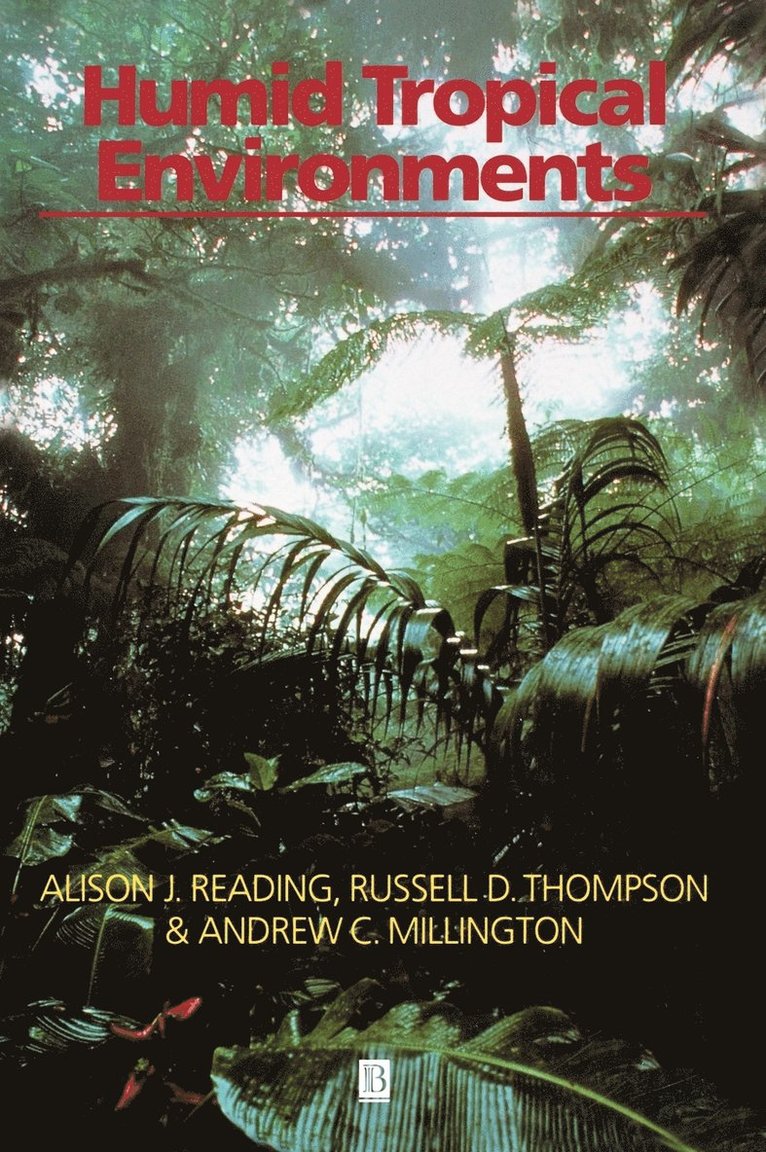
The humid tropics contain some of the world's richest, most diverse, most important and most threatened environments. This book draws on recent work by geographers, biologists, ecologists, geologists and climatologists to present a complete and integrated appraisal of the natural environment of all the humid tropical regions of the world. The most complete textbook on this key subject.Fully illustrated throughout with photographs and diagrams.Informative case studies and examples.Considers the physical environment as a whole and stresses the link between the elements.
603 kr
Skickas inom 7-10 vardagar
The humid tropics contain some of the world's richest, most diverse, most important and most threatened environments. This book draws on recent work by geographers, biologists, ecologists, geologists and climatologists to present a complete and integrated appraisal of the natural environment of all the humid tropical regions of the world. The most complete textbook on this key subject.Fully illustrated throughout with photographs and diagrams.Informative case studies and examples.Considers the physical environment as a whole and stresses the link between the elements.
1 584 kr
Skickas inom 10-15 vardagar
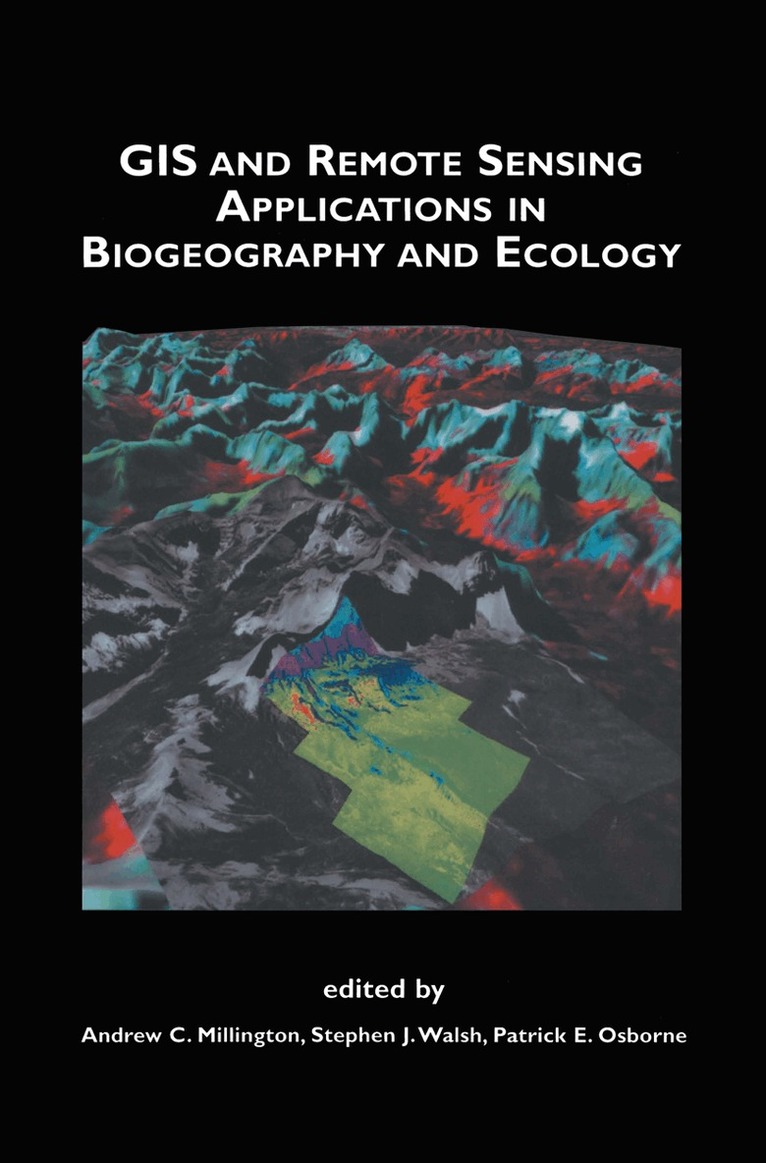
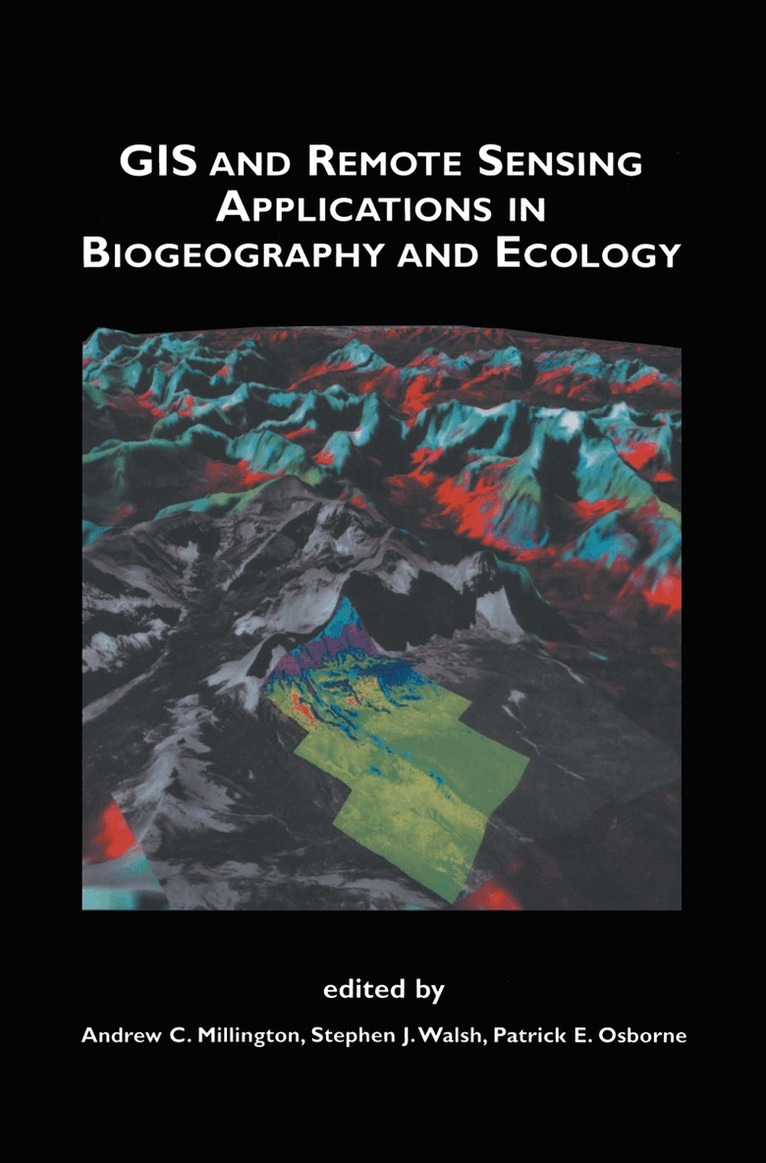
This volume gathers together a representative set of examples from the many varied spatial techniques and analytical approaches being used by geographers, ecologists, and biogeographers to study plant and animal distributions, to assess processes affecting the observed patterns at selected spatial and temporal scales, and to discuss these examples within a strong conceptual spatial and/or temporal framework.Therefore, the aims of this volume are to: identify the key spatial concepts that underpin Geographic Information Science (GISc) in biogeography and ecology; review the development of these spatial concepts within geography and how they have been taken up in ecology and biogeography; exemplify the use of the key spatial concepts underpinning GISc in biogeography and ecology using case studies from both vegetation science and animal ecology/biogeography that cover a wide range of spatial scales (from global to micro-scale) and different geographical regions (from arctic to humid tropical); and develop an agenda for future research in GISc, which takes into account developments in biogeography and ecology, and their applications in GISc including remote sensing, geographic information systems, quantitative methods, spatial analysis, and data visualization.
3 005 kr
Skickas inom 3-6 vardagar
A superb resource for understanding the diversity of the modern discipline of biogeography, and its history and future, especially within geography departments. I expect to refer to it often. - Professor Sally Horn, University of Tennessee "As you browse through this fine book you will be struck by the diverse topics that biogeographers investigate and the many research methods they use.... Biogeography is interdisciplinary, and a commonly-voiced concern is that one biogeographer may not readily understand another's research findings. A handbook like this is important for synthesising, situating, explaining and evaluating a large literature, and pointing the reader to informative publications." - Geographical Research "A valuable contribution in both a research and teaching context. If you are biologically trained, it provides an extensive look into the geographical tradition of biogeography, covering some topics that may be less familiar to those with an evolution/ecology background. Alternatively, if you are a geography student, researcher, or lecturer, it will provide a useful reference and will be invaluable to the non-biogeographer who suddenly has the teaching of an introductory biogeography course thrust upon them." - Adam C. Algar, Frontiers of Biogeography The SAGE Handbook of Biogeography is a manual for scoping the past, present and future of biogeography that enable readers to consider, where relevant, how similar biogeographical issues are tackled by researchers in different 'schools'. In line with the concept of all SAGE Handbooks, this is a retrospective and prospective overview of biogeography that will: Consider the main areas of biogeography researched by geographers Detail a global perspective by incorporating the work of different schools of biogeographers Ecplore the divergent evolution of biogeography as a discipline and consider how this diversity can be harnessed Examine the interdisciplinary debates that biogeographers are contributing to within geography and the biological sciences.
Aimed at an international audience of research students, academics, researchers and practitioners in biogeography, the text will attract interest from environmental scientists, ecologists, biologists and geographers alike.
1 584 kr
Skickas inom 10-15 vardagar
In recent years, the conservation of tropical forests has received worldwide publicity whereas effective forest management, particularly for timber extraction, has attracted little attention and gained some notoriety.