Andrew Frederick Smith – författare
Visar alla böcker från författaren . Handla med fri frakt och snabb leverans.
3 produkter
3 produkter
Inbunden, Engelska, 2027
1 121 kr
Kommande
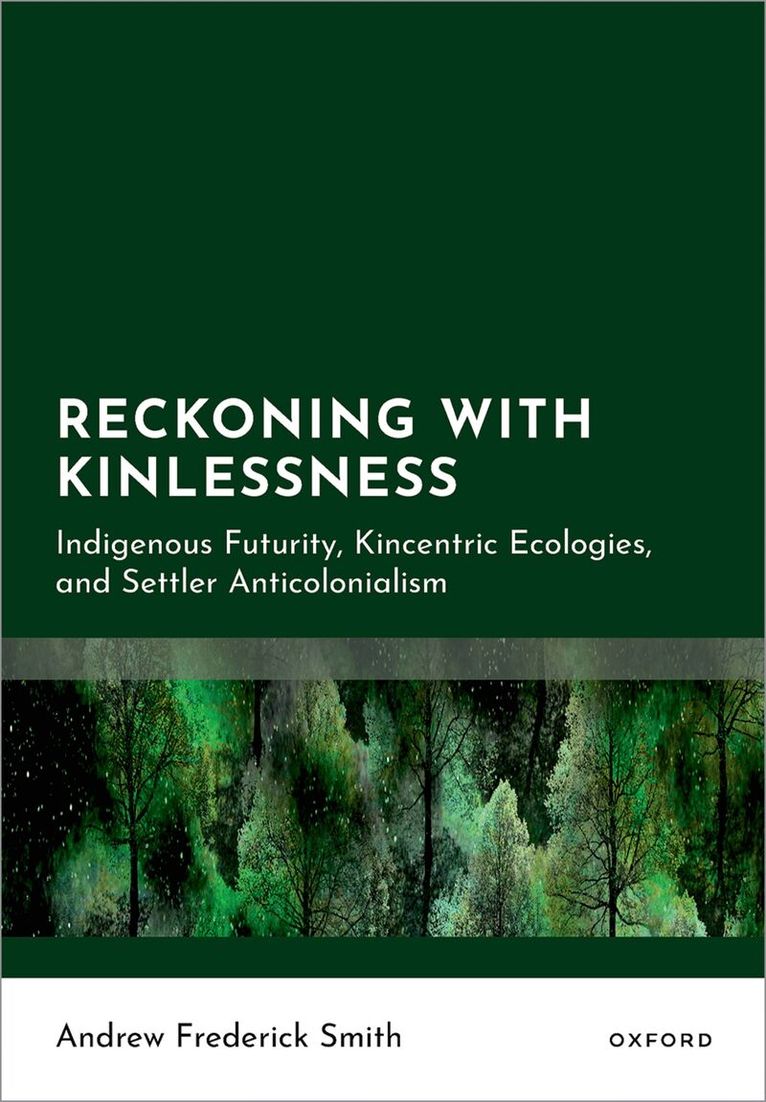
Operating at the intersection of Indigenous philosophy, environmental philosophy, and value theory, Andrew Frederick Smith defends reconceptualizing settler positionality as it appears through an Indigenous ecological lens. Smith argues that kinlessness better illuminates the profound forms of want, privation, and disconnection embodied in settler subjectivities and reproduced in everyday patterns of our lives. Kinlessness does not mean being without family or lacking care for others. It designates structural and lived conditions in which relationships^—^including with designated relatives, communities, lands and waters, and other-than-human beings^—^default to being transactional, possessive, hierarchical, and extractive. These orientations are so deeply normalized within settler colonial culture, particularly in the United States, that they typically remain ambient and unseen, registered more as diffuse and misdirected anxieties than as a recognizable locus of ethical and material concern.By contrast, many Indigenous philosophical traditions center kincentric ecologies^—^extended kinship arrangements in which humans, other-than-human beings, and spiritual and abiotic entities relate as moral equals within a sphere of responsibility based on mutual care and a wealth of multigenerational knowledge. These arrangements are not only ethically generative but evolutionarily stable. They have long sustained both human and planetary flourishing, supporting societal wellbeing, resilience, and adaptability in the face of both expected and unexpected change. And they are under unending assault within settler states.Kinlessness kills, reliably and by design. At both an individual level and with respect to matters of global concern, it is a defining feature driving the ongoing devastation of Indigenous lives and lifeways for power and profit. Resisting kinlessness, vigorously and relentlessly, must be regarded as a paramount responsibility for members of settler colonial culture. This requires concerted anticolonial work directed toward facilitating Indigenous futurity^—^creatively and cooperatively envisioning and striving to engender conditions free from settler colonial structures and norms. Kinlessness is not an immutable identity. It is instead a function both of confrontable structural impediments and transformable patterns of personal decision making that occur within an expansive network of malleable relationships. For members of settler colonial culture, kinlessness may exemplify our history and saturate our present. But it need not^—^and must not^—^define our legacy.
Inbunden, Engelska, 2022
1 249 kr
Skickas inom 5-8 vardagar
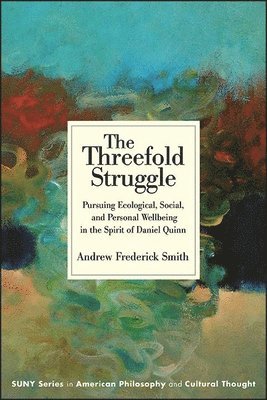
Drawing on the thought of novelist and cultural critic Daniel Quinn, argues it is not too late to free ourselves from a culture in which we are compelled to destroy the world, one another, and even ourselves.We members of settler colonial culture-the latest form of what novelist and cultural critic Daniel Quinn calls Taker culture-are constrained by myriad institutions that leave us with little choice but to engage in practices that are profoundly damaging to the planet, to others, and to ourselves. Our path to living otherwise, Andrew Frederick Smith argues, lies in the threefold struggle, which is inspired by Quinn's focus on the interweaving roots of ecological, social, and personal wellbeing. These three forms of wellbeing are co-implicated. We cannot enjoy one without equally enjoying the others; they are a package deal. As such, what works for people individually and collectively works for the planet, and vice versa. Reclaiming our lives and revitalizing our human and more-than-human communities are salient acts of resistance against Taker culture. They offer means of escape from our cultural captivity and an opportunity for full-spectrum wellbeing.
Häftad, Engelska, 2023
474 kr
Skickas inom 5-8 vardagar
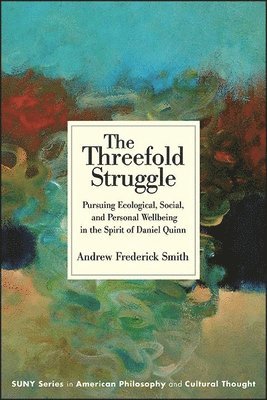
Drawing on the thought of novelist and cultural critic Daniel Quinn, argues it is not too late to free ourselves from a culture in which we are compelled to destroy the world, one another, and even ourselves.We members of settler colonial culture-the latest form of what novelist and cultural critic Daniel Quinn calls Taker culture-are constrained by myriad institutions that leave us with little choice but to engage in practices that are profoundly damaging to the planet, to others, and to ourselves. Our path to living otherwise, Andrew Frederick Smith argues, lies in the threefold struggle, which is inspired by Quinn's focus on the interweaving roots of ecological, social, and personal wellbeing. These three forms of wellbeing are co-implicated. We cannot enjoy one without equally enjoying the others; they are a package deal. As such, what works for people individually and collectively works for the planet, and vice versa. Reclaiming our lives and revitalizing our human and more-than-human communities are salient acts of resistance against Taker culture. They offer means of escape from our cultural captivity and an opportunity for full-spectrum wellbeing.