Andrew Melnyk – författare
Visar alla böcker från författaren . Handla med fri frakt och snabb leverans.
8 produkter
8 produkter
Inbunden, Engelska, 2025
1 128 kr
Skickas inom 5-8 vardagar
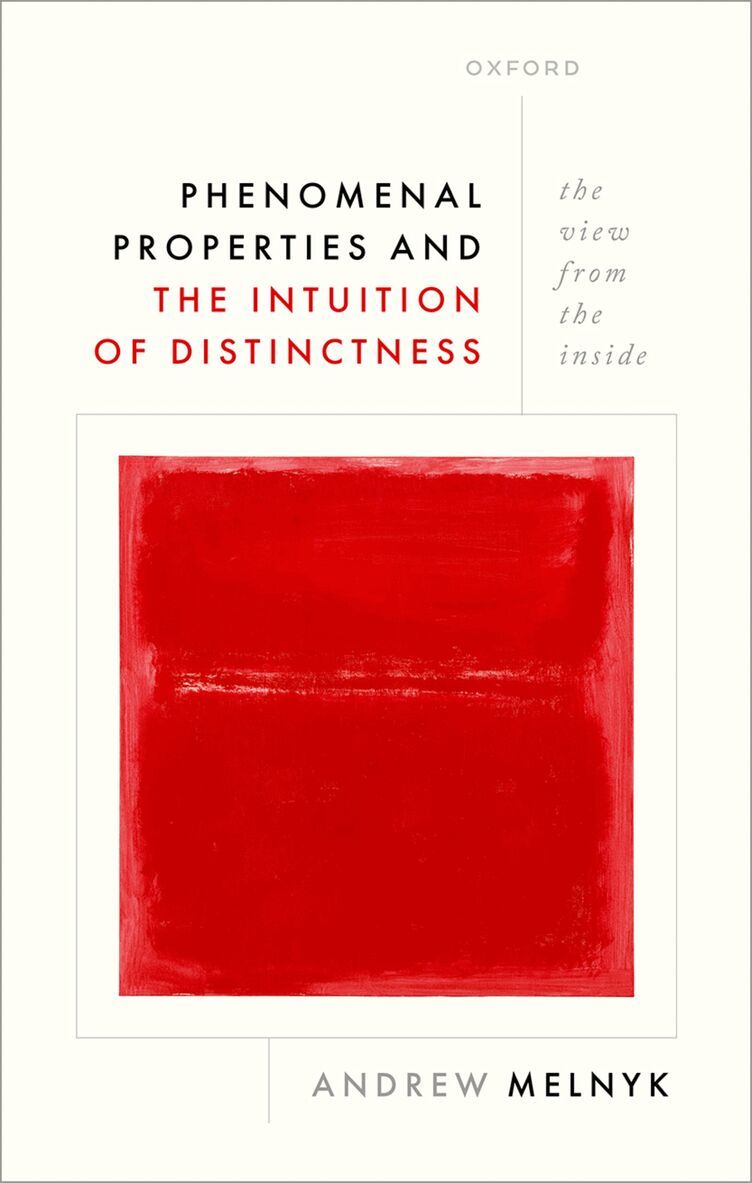
This book investigates in unprecedented detail what David Papineau has called "the intuition of distinctness"--its seeming to us, when we attend introspectively to a phenomenal property of a current sensation, that this property couldn't literally be an electro-chemical property of neural activity in a certain tiny region of our brain. This book argues that the intuition of distinctness is no mere curiosity, since it plausibly underlies much of the widespread feeling both inside and outside philosophy that phenomenal properties (or qualia) constitute an insuperable obstacle to physicalism (or materialism) about the mind. It goes on to argue against the natural suggestion that this feeling is warranted because the intuition of distinctness somehow gives us genuine reason to reject physicalism about phenomenal properties and to adopt property dualism instead; it argues that there is no plausible way in which it could. The volume develops a positive view of what phenomenal properties are, defending an unorthodox version of representationalism, and sketching accounts of what makes our introspective knowledge of phenomenal properties special, how introspection could tell us that an introspected property is physical, and what the subjectivity of phenomenal properties could be. The volume critically surveys previous attempts to explain consistently with physicalism how the intuition of distinctness arises in us. Finally, it elaborates an explanation of the intuition of distinctness.
E-bok
PDF, Engelska, 2024961 kr
Läs direkt efter köp
This book investigates in unprecedented detail what David Papineau has called "e;the intuition of distinctness"e;--its seeming to us, when we attend introspectively to a phenomenal property of a current sensation, that this property couldn't literally be an electro-chemical property of neural activity in a certain tiny region of our brain. This book argues that the intuition of distinctness is no mere curiosity, since it plausibly underlies much of the widespread feeling both inside and outside philosophy that phenomenal properties (or qualia) constitute an insuperable obstacle to physicalism (or materialism) about the mind. It goes on to argue against the natural suggestion that this feeling is warranted because the intuition of distinctness somehow gives us genuine reason to reject physicalism about phenomenal properties and to adopt property dualism instead; it argues that there is no plausible way in which it could. The volume develops a positive view of what phenomenal properties are, defending an unorthodox version of representationalism, and sketching accounts of what makes our introspective knowledge of phenomenal properties special, how introspection could tell us that an introspected property is physical, and what the subjectivity of phenomenal properties could be. The volume critically surveys previous attempts to explain consistently with physicalism how the intuition of distinctness arises in us. Finally, it elaborates an explanation of the intuition of distinctness.
961 kr
Läs direkt efter köp
This book investigates in unprecedented detail what David Papineau has called "e;the intuition of distinctness"e;--its seeming to us, when we attend introspectively to a phenomenal property of a current sensation, that this property couldn't literally be an electro-chemical property of neural activity in a certain tiny region of our brain. This book argues that the intuition of distinctness is no mere curiosity, since it plausibly underlies much of the widespread feeling both inside and outside philosophy that phenomenal properties (or qualia) constitute an insuperable obstacle to physicalism (or materialism) about the mind. It goes on to argue against the natural suggestion that this feeling is warranted because the intuition of distinctness somehow gives us genuine reason to reject physicalism about phenomenal properties and to adopt property dualism instead; it argues that there is no plausible way in which it could. The volume develops a positive view of what phenomenal properties are, defending an unorthodox version of representationalism, and sketching accounts of what makes our introspective knowledge of phenomenal properties special, how introspection could tell us that an introspected property is physical, and what the subjectivity of phenomenal properties could be. The volume critically surveys previous attempts to explain consistently with physicalism how the intuition of distinctness arises in us. Finally, it elaborates an explanation of the intuition of distinctness.
Häftad, Engelska, 2007
343 kr
Skickas inom 7-10 vardagar
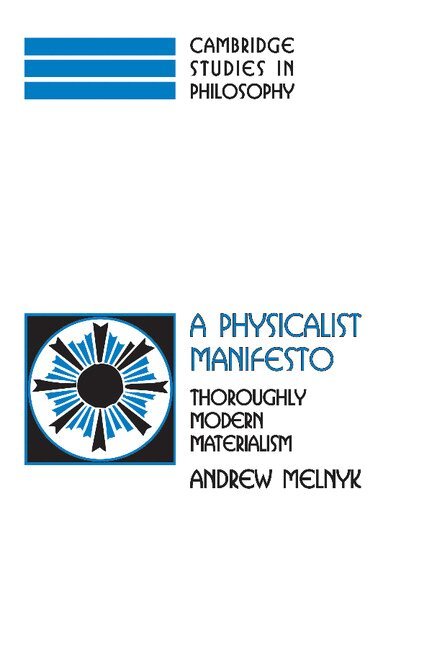
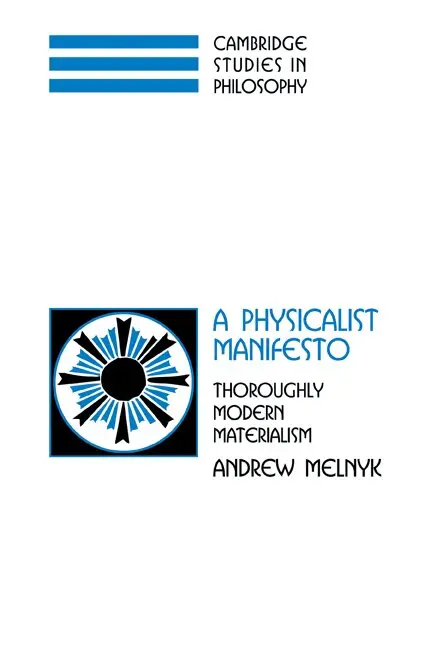
A Physicalist Manifesto is a full treatment of the comprehensive physicalist view that, in some important sense, everything is physical. Andrew Melnyk argues that the view is best formulated by appeal to a carefully worked-out notion of realization, rather than supervenience; that, so formulated, physicalism must be importantly reductionist; that it need not repudiate causal and explanatory claims framed in non-physical language; and that it has the a posteriori epistemic status of a broad-scope scientific hypothesis. Two concluding chapters argue in detail that contemporary science provides no significant empirical evidence against physicalism and some considerable evidence for it. Written in a brisk, candid and exceptionally clear style, this 2003 book should appeal to professionals and students in philosophy of mind, metaphysics and philosophy of science.
Inbunden, Engelska, 2003
1 365 kr
Skickas inom 7-10 vardagar
A Physicalist Manifesto is a full treatment of the comprehensive physicalist view that, in some important sense, everything is physical. Andrew Melnyk argues that the view is best formulated by appeal to a carefully worked-out notion of realization, rather than supervenience; that, so formulated, physicalism must be importantly reductionist; that it need not repudiate causal and explanatory claims framed in non-physical language; and that it has the a posteriori epistemic status of a broad-scope scientific hypothesis. Two concluding chapters argue in detail that contemporary science provides no significant empirical evidence against physicalism and some considerable evidence for it. Written in a brisk, candid and exceptionally clear style, this 2003 book should appeal to professionals and students in philosophy of mind, metaphysics and philosophy of science.
Häftad, Engelska, 2008
250 kr
Skickas inom 5-8 vardagar
Inbunden, Engelska, 2008
368 kr
Skickas inom 5-8 vardagar
E-bok
Engelska, 2008137 kr
Läs direkt efter köp
My Grandfathers Mill Journeyto Freedom is a true story parthistory, part biography. It focuseson two families and their two infantchildren, Andrew and Chrystyna,born in Western Ukraine at theheight of the Second World War.Their parents fought for Ukrainianindependence throughout the yearsof Polish occupation, the invasion ofStalins Bolshevik forces and duringthe years of Hitlers Nazi terror.Members of both their families weremurdered by one or another of theoccupying armies. Family accounts ofconcentration camps, refugee camps; ofwar crimes, brutality and uncertainty,of hope, courage and unexpectedgenerosity are interwoven with thehistorical realities of the time.They were among the lucky oneswho found freedom in North America.Half a century after they left theirhomeland, Andrew and Chrystynareturned. They discovered the villagesof their birth, found family membersthey didnt know existed, experiencedtheir culture fi rst-hand and fi nallybegan to make sense of their placein history.This book is written for futuregenerations, for all those who havelived in two very different worlds, forvictims of wars, present day refugees,immigrants and especially for thosewho were born and have alwayslived in a free country and neverexperienced the horrors of war.