Andrew Nagorski – författare
Visar alla böcker från författaren Andrew Nagorski. Handla med fri frakt och snabb leverans.
19 produkter
19 produkter
E-bok
Engelska, 201329 kr
Läs direkt efter köp
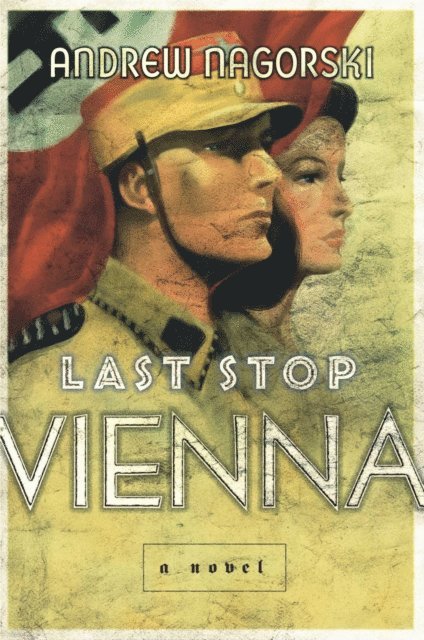
Germany in the 1920s, in the early days of Hitler and the Nazi party, was a country plunging into darkness and violence. Andrew Nagorski has written the story of a doomed generation, of evil, hopelessness, sexual perversion and murder that set the stage for the ultimate destruction of a society. But in a stunning denouement, a young Nazi brownshirt, acting out of passion and revenge, changes the course of history.Karl Naumann, a German teenager who has lost his father and brother in World War I, has tried to find a place in a defeated, demoralized and anarchic Berlin. Impressed by the returning veterans who refuse to lay down their arms and fight running battles with communist revolutionaries, and alone and adrift on the streets, he is recruited to their cause and camaraderie. He is sent to Munich, where he works his way up the ranks to become one of Adolf Hitler''s bodyguards, a storm trooper. The new movement is increasingly split between Hitler and rival leaders, including Karl''s mentor, Otto Strasser, a real-life Nazi activist. As the schism within the party widens, the battles intensify and Hitler asserts his dominance, Karl must determine where his loyalty lies. He has fallen in love with a nurse, Sabine, whom he marries, but he is infatuated with Hitler''s young niece, Geli Raubal, who is caught up in a deeply disturbing sexual relationship with her uncle. Obsessed by the seductive and elusive Geli, Karl is startled by what he sees through her of the dark core of Hitler''s personality. When Geli finally summons up the courage to leave her uncle, it is too late. Soon after, she is found dead in their apartment, a gun in her hand, allegedly a suicide. Karl believes that Hitler has murdered her. He follows him to Geli''s grave in Vienna where their final confrontation takes place. Last Stop Vienna presents a chilling and suspenseful look at what might have been.
Häftad, Engelska, 2008
319 kr
Skickas inom 3-6 vardagar
E-bok
Engelska, 2007208 kr
Läs direkt efter köp
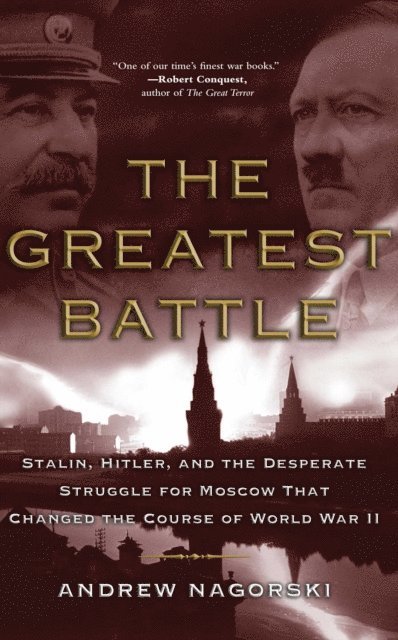
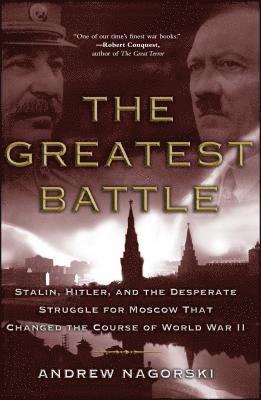
The battle for Moscow was the biggest battle of World War II -- the biggest battle of all time. And yet it is far less known than Stalingrad, which involved about half the number of troops. From the time Hitler launched his assault on Moscow on September 30, 1941, to April 20, 1942, seven million troops were engaged in this titanic struggle. The combined losses of both sides -- those killed, taken prisoner or severely wounded -- were 2.5 million, of which nearly 2 million were on the Soviet side. But the Soviet capital narrowly survived, and for the first time the German Blitzkrieg ended in failure. This shattered Hitler''s dream of a swift victory over the Soviet Union and radically changed the course of the war. The full story of this epic battle has never been told because it undermines the sanitized Soviet accounts of the war, which portray Stalin as a military genius and his people as heroically united against the German invader. Stalin''s blunders, incompetence and brutality made it possible for German troops to approach the outskirts of Moscow. This triggered panic in the city -- with looting, strikes and outbreaks of previously unimaginable violence. About half the city''s population fled. But Hitler''s blunders would soon loom even larger: sending his troops to attack the Soviet Union without winter uniforms, insisting on an immediate German reign of terror and refusing to heed his generals'' pleas that he allow them to attack Moscow as quickly as possible. In the end, Hitler''s mistakes trumped Stalin''s mistakes. Drawing on recently declassified documents from Soviet archives, including files of the dreaded NKVD; on accounts of survivors and of children of top Soviet military and government officials; and on reports of Western diplomats and correspondents, The Greatest Battle finally illuminates the full story of a clash between two systems based on sheer terror and relentless slaughter. Even as Moscow''s fate hung in the balance, the United States and Britain were discovering how wily a partner Stalin would turn out to be in the fight against Hitler -- and how eager he was to push his demands for a postwar empire in Eastern Europe. In addition to chronicling the bloodshed, Andrew Nagorski takes the reader behind the scenes of the early negotiations between Hitler and Stalin, and then between Stalin, Roosevelt and Churchill. This is a remarkable addition to the history of World War II.
Häftad, Engelska, 2008
299 kr
Skickas inom 3-6 vardagar
Häftad, Engelska, 2013
306 kr
Skickas inom 3-6 vardagar
E-bok
Engelska, 2012208 kr
Läs direkt efter köp
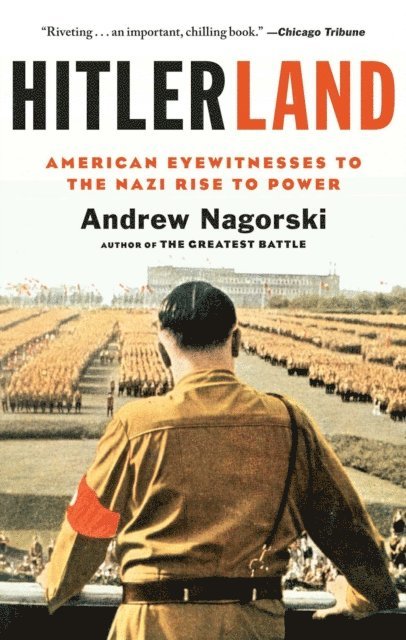
World War II historian Andrew Nagorski recounts Adolf Hitler’s rise to and consolidation of power, drawing on countless firsthand reports, letters, and diaries that narrate the creation of the Third Reich.“Hitlerland is a bit of a guilty pleasure. Reading about the Nazis is not supposed to be fun, but Nagorski manages to make it so. Readers new to this story will find it fascinating” (The Washington Post). Hitler’s rise to power, Germany’s march to the abyss, as seen through the eyes of Americans—diplomats, military officers, journalists, expats, visiting authors, Olympic athletes—who watched horrified and up close. “Engaging if chilling…a broader look at Americans who had a ringside seat to Hitler’s rise” (USA TODAY), Hitlerland offers a gripping narrative full of surprising twists—and a startlingly fresh perspective on this heavily dissected era.
Häftad, Engelska, 2030
113 kr
Kommande
More than seven decades after the end of the WWII, the era of the Nazi Hunters is drawing to a close as they and the hunted die. This is their story.
E-bok
Engelska, 2016102 kr
Läs direkt efter köp
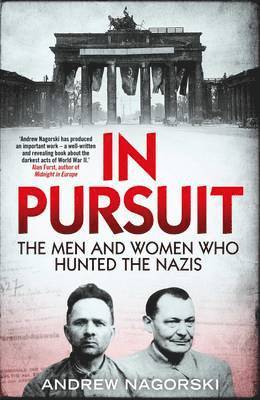
More than seven decades after the end of the Second World War, the era of the Nazi Hunters is drawing to a close as they and the hunted die off. Their saga can now be told almost in its entirety.After the Nuremberg trials and the start of the Cold War, most of the victors in World War II lost interest in prosecuting Nazi war criminals. Many of the lower-ranking perpetrators quickly blended in with the millions who were seeking to rebuild their lives in a new Europe, while those who felt most at risk fled the continent. In Pursuit focuses on the small band of men and women who refused to allow their crimes to be forgotten—and who were determined to track them down to the furthest corners of the earth.The story of the Nazi hunters is coming to a natural end. It was unprecedented in so many ways, especially the degree to which the initial impulse of revenge was transformed into a struggle for justice. The Nazi hunters have transformed our fundamental notions of right and wrong. Andrew Nagorski’s book is a richly reconstructed odyssey and an unforgettable tale of gritty determination, at times reckless behavior, and relentless pursuit.
Häftad, Engelska, 2017
270 kr
Skickas inom 3-6 vardagar
E-bok
Engelska, 2016169 kr
Läs direkt efter köp
More than seven decades after the end of the Second World War, the era of the Nazi Hunters is drawing to a close. Their saga is finally told in this “deep and sweeping account of a relentless search for justice that began in 1945 and is only now coming to an end” (The Washington Post).After the Nuremberg trials and the start of the Cold War, most of the victors in World War II lost interest in prosecuting Nazi war criminals. “Absorbing” (Kirkus Reviews) and “fascinating” (Library Journal), The Nazi Hunters focuses on the men and women who refused to allow their crimes to be forgotten. The Nazi Hunters reveals the experiences of the young American prosecutors in the Nuremberg and Dachau trials, Benjamin Ferencz and William Denson; the Polish investigating judge Jan Sehn, who handled the case of Auschwitz commandant Rudolf Höss; the Mossad agent Rafi Eitan, who was in charge of the Israeli team that nabbed Eichmann; and Eli Rosenbaum, who sought to expel war criminals who were living in the United States. But some of the Nazi hunters’ most controversial actions involved the more ambiguous cases, such as former UN Secretary-General Kurt Waldheim’s attempt to cover up his wartime history. Or the fate of concentration camp guards who have lived into their nineties, long past the time when reliable eyewitnesses could be found to pinpoint their exact roles. The story of the Nazi hunters is coming to a natural end. It was unprecedented in so many ways, especially the degree to which the initial impulse of revenge was transformed into a struggle for justice. The Nazi hunters have transformed our fundamental notions of right and wrong, and Andrew Nagorski’s “vivid, reader-friendly account of how justice was done…is comprehensively informative and a highly involving read” (The Wall Street Journal).
E-bok
Engelska, 2019190 kr
Läs direkt efter köp
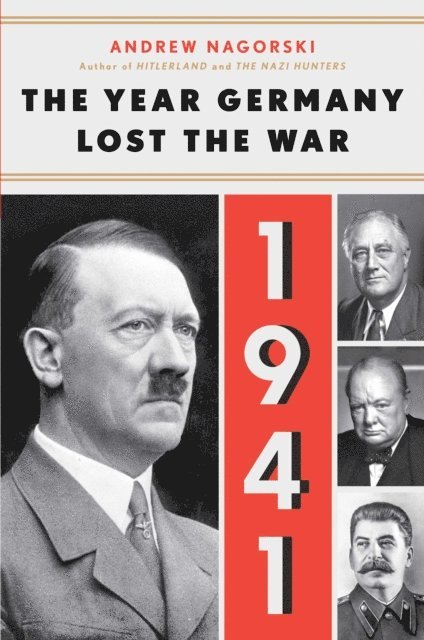
Bestselling historian Andrew Nagorski “brings keen psychological insights into the world leaders involved” (Booklist) during 1941, the critical year in World War II when Hitler’s miscalculations and policy of terror propelled Churchill, FDR, and Stalin into a powerful new alliance that defeated Nazi Germany. In early 1941, Hitler’s armies ruled most of Europe. Churchill’s Britain was an isolated holdout against the Nazi tide, but German bombers were attacking its cities and German U-boats were attacking its ships. Stalin was observing the terms of the Nazi-Soviet Pact, and Roosevelt was vowing to keep the United States out of the war. Hitler was confident that his aim of total victory was within reach. But by the end of 1941, all that changed. Hitler had repeatedly gambled on escalation and lost: by invading the Soviet Union and committing a series of disastrous military blunders; by making mass murder and terror his weapons of choice, and by rushing to declare war on the United States after Japan’s attack on Pearl Harbor. Britain emerged with two powerful new allies—Russia and the United States. By then, Germany was doomed to defeat. Nagorski illuminates the actions of the major characters of this pivotal year as never before. 1941: The Year Germany Lost the War is a stunning and “entertaining” (The Wall Street Journal) examination of unbridled megalomania versus determined leadership. It also reveals how 1941 set the Holocaust in motion, and presaged the postwar division of Europe, triggering the Cold War. 1941 was “the year that shaped not only the conflict of the hour but the course of our lives—even now” (New York Times bestselling author Jon Meacham).
Häftad, Engelska, 2020
261 kr
Skickas inom 3-6 vardagar
Ljudbok
Engelska, 2019371 kr
Lyssna direkt efter köp
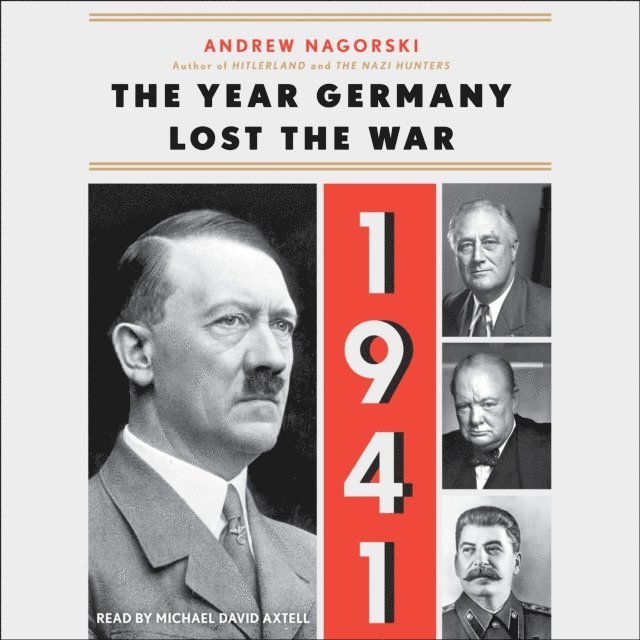
Bestselling historian Andrew Nagorski “brings keen psychological insights into the world leaders involved” (Booklist) during 1941, the critical year in World War II when Hitler’s miscalculations and policy of terror propelled Churchill, FDR, and Stalin into a powerful new alliance that defeated Nazi Germany. In early 1941, Hitler’s armies ruled most of Europe. Churchill’s Britain was an isolated holdout against the Nazi tide, but German bombers were attacking its cities and German U-boats were attacking its ships. Stalin was observing the terms of the Nazi-Soviet Pact, and Roosevelt was vowing to keep the United States out of the war. Hitler was confident that his aim of total victory was within reach. But by the end of 1941, all that changed. Hitler had repeatedly gambled on escalation and lost: by invading the Soviet Union and committing a series of disastrous military blunders; by making mass murder and terror his weapons of choice, and by rushing to declare war on the United States after Japan’s attack on Pearl Harbor. Britain emerged with two powerful new allies—Russia and the United States. By then, Germany was doomed to defeat. Nagorski illuminates the actions of the major characters of this pivotal year as never before. 1941: The Year Germany Lost the War is a stunning and “entertaining” (The Wall Street Journal) examination of unbridled megalomania versus determined leadership. It also reveals how 1941 set the Holocaust in motion, and presaged the postwar division of Europe, triggering the Cold War. 1941 was “the year that shaped not only the conflict of the hour but the course of our lives—even now” (New York Times bestselling author Jon Meacham).
Inbunden, Engelska, 2022
226 kr
Skickas
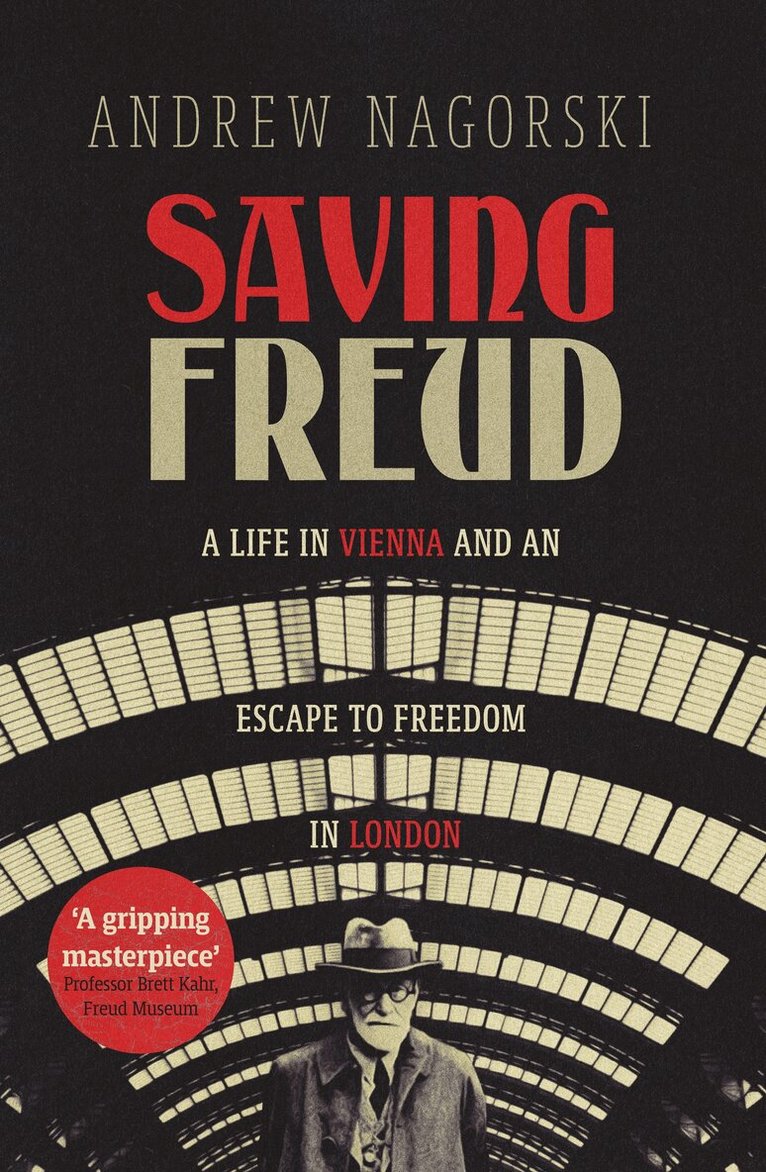
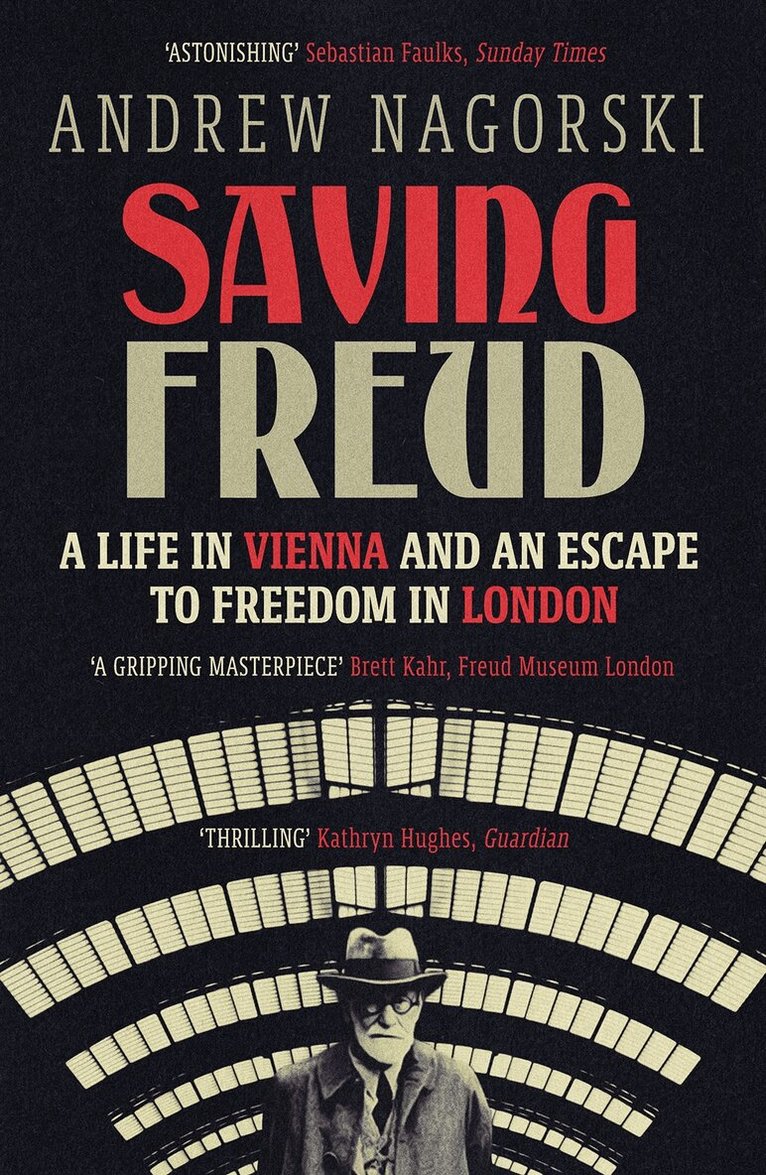
'Astonishing... In the American journalist Andrew Nagorski this tale has found its ideal narrator'SEBASTIAN FAULKS, Sunday Times'[A] thrilling book, as edge-of-your-seat gripping as any heist movie'Kathryn Hughes, Guardian Book of the Day'A gripping masterpiece'BRETT KAHR, Freud Museum LondonMarch 1938: German soldiers are massing on the Austrian border, on the cusp of fulfilling Hitler's dream of absorbing the country into the Third Reich. Many Jews make frantic plans to flee to safety. But one of the most famous men in the world, unable to contemplate leaving his beloved Vienna, is not among them. His name is Sigmund Freud.Saving Freud is the story of a great man's life, and of the extraordinary people who managed to prolong it, by convincing him to escape to London: the Welsh physician who brought psychoanalysis to Britain; Napoleon's great-grandniece; an American ambassador; Freud's devoted daughter, Anna; and the doctor who risked his own life by staying at Freud's side.In examining the histories of both Freud and his closest circle, Andrew Nagorski brilliantly evokes the story of Europe in the first half of the Twentieth Century. This is a tale of a great city, a collapsing empire, a rising terror -and of a man who would change the way we think.
Häftad, Engelska, 2023
127 kr
Skickas
'Astonishing... In the American journalist Andrew Nagorski this tale has found its ideal narrator'SEBASTIAN FAULKS, Sunday Times'[A] thrilling book, as edge-of-your-seat gripping as any heist movie'Kathryn Hughes, Guardian Book of the Day'A gripping masterpiece'BRETT KAHR, Freud Museum LondonMarch 1938: German soldiers are massing on the Austrian border, on the cusp of fulfilling Hitler's dream of absorbing the country into the Third Reich. Many Jews make frantic plans to flee to safety. But one of the most famous men in the world, unable to contemplate leaving his beloved Vienna, is not among them. His name is Sigmund Freud.Saving Freud is the story of a great man's life, and of the extraordinary people who managed to prolong it, by convincing him to escape to London: the Welsh physician who brought psychoanalysis to Britain; Napoleon's great-grandniece; an American ambassador; Freud's devoted daughter, Anna; and the doctor who risked his own life by staying at Freud's side.In examining the histories of both Freud and his closest circle, Andrew Nagorski brilliantly evokes the story of Europe in the first half of the Twentieth Century. This is a tale of a great city, a collapsing empire, a rising terror - and of a man who would change the way we think.
Ljudbok
Engelska, 2022382 kr
Lyssna direkt efter köp
A dramatic true story about Sigmund Freud’s last-minute escape to London following the German annexation of Austria and the group of friends who made it possible.In March 1938, German soldiers crossed the border into Austria and Hitler absorbed the country into the Third Reich. Anticipating these events, many Jews had fled Austria, but the most famous Austrian Jew remained in Vienna, where he had lived since early childhood. Sigmund Freud was eighty-one years old, ill with cancer, and still unconvinced that his life was in danger. But several prominent people close to Freud thought otherwise, and they began a coordinated effort to persuade Freud to leave his beloved Vienna and emigrate to England. The group included a Welsh physician, Napoleon’s great-grandniece, an American ambassador, Freud’s devoted youngest daughter Anna and his personal doctor. Saving Freud is the story of how this remarkable collection of people finally succeeded in coaxing Freud, a man who seemingly knew the human mind better than anyone else, to emerge from his deep state of denial about the looming catastrophe, allowing them to extricate him and his family from Austria so that they could settle in London. There Freud would live out the remaining sixteen months of his life in freedom. It is “an insight-filled group portrait of the founder of psychoanalysis and his followers…Compelling reading” (The Wall Street Journal).
Häftad, Engelska, 2023
215 kr
Skickas
E-bok
Engelska, 2022182 kr
Läs direkt efter köp
A dramatic true story about Sigmund Freud’s last-minute escape to London following the German annexation of Austria and the group of friends who made it possible.In March 1938, German soldiers crossed the border into Austria and Hitler absorbed the country into the Third Reich. Anticipating these events, many Jews had fled Austria, but the most famous Austrian Jew remained in Vienna, where he had lived since early childhood. Sigmund Freud was eighty-one years old, ill with cancer, and still unconvinced that his life was in danger. But several prominent people close to Freud thought otherwise, and they began a coordinated effort to persuade Freud to leave his beloved Vienna and emigrate to England. The group included a Welsh physician, Napoleon’s great-grandniece, an American ambassador, Freud’s devoted youngest daughter Anna and his personal doctor. Saving Freud is the story of how this remarkable collection of people finally succeeded in coaxing Freud, a man who seemingly knew the human mind better than anyone else, to emerge from his deep state of denial about the looming catastrophe, allowing them to extricate him and his family from Austria so that they could settle in London. There Freud would live out the remaining sixteen months of his life in freedom. It is “an insight-filled group portrait of the founder of psychoanalysis and his followers…Compelling reading” (The Wall Street Journal).
E-bok
Spanska, 2017136 kr
Läs direkt efter köp
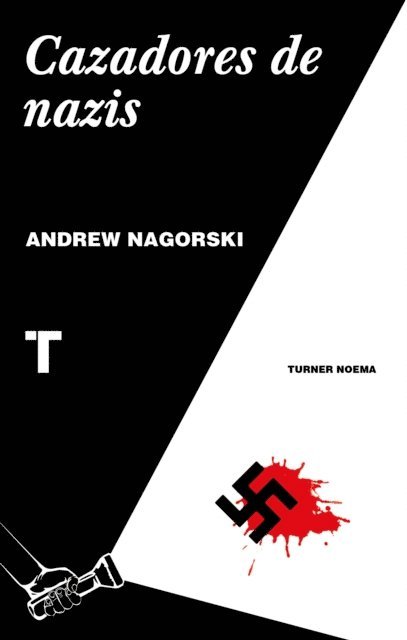
Han pasado más de setenta años desde el fin de la Segunda Guerra Mundial y la era de los cazadores de nazis está llegando a su fin de forma natural. Ahora es el momento de contar la historia completa de los hombres y mujeres que han dedicado su vida a seguirles el rastro a los asesinos del Tercer Reich. Un rastro que ha recorrido el mundo entero, con frecuentes paradas en Sudamérica, donde parte de los criminales más conspicuos encontraron refugio en la posguerra.La historia empieza con los primeros juicios de Núremberg, recorre los procesos al comandante de Auschwitz Rudolf Höss, a "la perra de Buchenwald" Ilse Koch o al científico Arthur Rudolph, pasando por casos más dignos de una novela como el de la muerte del aviador Herbert Cukurs a cargo de un escuadrón del Mosad o la larga y accidentada búsqueda de Joseph Mengele, "el Ángel de la Muerte" de Auschwitz.¿Justicia o venganza? La historia de los cazadores de nazis se ha debatido siempre entre estos dos polos. Y los perfiles de Simon Wiesenthal o del matrimonio Klarsfeld, junto a los de los jueces más destacados de estos grandes procesos, cuentan una historia a menudo intensamente personal, sin precedentes en los anales de la humanidad, y que cambiaría para siempre nuestra idea del bien y del mal.