Andrew Nikiforuk – författare
Visar alla böcker från författaren Andrew Nikiforuk. Handla med fri frakt och snabb leverans.
10 produkter
10 produkter
E-bok
Engelska, 2008159 kr
Läs direkt efter köp
Our health and habitat are being threatened by biological invaders moving at unprecedented speed. Avian flu and its potential to cause a human pandemic is only one example of a worldwide menace unwittingly unleashed by the forces of globalization. The combination of unfettered free trade in living organisms, increased mobility, and urban crowding has created an increasingly volatile environment for the world’s 6.5 billion people. Nikiforuk argues that it shouldn’t take a pandemic to make us rethink the deadly pace of globalization and biological traffic. Authoritative and wide-ranging, Pandemonium is a clear-eyed guide to instability, unpredictability, and the hidden biological terrorist on our doorstep.
142 kr
Läs direkt efter köp
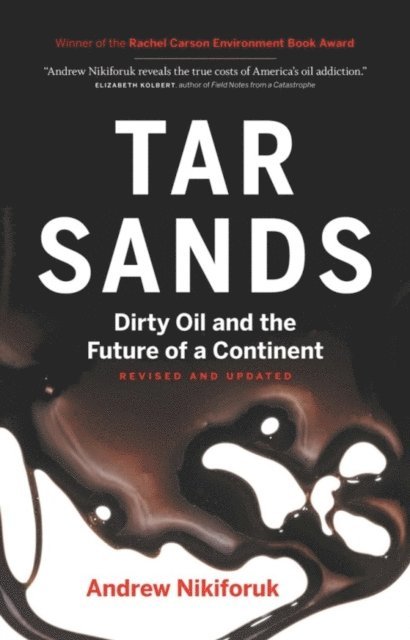
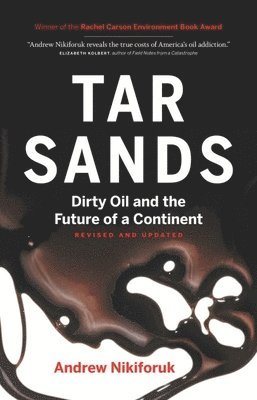
Tar Sands critically examines the frenzied development in the Canadian tar sands and the far-reaching implications for all of North America. Bitumen, the sticky stuff that ancients used to glue the Tower of Babel together, is the world’s most expensive hydrocarbon. This difficult-to-find resource has made Canada the number-one supplier of oil to the United States, and every major oil company now owns a lease in the Alberta tar sands. The region has become a global Deadwood, complete with rapturous engineers, cut-throat cocaine dealers, Muslim extremists, and a huge population of homeless individuals.In this award-winning book, a Canadian bestseller, journalist Andrew Nikiforuk exposes the disastrous environmental, social, and political costs of the tar sands, arguing forcefully for change. This updated edition includes new chapters on the most energy-inefficient tar sands projects (the steam plants), as well as new material on the controversial carbon cemeteries and nuclear proposals to accelerate bitumen production.
E-bok
Engelska, 2011150 kr
Läs direkt efter köp
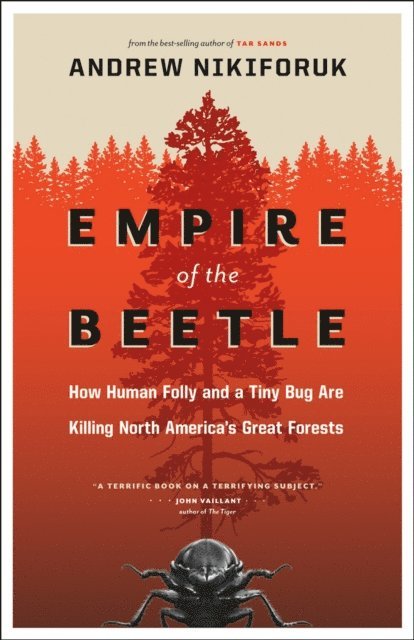
Beginning in the late 1980s, a series of improbable bark beetle outbreaks unsettled iconic forests and communities across western North America. An insect the size of a rice kernel eventually killed more than 30 billion pine and spruce trees from Alaska to New Mexico. Often appearing in masses larger than schools of killer whales, the beetles engineered one of the world''s greatest forest die-offs since the deforestation of Europe by peasants between the eleventh and thirteenth centuries. The beetle didn''t act alone. Misguided science, out-of-control logging, bad public policy, and a hundred years of fire suppression created a volatile geography that released the world''s oldest forest manager from all natural constraints. Like most human empires, the beetles exploded wildly and then crashed, leaving in their wake grieving landowners, humbled scientists, hungry animals, and altered watersheds. Although climate change triggered this complex event, human arrogance assuredly set the table. With little warning, an ancient insect pointedly exposed the frailty of seemingly stable manmade landscapes.Drawing on first-hand accounts from entomologists, botanists, foresters, and rural residents, award-winning journalist Andrew Nikiforuk, investigates this unprecedented beetle plague, its startling implications, and the lessons it holds.
Häftad, Engelska, 2014
145 kr
Skickas inom 5-8 vardagar
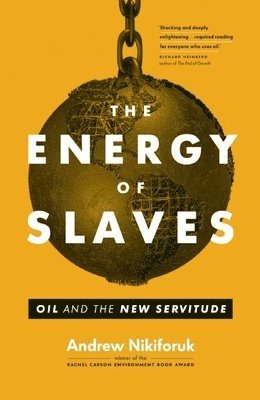
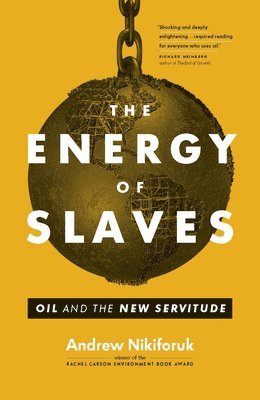
Ancient civilizations routinely relied on shackled human muscle. It took the energy of slaves to plant crops, clothe emperors, and build cities. In the early 19th century, the slave trade became one of the most profitable enterprises on the planet. Economists described the system as necessary for progress. Slaveholders viewed religious critics as hostilely as oil companies now regard environmentalists. Yet the abolition movement that triumphed in the 1850s had an invisible ally: coal and oil. As the world's most portable and versatile workers, fossil fuels replenished slavery's ranks with combustion engines and other labor-saving tools. Since then, oil has changed the course of human life on a global scale, transforming politics, economics, science, agriculture, gender, and even our concept of happiness. But as best-selling author Andrew Nikiforuk argues in this provocative book, we still behave like slaveholders in the way we use energy, and that urgently needs to change. Cheap oil transformed the United States from a resilient republic into a global petroleum evangelical, then a sickly addict. Modern economics owes its unrealistic models to fossil fuels.On the global stage, petroleum has fueled a demographic explosion, turning 1 billion people into 7 billion in just a hundred years.
E-bok
Engelska, 2015239 kr
Läs direkt efter köp
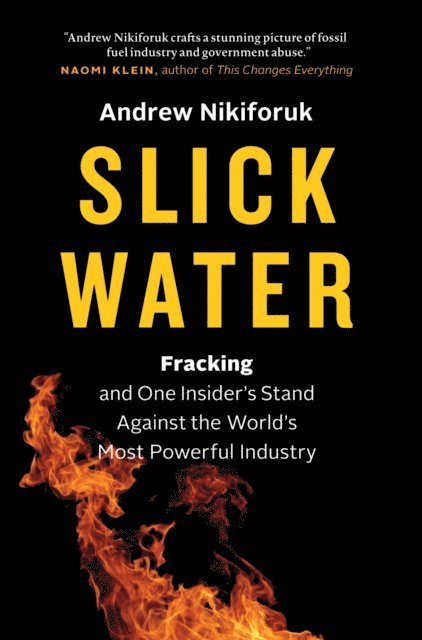
The fossil fuel industry and many environmental groups tout hydraulic fracturing — “fracking” — as a panacea, with slick promises of energy independence, greenhouse gas reductions, and benefits to local economies. Yet the controversial technology, which blasts massive volumes of fluids, sand, and chemicals into rock and coal formations, has sparked huge public protests. Slick Water tells the shocking, inspiring story of one woman’s stand to hold government and industry accountable for the damage fracking leaves in its wake.After energy giant Encana secretly fracked hundreds of gas wells around her home and her well water turned to a flammable broth, Jessica Ernst started asking questions. When she put forward evidence that Encana had violated laws by fracturing the community''s drinking water aquifer, Ernst was falsely tagged as a bomb-making terrorist and visited by the government’s anti-terrorism squad. Frightened but undaunted, she uncovered a startling history of liability, fraud, and intimidation, along with a willful denial of widespread groundwater contamination. Jessica Ernst’s remarkable story raises dramatic questions about the role of Big Oil in government, society’s obsession with rapidly depleting supplies of unconventional oil and gas, and the future of civil society.
Published in Partnership with the David Suzuki Institute.
E-bok
Engelska, 2014245 kr
Läs direkt efter köp
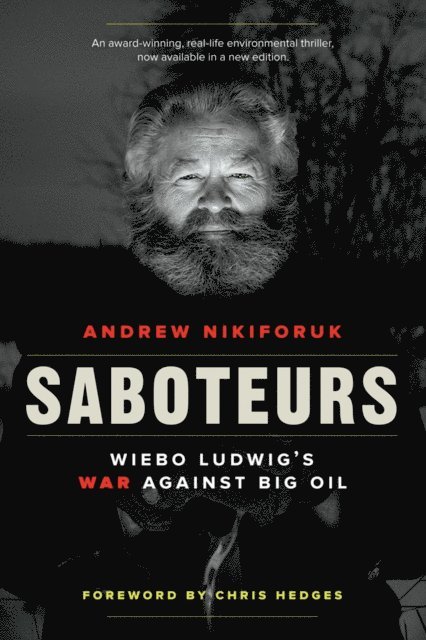
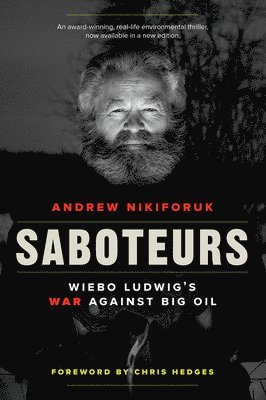
At Trickle Creek in northern Alberta, Wiebo Ludwig thought he’d buffered his tiny religious community from civilization, but in 1990 civilization came calling. A Calgary oil company proposed to drill directly in view of the farm’s communal dining room. Ludwig wrote letters, petitioned, forced public hearings, and discovered the provincial regulator cared little about landowners. After the oil company accidentally vented raw sour gas, Ludwig’s wife miscarried. Hostilities against the oil company began with nails on the roads, sabotaged well sites, and road blockades. They culminated in death threats, shootings, and bombings. The RCMP recruited a Ludwig acolyte as an informant, and in an attempt to establish the man’s credibility the police themselves blew up an equipment shack. Ludwig was charged with 19 counts of mischief, vandalism, and possession of explosives, and he was later convicted on five charges. This taut work of nonfiction, first published in 2002, won both a Governor General’s Award and the Arthur Ellis Award for True Crime Writing. With the escalation of oil and gas extraction over the past decade, the unsettling questions Saboteurs raises about individual rights, corporate power, police methods, and government accountability are more relevant than ever.
Häftad, Engelska, 2010
145 kr
Tillfälligt slut
Tar Sands critically examines the frenzied development in the Canadian tar sands and the far-reaching implications for all of North America. Bitumen, the sticky stuff that ancients used to glue the Tower of Babel together, is the world’s most expensive hydrocarbon. This difficult-to-find resource has made Canada the number-one supplier of oil to the United States, and every major oil company now owns a lease in the Alberta tar sands. The region has become a global Deadwood, complete with rapturous engineers, cut-throat cocaine dealers, Muslim extremists, and a huge population of homeless individuals. In this award-winning book, a Canadian bestseller, journalist Andrew Nikiforuk exposes the disastrous environmental, social, and political costs of the tar sands, arguing forcefully for change. This updated edition includes new chapters on the most energy-inefficient tar sands projects (the steam plants), as well as new material on the controversial carbon cemeteries and nuclear proposals to accelerate bitumen production.
Inbunden, Engelska, 2012
221 kr
Tillfälligt slut
By the winner of the Rachel Carson Environment Book Award Ancient civilizations relied on shackled human muscle. It took the energy of slaves to plant crops, clothe emperors, and build cities. Nineteenth-century slaveholders viewed critics as hostilely as oil companies and governments now regard environmentalists. Yet the abolition movement had an invisible ally: coal and oil. As the world's most versatile workers, fossil fuels replenished slavery's ranks with combustion engines and other labor-saving tools. Since then, cheap oil has transformed politics, economics, science, agriculture, and even our concept of happiness. Many North Americans today live as extravagantly as Caribbean plantation owners. We feel entitled to surplus energy and rationalize inequality, even barbarity, to get it. But endless growth is an illusion. What we need, Andrew Nikiforuk argues in this provocative new book, is a radical emancipation movement that ends our master-and-slave approach to energy. We must learn to use energy on a moral, just, and truly human scale.
Inbunden, Engelska, 2015
217 kr
Tillfälligt slut
The fossil fuel industry and many environmental groups tout hydraulic fracturing -- "fracking" -- as a panacea, with slick promises of energy independence, greenhouse gas reductions, and benefits to local economies. Yet the controversial technology, which blasts massive volumes of fluids, sand, and chemicals into rock and coal formations, has sparked huge public protests. Slick Water tells the shocking, inspiring story of one woman's stand to hold government and industry accountable for the damage fracking leaves in its wake. After energy giant Encana secretly fracked hundreds of gas wells around her home and her well water turned to a flammable broth, Jessica Ernst started asking questions. When she put forward evidence that Encana had violated laws by fracturing the community's drinking water aquifer, Ernst was falsely tagged as a bomb-making terrorist and visited by the government's anti-terrorism squad. Frightened but undaunted, she uncovered a startling history of liability, fraud, and intimidation, along with a willful denial of widespread groundwater contamination.Jessica Ernst's remarkable story raises dramatic questions about the role of Big Oil in government, society's obsession with rapidly depleting supplies of unconventional oil and gas, and the future of civil society.
Häftad, Engelska, 2014
154 kr
Tillfälligt slut
At Trickle Creek in northern Alberta, Wiebo Ludwig thought he'd buffered his tiny religious community from civilization, but in 1990 civilization came calling. A Calgary oil company proposed to drill directly in view of the farm's communal dining room. Ludwig wrote letters, petitioned, forced public hearings, and discovered the provincial regulator cared little about landowners. After the oil company accidentally vented raw sour gas, Ludwig's wife miscarried. Hostilities against the oil company began with nails on the roads, sabotaged well sites, and road blockades. They culminated in death threats, shootings, and bombings. The RCMP recruited a Ludwig acolyte as an informant, and in an attempt to establish the man's credibility the police themselves blew up an equipment shack. Ludwig was charged with 19 counts of mischief, vandalism, and possession of explosives, and he was later convicted on five charges. This taut work of nonfiction, first published in 2002, won both a Governor General's Award and the Arthur Ellis Award for True Crime Writing.With the escalation of oil and gas extraction over the past decade, the unsettling questions Saboteurs raises about individual rights, corporate power, police methods, and government accountability are more relevant than ever.