Andrew Parnaby – författare
Visar alla böcker från författaren Andrew Parnaby. Handla med fri frakt och snabb leverans.
7 produkter
7 produkter
Inbunden, Engelska, 2012
1 005 kr
Skickas inom 5-8 vardagar
Secret Service provides the first comprehensive history of political policing in Canada – from its beginnings in the mid-nineteenth century, through two world wars and the Cold War to the more recent 'war on terror.' This book reveals the extent, focus, and politics of government-sponsored surveillance and intelligence-gathering operations.Drawing on previously classified government records, the authors reveal that for over 150 years, Canada has run spy operations largely hidden from public or parliamentary scrutiny – complete with undercover agents, secret sources, agent provocateurs, coded communications, elaborate files, and all the usual apparatus of deception and betrayal so familiar to fans of spy fiction. As they argue, what makes Canada unique among Western countries is its insistent focus of its surveillance inwards, and usually against Canadian citizens.Secret Service highlights the many tensions that arise when undercover police and their covert methods are deployed too freely in a liberal democratic society. It will prove invaluable to readers attuned to contemporary debates about policing, national security, and civil rights in a post-9/11 world.
Häftad, Engelska, 2012
458 kr
Skickas inom 5-8 vardagar
Secret Service provides the first comprehensive history of political policing in Canada – from its beginnings in the mid-nineteenth century, through two world wars and the Cold War to the more recent 'war on terror.' This book reveals the extent, focus, and politics of government-sponsored surveillance and intelligence-gathering operations.Drawing on previously classified government records, the authors reveal that for over 150 years, Canada has run spy operations largely hidden from public or parliamentary scrutiny – complete with undercover agents, secret sources, agent provocateurs, coded communications, elaborate files, and all the usual apparatus of deception and betrayal so familiar to fans of spy fiction. As they argue, what makes Canada unique among Western countries is its insistent focus of its surveillance inwards, and usually against Canadian citizens.Secret Service highlights the many tensions that arise when undercover police and their covert methods are deployed too freely in a liberal democratic society. It will prove invaluable to readers attuned to contemporary debates about policing, national security, and civil rights in a post-9/11 world.
E-bok
PDF, Engelska, 2012596 kr
Läs direkt efter köp
Secret Service provides the first comprehensive history of political policing in Canada – from its beginnings in the mid-nineteenth century, through two world wars and the Cold War to the more recent 'war on terror.' This book reveals the extent, focus, and politics of government-sponsored surveillance and intelligence-gathering operations.Drawing on previously classified government records, the authors reveal that for over 150 years, Canada has run spy operations largely hidden from public or parliamentary scrutiny – complete with undercover agents, secret sources, agent provocateurs, coded communications, elaborate files, and all the usual apparatus of deception and betrayal so familiar to fans of spy fiction. As they argue, what makes Canada unique among Western countries is its insistent focus of its surveillance inwards, and usually against Canadian citizens.Secret Service highlights the many tensions that arise when undercover police and their covert methods are deployed too freely in a liberal democratic society. It will prove invaluable to readers attuned to contemporary debates about policing, national security, and civil rights in a post-9/11 world.
617 kr
Läs direkt efter köp
Secret Service provides the first comprehensive history of political policing in Canada – from its beginnings in the mid-nineteenth century, through two world wars and the Cold War to the more recent 'war on terror.' This book reveals the extent, focus, and politics of government-sponsored surveillance and intelligence-gathering operations.Drawing on previously classified government records, the authors reveal that for over 150 years, Canada has run spy operations largely hidden from public or parliamentary scrutiny – complete with undercover agents, secret sources, agent provocateurs, coded communications, elaborate files, and all the usual apparatus of deception and betrayal so familiar to fans of spy fiction. As they argue, what makes Canada unique among Western countries is its insistent focus of its surveillance inwards, and usually against Canadian citizens.Secret Service highlights the many tensions that arise when undercover police and their covert methods are deployed too freely in a liberal democratic society. It will prove invaluable to readers attuned to contemporary debates about policing, national security, and civil rights in a post-9/11 world.
E-bok
PDF, Engelska, 2008488 kr
Läs direkt efter köp
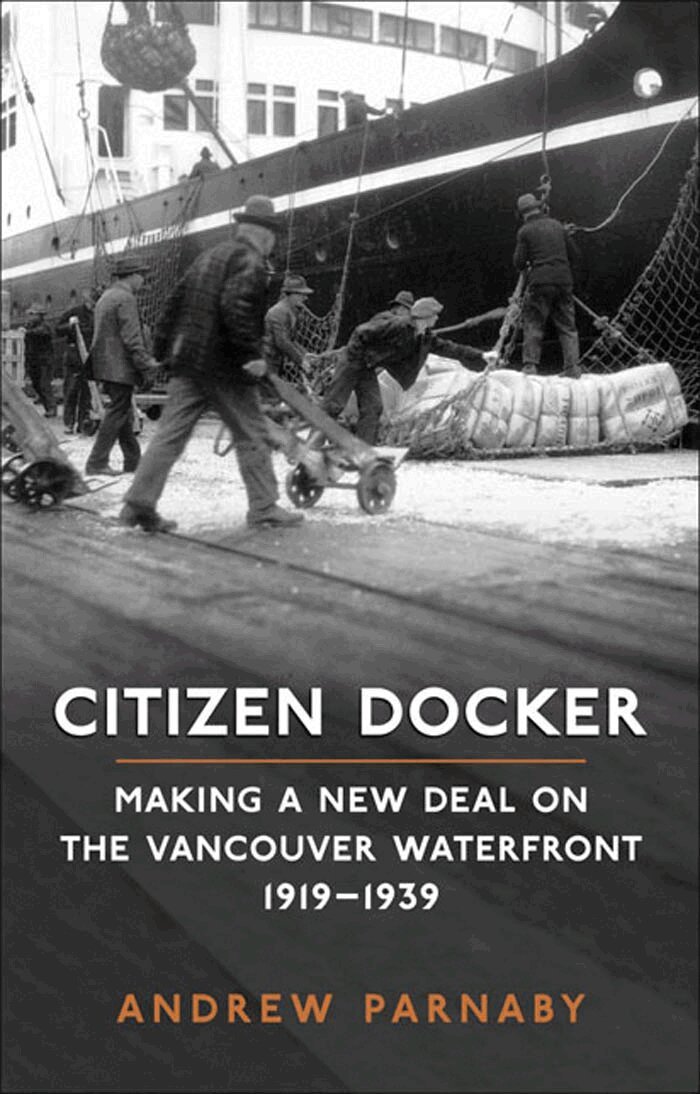
After the First World War, many Canadians were concerned with the possibility of national regeneration. Progressive-minded politicians, academics, church leaders, and social reformers turned increasingly to the state for solutions. Yet, as significant as the state was in articulating and instituting a new morality, outside actors such as employers were active in pursuing reform agendas as well, taking aim at the welfare of the family, citizen, and nation. Citizen Docker considers this trend, focusing on the Vancouver waterfront as a case in point.After the war, waterfront employers embarked on an ambitious program - welfare capitalism - to ease industrial relations, increase the efficiency of the port, and, ultimately, recondition longshoremen themselves. Andrew Parnaby considers these reforms as a microcosm of the process of accommodation between labour and capital that affected Canadian society as a whole in the 1920s and 1930s. By creating a new sense of entitlement among waterfront workers, one that could not be satisfied by employers during the Great Depression, welfare capitalism played an important role in the cultural transformation that took place after the Second World War.Encompassing labour and gender history, aboriginal studies, and the study of state formation, Citizen Docker examines the deep shift in the aspirations of working people, and the implications that shift had on Canadian society in the interwar years and beyond.
E-bok
Engelska, 2008505 kr
Läs direkt efter köp
After the First World War, many Canadians were concerned with the possibility of national regeneration. Progressive-minded politicians, academics, church leaders, and social reformers turned increasingly to the state for solutions. Yet, as significant as the state was in articulating and instituting a new morality, outside actors such as employers were active in pursuing reform agendas as well, taking aim at the welfare of the family, citizen, and nation. Citizen Docker considers this trend, focusing on the Vancouver waterfront as a case in point.After the war, waterfront employers embarked on an ambitious program - welfare capitalism - to ease industrial relations, increase the efficiency of the port, and, ultimately, recondition longshoremen themselves. Andrew Parnaby considers these reforms as a microcosm of the process of accommodation between labour and capital that affected Canadian society as a whole in the 1920s and 1930s. By creating a new sense of entitlement among waterfront workers, one that could not be satisfied by employers during the Great Depression, welfare capitalism played an important role in the cultural transformation that took place after the Second World War.Encompassing labour and gender history, aboriginal studies, and the study of state formation, Citizen Docker examines the deep shift in the aspirations of working people, and the implications that shift had on Canadian society in the interwar years and beyond.
Häftad, Engelska, 2024
543 kr
Skickas inom 5-8 vardagar
The emergence, dominance, and alarmingly rapid retreat of modernist industrial capitalism on Cape Breton Island during the "long twentieth century" offers a particularly captivating window on the lasting and varied effects of deindustrialization. Now, at the tail end of the industrial moment in North American history, the story of Cape Breton Island presents an opportunity to reflect on how industrialization and deindustrialization have shaped human experiences. Covering the period between 1860 and the early 2000s, this volume looks at trade unionism, state and cultural responses to deindustrialization, including the more recent pivot towards the tourist industry, and the lived experiences of Indigenous and Black people. Rather than focusing on the separate or distinct nature of Cape Breton, contributors place the island within broad transnational networks such as the financial world of the Anglo-Atlantic, the Celtic music revival, the Black diaspora, Canadian development programs, and more. In capturing the vital elements of a region on the rural resource frontier that was battered by deindustrialization, the histories included here show how the interplay of the state, cultures, and transnational connections shaped how people navigated these heavy pressures, both individually and collectively.