Andrew Poe – författare
Visar alla böcker från författaren Andrew Poe. Handla med fri frakt och snabb leverans.
9 produkter
9 produkter
Inbunden, Engelska, 2018
427 kr
Skickas inom 5-8 vardagar
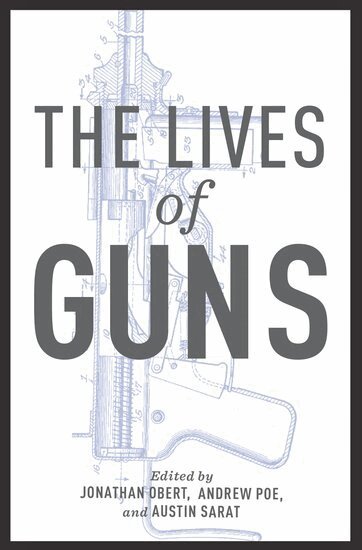
Guns have never before been as important in American culture as they are at this moment. Most contemporary conversations on guns focus on either the gun as a tool used in mass killings or a right to be fiercely defended, with most debates deadlocking on the ultimate role of humans in causing gun violence--that, as the cliché goes, "Guns don't kill people; people kill people." And yet for all this attention, too much of the discussions on gun violence and gun control take the gun as passive object, ignoring the changing effects, and the very agency, that guns may deploy as politicized objects. The Lives of Guns offers a new and compelling way of thinking about the role of the gun in our social and political lives. In gathering ideas from science studies, law, sociology, and politics, each chapter turns the stale, standard gun conversations around by investigating the gun as a technology and thus as an object with its own power and agency. In approaching guns from a tech perspective, down to the very science of how they are created and how they fire, The Lives of Guns takes up a number of questions, such as: How does the presence of these specific objects shape civic ideology? What does it mean to develop and care for gun and gun accessories technology? What do guns mean to those who build them versus those who fight for--and against--them? What could happen when drone technology meets gun technology? In bringing together a great breadth of perspectives from leading lawyers, political scientists, and historians, The Lives of Guns promises to move the gun debate forward by opening up new ways of thinking about these issues, ultimately broadening our conception of what counts as an issue in these debates.
E-bok
PDF, Engelska, 2018361 kr
Läs direkt efter köp
Guns have never been as prevalent in American culture as they are at this moment. Most contemporary conversations on guns either highlight the gun as just a tool used in mass killings or a right to be fiercely defended; eventually, whatever progress these debates foster in the public conversation tend to halt altogether once the old cliché, "guns don''t kill people; people kill people" is trotted out. These gun control and gun violence discussions take the gun as passive object, ignoring the changing effects, and the very agency, that guns may deploy as politicized objects. What happens if we reset the conversation and admit that guns, and not the people behind them, kill people?The Lives of Guns offers a new and compelling way of thinking about the role of the gun in our social and political lives. In gathering ideas from law, science studies, sociology, and politics, each chapter turns the stale, standard gun conversations around by investigating the gun as an object with agency. In approaching guns from a technological perspective, down to the very science of how they are created and how they fire, The Lives of Guns takes up a number of questions, such as: How does the presence of these objects shape civic ideology? What does it mean to develop and care for gun and gun accessories technology? What do guns mean to those who build them versus those who fight for-and against-them? What could happen when drone technology meets gun technology? In bringing together fresh perspectives from leading lawyers, political scientists, and historians, The Lives of Guns promises to move the gun debate forward by opening up new ways of thinking about these issues and broadening the scope of these perennial debates.
E-bok
Engelska, 2018364 kr
Läs direkt efter köp
Guns have never been as prevalent in American culture as they are at this moment. Most contemporary conversations on guns either highlight the gun as just a tool used in mass killings or a right to be fiercely defended; eventually, whatever progress these debates foster in the public conversation tend to halt altogether once the old cliché, "guns don''t kill people; people kill people" is trotted out. These gun control and gun violence discussions take the gun as passive object, ignoring the changing effects, and the very agency, that guns may deploy as politicized objects. What happens if we reset the conversation and admit that guns, and not the people behind them, kill people?The Lives of Guns offers a new and compelling way of thinking about the role of the gun in our social and political lives. In gathering ideas from law, science studies, sociology, and politics, each chapter turns the stale, standard gun conversations around by investigating the gun as an object with agency. In approaching guns from a technological perspective, down to the very science of how they are created and how they fire, The Lives of Guns takes up a number of questions, such as: How does the presence of these objects shape civic ideology? What does it mean to develop and care for gun and gun accessories technology? What do guns mean to those who build them versus those who fight for-and against-them? What could happen when drone technology meets gun technology? In bringing together fresh perspectives from leading lawyers, political scientists, and historians, The Lives of Guns promises to move the gun debate forward by opening up new ways of thinking about these issues and broadening the scope of these perennial debates.
Häftad, Engelska, 2019
668 kr
Skickas inom 10-15 vardagar
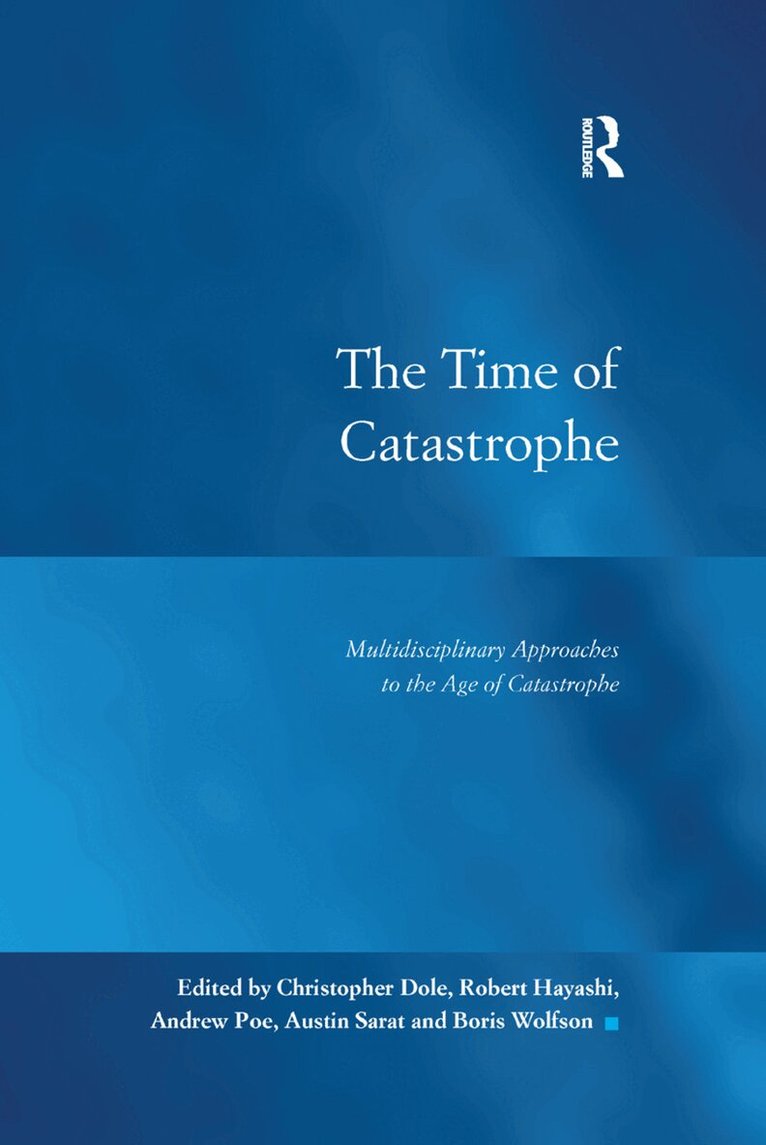
If catastrophes are, by definition, exceptional events of such magnitude that worlds and lives are dramatically overturned, the question of timing would pose a seemingly straightforward, if not redundant question. The Time of Catastrophe demonstrates the analytic productiveness of this question, arguing that there is much to be gained by interrogating the temporal conceits of conventional understandings of catastrophe and the catastrophic. Bringing together a distinguished, interdisciplinary group of scholars, the book develops a critical language for examining 'catastrophic time', recognizing the central importance of, and offering a set of frameworks for, examining the alluring and elusive qualities of catastrophe. Framed around the ideas of Agamben, Kant and Benjamin, and drawing on philosophy, history, law, political science, anthropology and the arts, this volume seeks to demonstrate how the question of 'catastrophic time' is in fact a question about something much more than the frequency of disasters in our so-called 'Age of Catastrophe'.
E-bok
Engelska, 2016761 kr
Läs direkt efter köp
If catastrophes are, by definition, exceptional events of such magnitude that worlds and lives are dramatically overturned, the question of timing would pose a seemingly straightforward, if not redundant question. The Time of Catastrophe demonstrates the analytic productiveness of this question, arguing that there is much to be gained by interrogating the temporal conceits of conventional understandings of catastrophe and the catastrophic. Bringing together a distinguished, interdisciplinary group of scholars, the book develops a critical language for examining ''catastrophic time'', recognizing the central importance of, and offering a set of frameworks for, examining the alluring and elusive qualities of catastrophe. Framed around the ideas of Agamben, Kant and Benjamin, and drawing on philosophy, history, law, political science, anthropology and the arts, this volume seeks to demonstrate how the question of ''catastrophic time'' is in fact a question about something much more than the frequency of disasters in our so-called ''Age of Catastrophe''.
E-bok
PDF, Engelska, 2016789 kr
Läs direkt efter köp
If catastrophes are, by definition, exceptional events of such magnitude that worlds and lives are dramatically overturned, the question of timing would pose a seemingly straightforward, if not redundant question. The Time of Catastrophe demonstrates the analytic productiveness of this question, arguing that there is much to be gained by interrogating the temporal conceits of conventional understandings of catastrophe and the catastrophic. Bringing together a distinguished, interdisciplinary group of scholars, the book develops a critical language for examining ''catastrophic time'', recognizing the central importance of, and offering a set of frameworks for, examining the alluring and elusive qualities of catastrophe. Framed around the ideas of Agamben, Kant and Benjamin, and drawing on philosophy, history, law, political science, anthropology and the arts, this volume seeks to demonstrate how the question of ''catastrophic time'' is in fact a question about something much more than the frequency of disasters in our so-called ''Age of Catastrophe''.
Inbunden, Engelska, 2015
2 018 kr
Skickas inom 10-15 vardagar
If catastrophes are, by definition, exceptional events of such magnitude that worlds and lives are dramatically overturned, the question of timing would pose a seemingly straightforward, if not redundant question. The Time of Catastrophe demonstrates the analytic productiveness of this question, arguing that there is much to be gained by interrogating the temporal conceits of conventional understandings of catastrophe and the catastrophic. Bringing together a distinguished, interdisciplinary group of scholars, the book develops a critical language for examining 'catastrophic time', recognizing the central importance of, and offering a set of frameworks for, examining the alluring and elusive qualities of catastrophe. Framed around the ideas of Agamben, Kant and Benjamin, and drawing on philosophy, history, law, political science, anthropology and the arts, this volume seeks to demonstrate how the question of 'catastrophic time' is in fact a question about something much more than the frequency of disasters in our so-called 'Age of Catastrophe'.
Inbunden, Engelska, 2022
1 150 kr
Skickas inom 5-8 vardagar
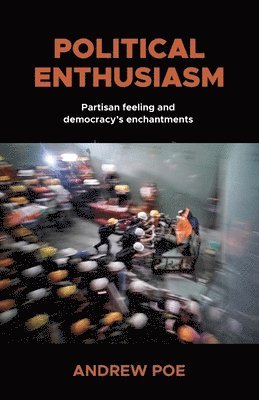
Enthusiasm has long been perceived as a fundamental danger to democratic politics, with many regarding it as a source of instability and irrationalism. Such views can make enthusiasm appear as a direct threat to the reason and order on which democracy is thought to rely. But such a desire for a sober and moderate democratic politics is perilously misleading and ignores the emotional basis on which democracy thrives.Enthusiasm in democracy works to help political actors identify and foster radical changes. We feel enthusiasm at precisely those moments of new beginnings, when politics takes on new shapes and structures. Being clear about how we experience enthusiasm, and how we recognize it, is thus crucial for democracy, which depends on the sharing of power and the alteration of rule.This book traces the shifting understanding of enthusiasm in modern Western political thought. Poe explores how political actors use enthusiasm to motivate allegiances, how we have come to think on the dangers of enthusiasm in democratic politics, and how else we might think about enthusiasm today. From its inception, democracy has relied on a constant affective energy of renewal. By tracing the way this crucial emotional energy is made manifest in political actions – from ancient times to the present – this book sheds light on the way enthusiasm has been understood by political scientists, philosophers, and political activists, as well as its implications for future democratic politics.
Häftad, Engelska, 2026
361 kr
Skickas inom 5-8 vardagar
Enthusiasm has long been perceived as a fundamental danger to democratic politics, with many regarding it as a source of instability and irrationalism. Such views can make enthusiasm appear as a direct threat to the reason and order on which democracy is thought to rely. But such a desire for a sober and moderate democratic politics is perilously misleading and ignores the emotional basis on which democracy thrives.Enthusiasm in democracy works to help political actors identify and foster radical changes. We feel enthusiasm at precisely those moments of new beginnings, when politics takes on new shapes and structures. Being clear about how we experience enthusiasm, and how we recognize it, is thus crucial for democracy, which depends on the sharing of power and the alteration of rule.This book traces the shifting understanding of enthusiasm in modern Western political thought. Poe explores how political actors use enthusiasm to motivate allegiances, how we have come to think on the dangers of enthusiasm in democratic politics, and how else we might think about enthusiasm today. From its inception, democracy has relied on a constant affective energy of renewal. By tracing the way this crucial emotional energy is made manifest in political actions – from ancient times to the present – this book sheds light on the way enthusiasm has been understood by political scientists, philosophers, and political activists, as well as its implications for future democratic politics.