Andrew W. Appel – författare
Visar alla böcker från författaren Andrew W. Appel. Handla med fri frakt och snabb leverans.
17 produkter
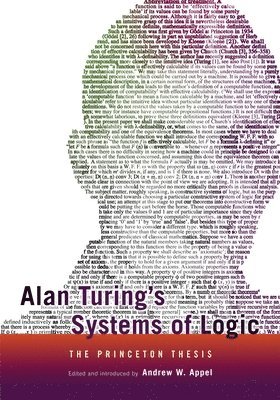
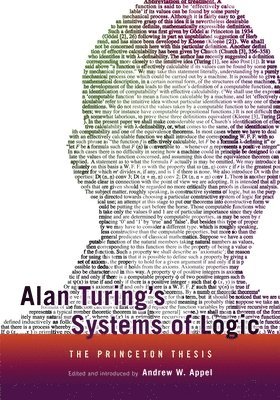
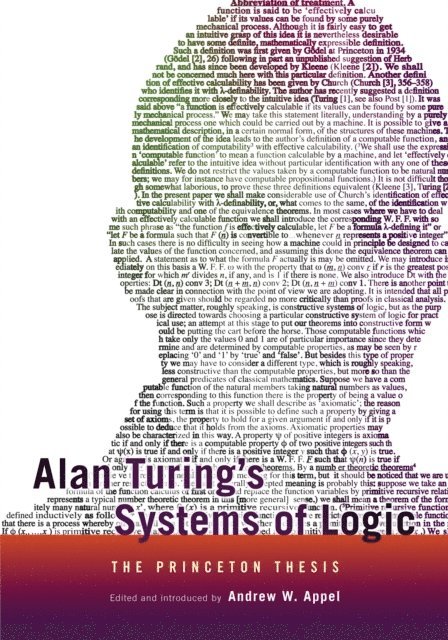
Alan Turing's Systems of Logic
The Princeton Thesis
Häftad, 2014
135 kr
Lägg i varukorg
Between inventing the concept of a universal computer in 1936 and breaking the German Enigma code during World War II, Alan Turing (1912-1954), the British founder of computer science and artificial intelligence, came to Princeton University to study mathematical logic. Some of the greatest …
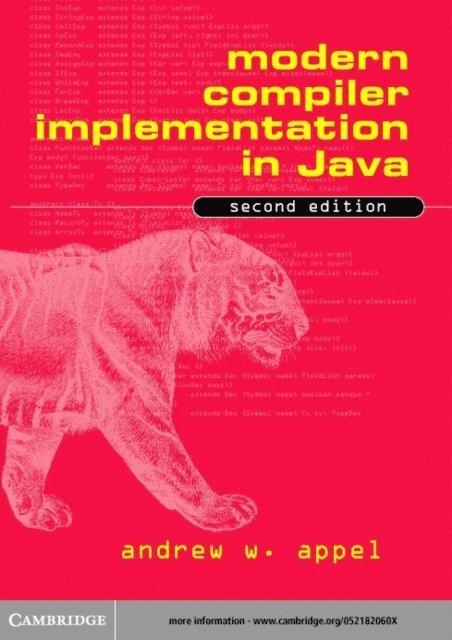
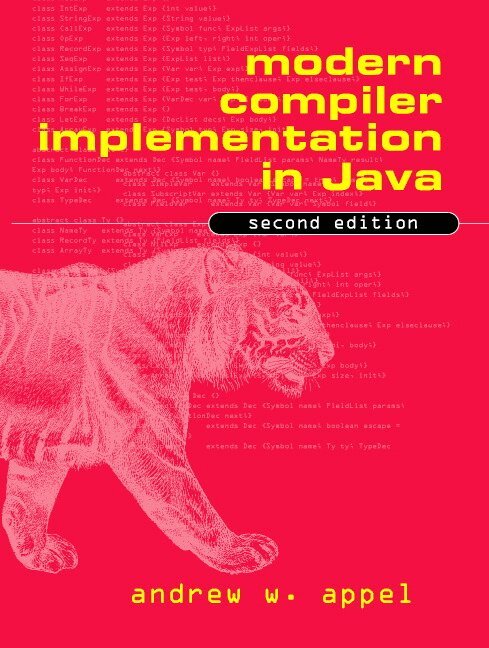
Modern Compiler Implementation in Java
E-bok, 2002
1232 kr
Lägg i varukorg
This textbook describes all phases of a compiler: lexical analysis, parsing, abstract syntax, semantic actions, intermediate representations, instruction selection via tree matching, dataflow analysis, graph-coloring register allocation, and runtime systems. It includes good coverage of current …
Compiling with Continuations
E-bok, 2007
1429 kr
Lägg i varukorg
The control and data flow of a program can be represented using continuations, a concept from denotational semantics that has practical application in real compilers. This book shows how continuation-passing style is used as an intermediate representation on which to perform optimisations and …
Compiling with Continuations
Häftad, 2007
1444 kr
Lägg i varukorg
The control and data flow of a program can be represented using continuations, a concept from denotational semantics that has practical application in real compilers. This book shows how continuation-passing style is used as an intermediate representation on which to perform optimisations and …
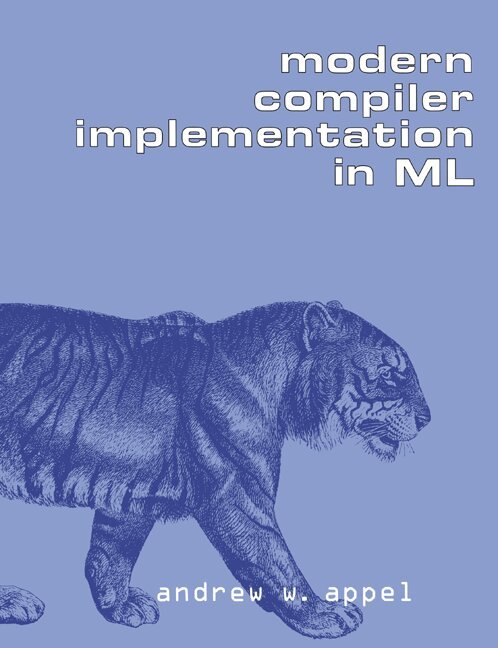
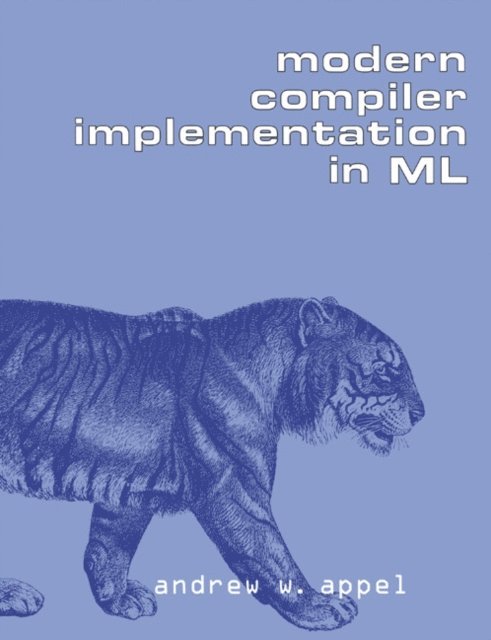
Modern Compiler Implementation in ML
Häftad, 2004
1093 kr
Lägg i varukorg
This new, expanded textbook describes all phases of a modern compiler: lexical analysis, parsing, abstract syntax, semantic actions, intermediate representations, instruction selection via tree matching, dataflow analysis, graph-coloring register allocation, and runtime systems. It includes good …
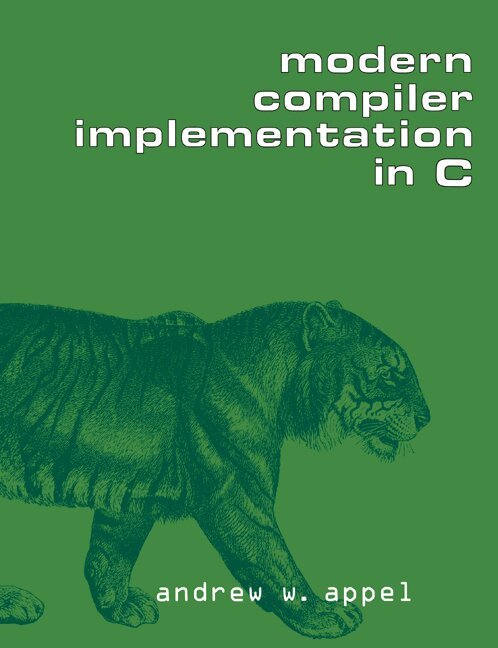
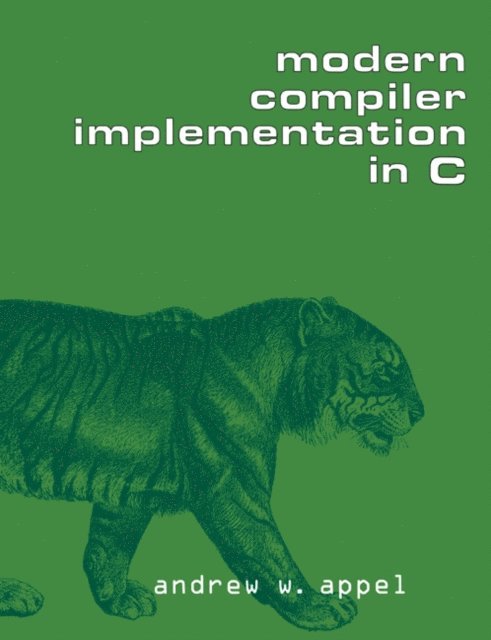
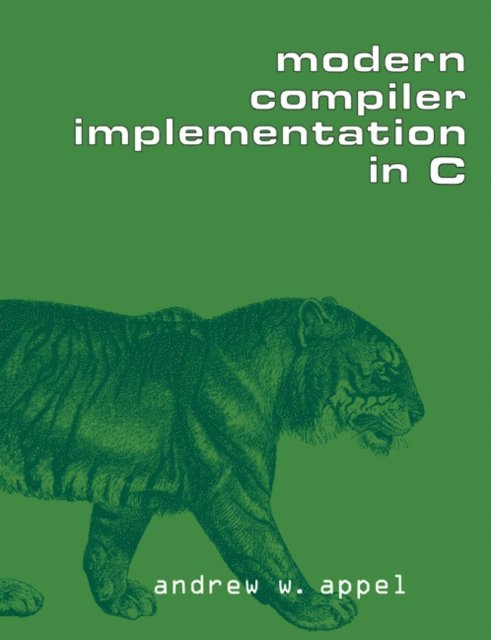
Modern Compiler Implementation in C
Häftad, 2004
1207 kr
Lägg i varukorg
This new, expanded textbook describes all phases of a modern compiler: lexical analysis, parsing, abstract syntax, semantic actions, intermediate representations, instruction selection via tree matching, dataflow analysis, graph-coloring register allocation, and runtime systems. It includes good …
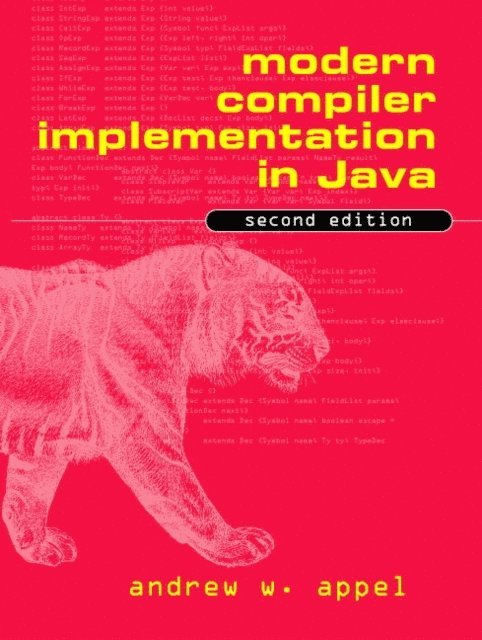
Modern Compiler Implementation in Java
Inbunden, 2002
1274 kr
Lägg i varukorg
This textbook describes all phases of a compiler: lexical analysis, parsing, abstract syntax, semantic actions, intermediate representations, instruction selection via tree matching, dataflow analysis, graph-coloring register allocation, and runtime systems. It includes good coverage of current …
Alan Turing's Systems of Logic
The Princeton Thesis
Inbunden, 2012
392 kr
Lägg i varukorg
Between inventing the concept of a universal computer in 1936 and breaking the German Enigma code during World War II, Alan Turing (1912-1954), the British founder of computer science and artificial intelligence, came to Princeton University to study mathematical logic. Some of the greatest …
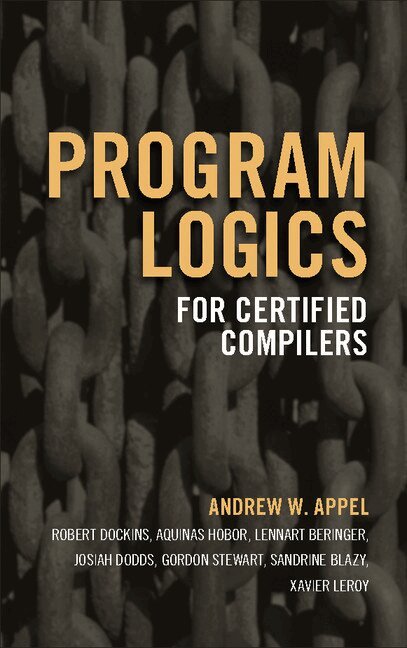
Program Logics for Certified Compilers
Inbunden, 2014
1475 kr
Lägg i varukorg
Separation logic is the twenty-first-century variant of Hoare logic that permits verification of pointer-manipulating programs. This book covers practical and theoretical aspects of separation logic at a level accessible to beginning graduate students interested in software verification. On the …
Modern Compiler Implementation in ML
E-bok, 2004
1158 kr
Lägg i varukorg
This new, expanded textbook describes all phases of a modern compiler: lexical analysis, parsing, abstract syntax, semantic actions, intermediate representations, instruction selection via tree matching, dataflow analysis, graph-coloring register allocation, and runtime systems. It includes good …
Modern Compiler Implementation in C
E-bok, 2004
1166 kr
Lägg i varukorg
This new, expanded textbook describes all phases of a modern compiler: lexical analysis, parsing, abstract syntax, semantic actions, intermediate representations, instruction selection via tree matching, dataflow analysis, graph-coloring register allocation, and runtime systems. It includes good …
Modern Compiler Implementation in ML
E-bok, 2004
1158 kr
Lägg i varukorg
This new, expanded textbook describes all phases of a modern compiler: lexical analysis, parsing, abstract syntax, semantic actions, intermediate representations, instruction selection via tree matching, dataflow analysis, graph-coloring register allocation, and runtime systems. It includes good …
Modern Compiler Implementation in C
E-bok, 2004
1166 kr
Lägg i varukorg
This new, expanded textbook describes all phases of a modern compiler: lexical analysis, parsing, abstract syntax, semantic actions, intermediate representations, instruction selection via tree matching, dataflow analysis, graph-coloring register allocation, and runtime systems. It includes good …
Compiling with Continuations
E-bok, 2007
1429 kr
Lägg i varukorg
The control and data flow of a program can be represented using continuations, a concept from denotational semantics that has practical application in real compilers. This book shows how continuation-passing style is used as an intermediate representation on which to perform optimisations and …
Modern Compiler Implementation in Java
E-bok, 2002
1259 kr
Lägg i varukorg
This textbook describes all phases of a compiler: lexical analysis, parsing, abstract syntax, semantic actions, intermediate representations, instruction selection via tree matching, dataflow analysis, graph-coloring register allocation, and runtime systems. It includes good coverage of current …
Program Logics for Certified Compilers
E-bok, 2014
1460 kr
Lägg i varukorg
Separation logic is the twenty-first-century variant of Hoare logic that permits verification of pointer-manipulating programs. This book covers practical and theoretical aspects of separation logic at a level accessible to beginning graduate students interested in software verification. On the …
Alan Turing's Systems of Logic
The Princeton Thesis
E-bok, 2021
191 kr
Lägg i varukorg
A facsimile edition of Alan Turing''s influential Princeton thesis Between inventing the concept of a universal computer in 1936 and breaking the German Enigma code during World War II, Alan Turing (1912–1954), the British founder of computer science and artificial intelligence, came to Princeton …