Andrew W. Meyers – författare
Visar alla böcker från författaren Andrew W. Meyers. Handla med fri frakt och snabb leverans.
5 produkter
5 produkter
Inbunden, Engelska, 1984
1 664 kr
Skickas inom 10-15 vardagar
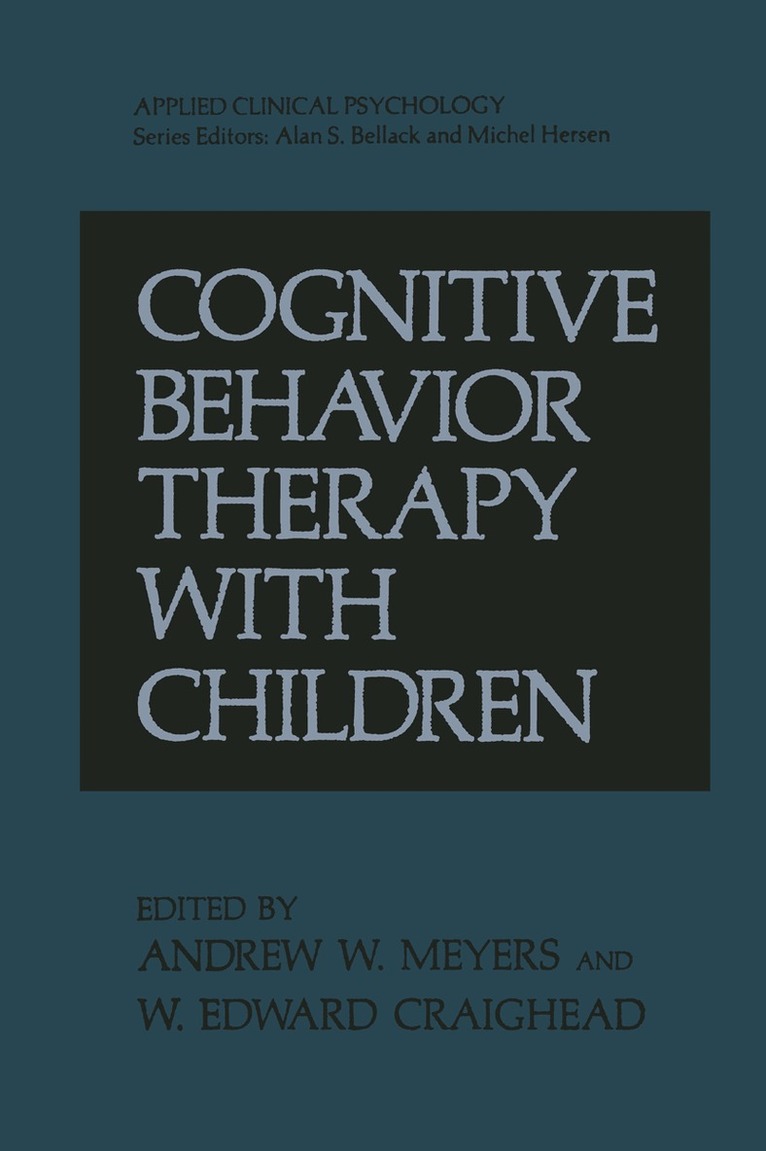
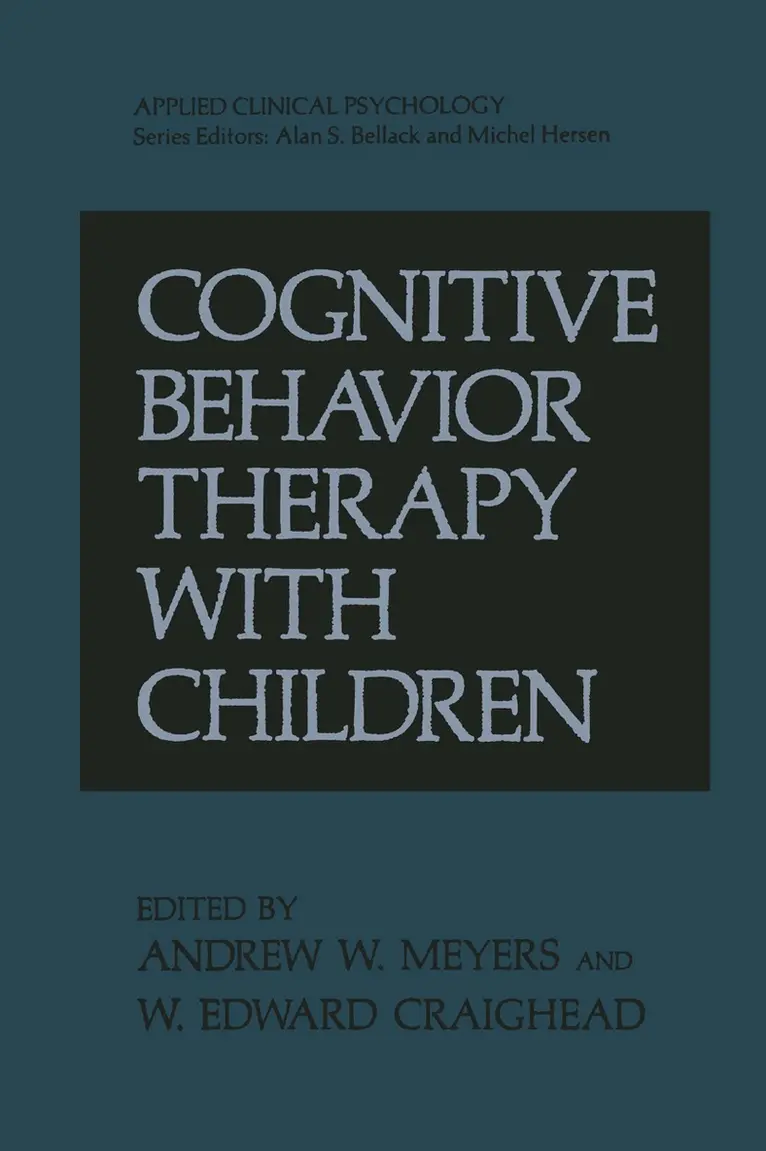
Recent estimates (Hallahan & Kauffman, 1978) indicate that over 4. 7 million children, 7.3% of the child population under the age of 19, are labeled emotionally disturbed, mentally retarded, or learning-disabled. Moreover, many of these children remain unserved or are inadequately served. The past decade has produced an increasing concern with the mental health needs of these children and their families. This trend had as much impact in behavior therapy as it did in any other branch of the helping professions. Behavioral work with children, with its emphasis on skill development and environmental modification, helped to build into child psychotherapy a true preventive mental health orientation. The ease of delivery and application of behavioral procedures allowed parents and other caregivers to become meaningfully involved in the clinical process, and so facilitated therapy gains and the maintenance and generalization of those gains. Perhaps the most significant change in behavior therapy in the 1970s was the move beyond interventions derived strictly from learning theories to applications based on knowledge from a variety of psycho logical research areas. The cognitive mediational activities of the client have received special attention, and this book presents the conceptual, methodological, and clinical issues in contemporary cognitive behavior therapy with children.
E-bok
PDF, Engelska, 20132 110 kr
Läs direkt efter köp
Recent estimates (Hallahan & Kauffman, 1978) indicate that over 4. 7 million children, 7.3% of the child population under the age of 19, are labeled emotionally disturbed, mentally retarded, or learning-disabled. Moreover, many of these children remain unserved or are inadequately served. The past decade has produced an increasing concern with the mental health needs of these children and their families. This trend had as much impact in behavior therapy as it did in any other branch of the helping professions. Behavioral work with children, with its emphasis on skill development and environmental modification, helped to build into child psychotherapy a true preventive mental health orientation. The ease of delivery and application of behavioral procedures allowed parents and other caregivers to become meaningfully involved in the clinical process, and so facilitated therapy gains and the maintenance and generalization of those gains. Perhaps the most significant change in behavior therapy in the 1970s was the move beyond interventions derived strictly from learning theories to applications based on knowledge from a variety of psycho logical research areas. The cognitive mediational activities of the client have received special attention, and this book presents the conceptual, methodological, and clinical issues in contemporary cognitive behavior therapy with children.
Häftad, Engelska, 2013
1 668 kr
Skickas inom 10-15 vardagar
Recent estimates (Hallahan & Kauffman, 1978) indicate that over 4. 7 million children, 7.3% of the child population under the age of 19, are labeled emotionally disturbed, mentally retarded, or learning-disabled. Moreover, many of these children remain unserved or are inadequately served. The past decade has produced an increasing concern with the mental health needs of these children and their families. This trend had as much impact in behavior therapy as it did in any other branch of the helping professions. Behavioral work with children, with its emphasis on skill development and environmental modification, helped to build into child psychotherapy a true preventive mental health orientation. The ease of delivery and application of behavioral procedures allowed parents and other caregivers to become meaningfully involved in the clinical process, and so facilitated therapy gains and the maintenance and generalization of those gains. Perhaps the most significant change in behavior therapy in the 1970s was the move beyond interventions derived strictly from learning theories to applications based on knowledge from a variety of psycho logical research areas. The cognitive mediational activities of the client have received special attention, and this book presents the conceptual, methodological, and clinical issues in contemporary cognitive behavior therapy with children.
E-bok
Engelska, 2007153 kr
Läs direkt efter köp
Over the past 30 years there has been a dramatic increase in the availability of convenient and legal gambling opportunities. Accompanying this proliferation of gambling is a growing understanding that between 5% and 9% of adults experience significant to severe problems due to their gambling activities. These problems have become a real health concern, with substantial costs to individuals, families, and communities.The objective of this book is to provide the clinician – or graduate student – with essential information about problem and pathological gambling. After placing this behavioral addiction and its co-occurring difficulties in perspective, by describing its proliferation, the associated costs, and diagnostic criteria and definitions, the authors present detailed information on a strategy to assess and treat gambling problems in an outpatient setting.
E-bok
PDF, Engelska, 2007153 kr
Läs direkt efter köp
Over the past 30 years there has been a dramatic increase in the availability of convenient and legal gambling opportunities. Accompanying this proliferation of gambling is a growing understanding that between 5% and 9% of adults experience significant to severe problems due to their gambling activities. These problems have become a real health concern, with substantial costs to individuals, families, and communities.The objective of this book is to provide the clinician – or graduate student – with essential information about problem and pathological gambling. After placing this behavioral addiction and its co-occurring difficulties in perspective, by describing its proliferation, the associated costs, and diagnostic criteria and definitions, the authors present detailed information on a strategy to assess and treat gambling problems in an outpatient setting.