Andrew Wyatt – författare
560 kr
Läs direkt efter köp
2 246 kr
Skickas inom 10-15 vardagar
22 535 kr
Skickas inom 10-15 vardagar
18 772 kr
Skickas inom 10-15 vardagar
30 345 kr
Skickas inom 10-15 vardagar
19 213 kr
Skickas inom 10-15 vardagar
19 536 kr
Skickas inom 10-15 vardagar
39 523 kr
Skickas inom 10-15 vardagar
17 106 kr
Skickas inom 10-15 vardagar
23 547 kr
Skickas inom 10-15 vardagar
12 534 kr
Skickas inom 10-15 vardagar
20 063 kr
Skickas inom 10-15 vardagar
34 577 kr
Skickas inom 10-15 vardagar
40 605 kr
Skickas inom 10-15 vardagar
50 754 kr
Skickas inom 10-15 vardagar
31 908 kr
Skickas inom 10-15 vardagar
24 762 kr
Skickas inom 10-15 vardagar
8 276 kr
Skickas inom 10-15 vardagar
26 478 kr
Skickas inom 10-15 vardagar
79 254 kr
Skickas inom 10-15 vardagar
9 992 kr
Skickas inom 10-15 vardagar
43 576 kr
Skickas inom 10-15 vardagar
33 674 kr
Skickas inom 10-15 vardagar
18 821 kr
Skickas inom 10-15 vardagar
63 247 kr
Skickas inom 10-15 vardagar
19 013 kr
Skickas inom 10-15 vardagar
37 143 kr
Skickas inom 10-15 vardagar
693 kr
Skickas inom 10-15 vardagar
487 kr
Läs direkt efter köp
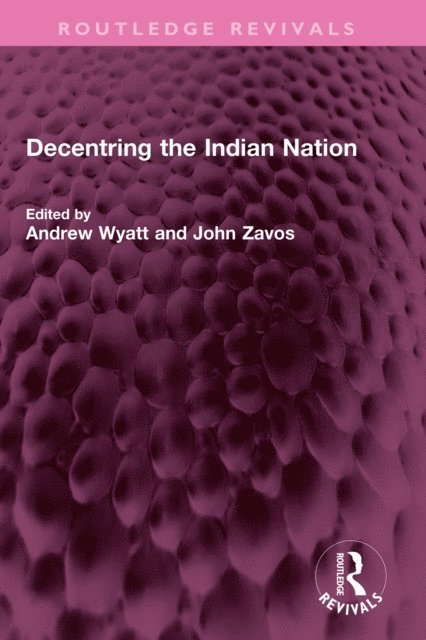
First published in 2003, Decentring the Indian Nation examines the various centrifugal forces apparent in recent Indian politics. After achieving independence in 1947 India’s elite opted to build a modern nation-state. This idea was carefully nurtured during the fight for freedom from British rule by the dominant Congress movement. In recent years, the idea of a centralised state has been challenged from a number of directions. Strong regional political movements have questioned the assumption that India’s federal system requires a dominant centre. The related trend of identity-based mobilisation has challenged settled notions of Indian national identity. The authors discuss the idea that as a nation, India is becoming ‘decentred’, and consider the implications of this idea for the development of the Indian polity. This book will be of interest to students of politics, geography and development.
487 kr
Läs direkt efter köp
First published in 2003, Decentring the Indian Nation examines the various centrifugal forces apparent in recent Indian politics. After achieving independence in 1947 India’s elite opted to build a modern nation-state. This idea was carefully nurtured during the fight for freedom from British rule by the dominant Congress movement. In recent years, the idea of a centralised state has been challenged from a number of directions. Strong regional political movements have questioned the assumption that India’s federal system requires a dominant centre. The related trend of identity-based mobilisation has challenged settled notions of Indian national identity. The authors discuss the idea that as a nation, India is becoming ‘decentred’, and consider the implications of this idea for the development of the Indian polity. This book will be of interest to students of politics, geography and development.