Andrew Zissos – författare
Visar alla böcker från författaren Andrew Zissos. Handla med fri frakt och snabb leverans.
11 produkter
11 produkter
E-bok
PDF, Engelska, 20083 437 kr
Läs direkt efter köp
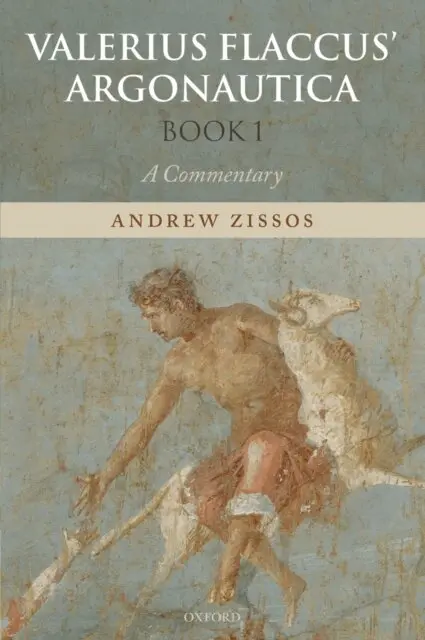
A text (with apparatus criticus), translation, and commentary, with introduction, of the first book of Valerius Flaccus' Argonautica, an unfinished Roman epic extending to eight books and several thousand lines, written in the Flavian period (69-96 CE). The commentary addresses both textual and semantic matters and broader questions of stylistics, poetics, thematics, and cultural context. Particularly close attention is paid to Valerius' choice of diction, his sophisticated use of figures and tropes, his often sly erudition, the recurring and strategic resort to subtle intertextual gestures, and, where appropriate, the reception of his work in later authors. The substantial introduction provides an overview of the poet and his poem.
Inbunden, Engelska, 2008
4 920 kr
Skickas inom 7-10 vardagar
A text (with apparatus criticus), translation, and commentary, with introduction, of the first book of Valerius Flaccus' Argonautica, an unfinished Roman epic extending to eight books and several thousand lines, written in the Flavian period (69-96 CE). The commentary addresses both textual and semantic matters and broader questions of stylistics, poetics, thematics, and cultural context. Particularly close attention is paid to Valerius' choice of diction, his sophisticated use of figures and tropes, his often sly erudition, the recurring and strategic resort to subtle intertextual gestures, and, where appropriate, the reception of his work in later authors. The substantial introduction provides an overview of the poet and his poem.
E-bok
Engelska, 20162 639 kr
Läs direkt efter köp
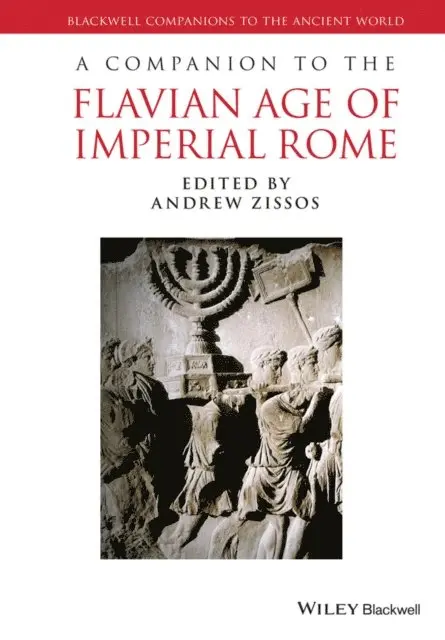
A Companion to the Flavian Age of Imperial Rome provides a systematic and comprehensive examination of the political, economic, social, and cultural nuances of the Flavian Age (69–96 CE). Includes contributions from over two dozen Classical Studies scholars organized into six thematic sections Illustrates how economic, social, and cultural forces interacted to create a variety of social worlds within a composite Roman empire Concludes with a series of appendices that provide detailed chronological and demographic information and an extensive glossary of terms Examines the Flavian Age more broadly and inclusively than ever before incorporating coverage of often neglected groups, such as women and non-Romans within the Empire
E-bok
PDF, Engelska, 20152 688 kr
Läs direkt efter köp
A Companion to the Flavian Age of Imperial Rome provides a systematic and comprehensive examination of the political, economic, social, and cultural nuances of the Flavian Age (69–96 CE). Includes contributions from over two dozen Classical Studies scholars organized into six thematic sections Illustrates how economic, social, and cultural forces interacted to create a variety of social worlds within a composite Roman empire Concludes with a series of appendices that provide detailed chronological and demographic information and an extensive glossary of terms Examines the Flavian Age more broadly and inclusively than ever before incorporating coverage of often neglected groups, such as women and non-Romans within the Empire
Häftad, Engelska, 2024
290 kr
Skickas inom 5-8 vardagar
Taking the reader through the fragmentary text of Petronius’ Satyrica in a coherent sequence, this book gives a deeper understanding of the fascinating aesthetic, literary and social issues raised within the text. Petronius' Satyrica has long been popular with readers of Latin: it is one of the few texts that offers a glimpse into non-elite society in the early Roman imperial period. It is also one of only a handful of ancient novels to survive in any form, and certainly the most racy and controversial. Supported by a detailed contextualising introduction and companion website resources, these selections from the Latin text are carefully annotated for students and a full vocabulary can be found at the end of the book.The selections in this edition put at centre stage the figure of Eumolpus: poet, storyteller and would-be critic, as well as charlatan, swindler and lecher. He is one of the major characters in what survives of the Satyrica; he serves as an internal narrator for many of the longer embedded poems and stories; and he meditates on topics of great interest, not the least being the perceived decline of art, science and culture in the contemporary Graeco-Roman world. In this way,students are introduced to some of the best-known myths and tales of antiquity, including the Capture of Troy and the Widow of Ephesus, while affording the opportunity to translate both prose and verse passages, and to consider and evaluate the Satyrica’s relationship to the literary tradition.
E-bok
PDF, Engelska, 2024302 kr
Läs direkt efter köp
Taking the reader through the fragmentary text of Petronius'' Satyrica in a coherent sequence, this book gives a deeper understanding of the fascinating aesthetic, literary and social issues raised within the text. Petronius'' Satyrica has long been popular with readers of Latin: it is one of the few texts that offers a glimpse into non-elite society in the early Roman imperial period. It is also one of only a handful of ancient novels to survive in any form, and certainly the most racy and controversial. Supported by a detailed contextualising introduction and companion website resources, these selections from the Latin text are carefully annotated for students and a full vocabulary can be found at the end of the book.The selections in this edition put at centre stage the figure of Eumolpus: poet, storyteller and would-be critic, as well as charlatan, swindler and lecher. He is one of the major characters in what survives of the Satyrica; he serves as an internal narrator for many of the longer embedded poems and stories; and he meditates on topics of great interest, not the least being the perceived decline of art, science and culture in the contemporary Graeco-Roman world. In this way,students are introduced to some of the best-known myths and tales of antiquity, including the Capture of Troy and the Widow of Ephesus, while affording the opportunity to translate both prose and verse passages, and to consider and evaluate the Satyrica''s relationship to the literary tradition.
E-bok
Engelska, 2024302 kr
Läs direkt efter köp
Taking the reader through the fragmentary text of Petronius'' Satyrica in a coherent sequence, this book gives a deeper understanding of the fascinating aesthetic, literary and social issues raised within the text. Petronius'' Satyrica has long been popular with readers of Latin: it is one of the few texts that offers a glimpse into non-elite society in the early Roman imperial period. It is also one of only a handful of ancient novels to survive in any form, and certainly the most racy and controversial. Supported by a detailed contextualising introduction and companion website resources, these selections from the Latin text are carefully annotated for students and a full vocabulary can be found at the end of the book.The selections in this edition put at centre stage the figure of Eumolpus: poet, storyteller and would-be critic, as well as charlatan, swindler and lecher. He is one of the major characters in what survives of the Satyrica; he serves as an internal narrator for many of the longer embedded poems and stories; and he meditates on topics of great interest, not the least being the perceived decline of art, science and culture in the contemporary Graeco-Roman world. In this way,students are introduced to some of the best-known myths and tales of antiquity, including the Capture of Troy and the Widow of Ephesus, while affording the opportunity to translate both prose and verse passages, and to consider and evaluate the Satyrica''s relationship to the literary tradition.
Inbunden, Engelska, 2016
2 280 kr
Skickas inom 5-8 vardagar
A Companion to the Flavian Age of Imperial Rome provides a systematic and comprehensive examination of the political, economic, social, and cultural nuances of the Flavian Age (69–96 CE). Includes contributions from over two dozen Classical Studies scholars organized into six thematic sectionsIllustrates how economic, social, and cultural forces interacted to create a variety of social worlds within a composite Roman empireConcludes with a series of appendices that provide detailed chronological and demographic information and an extensive glossary of termsExamines the Flavian Age more broadly and inclusively than ever before incorporating coverage of often neglected groups, such as women and non-Romans within the Empire
Del 5 - Classics Textbooks
Ovid, Metamorphoses, 3.511-733
Latin Text with Introduction, Commentary, Glossary of Terms, Vocabulary Aid and Study Questions
Häftad, Engelska, 2016
430 kr
Skickas inom 5-8 vardagar
Del 5 - Classics Textbooks
Ovid, Metamorphoses, 3.511-733
Latin Text with Introduction, Commentary, Glossary of Terms, Vocabulary Aid and Study Questions
Inbunden, Engelska, 2016
631 kr
Skickas inom 5-8 vardagar
E-bok
Engelska, 201823 kr
Läs direkt efter köp
This part of Ovid''s ''Theban History'' recounts the confrontation of Pentheus, king of Thebes, with his divine cousin, Bacchus, the god of wine. Notwithstanding the warnings of the seer Tiresias and the cautionary tale of a character Acoetes (perhaps Bacchus in disguise), who tells of how the god once transformed a group of blasphemous sailors into dolphins, Pentheus refuses to acknowledge the divinity of Bacchus or allow his worship at Thebes. Enraged, yet curious to witness the orgiastic rites of the nascent cult, Pentheus conceals himself in a grove on Mt. Cithaeron near the locus of the ceremonies. But in the course of the rites he is spotted by the female participants who rush upon him in a delusional frenzy, his mother and sisters in the vanguard, and tear him limb from limb.This course book offers a wide-ranging introduction, the original Latin text, study aids with vocabulary, and an extensive commentary. Designed to stretch and stimulate readers, Gildenhard and Zissos''s incisive commentary will be of particular interest to students of Latin at AS and undergraduate level. It extends beyond detailed linguistic analysis to encourage critical engagement with Ovid''s poetry and discussion of the most recent scholarly thought.