Andries de Grip - Böcker
Visar alla böcker från författaren Andries de Grip. Handla med fri frakt och snabb leverans.
3 produkter
3 produkter
Del 21 - Research in Labor Economics
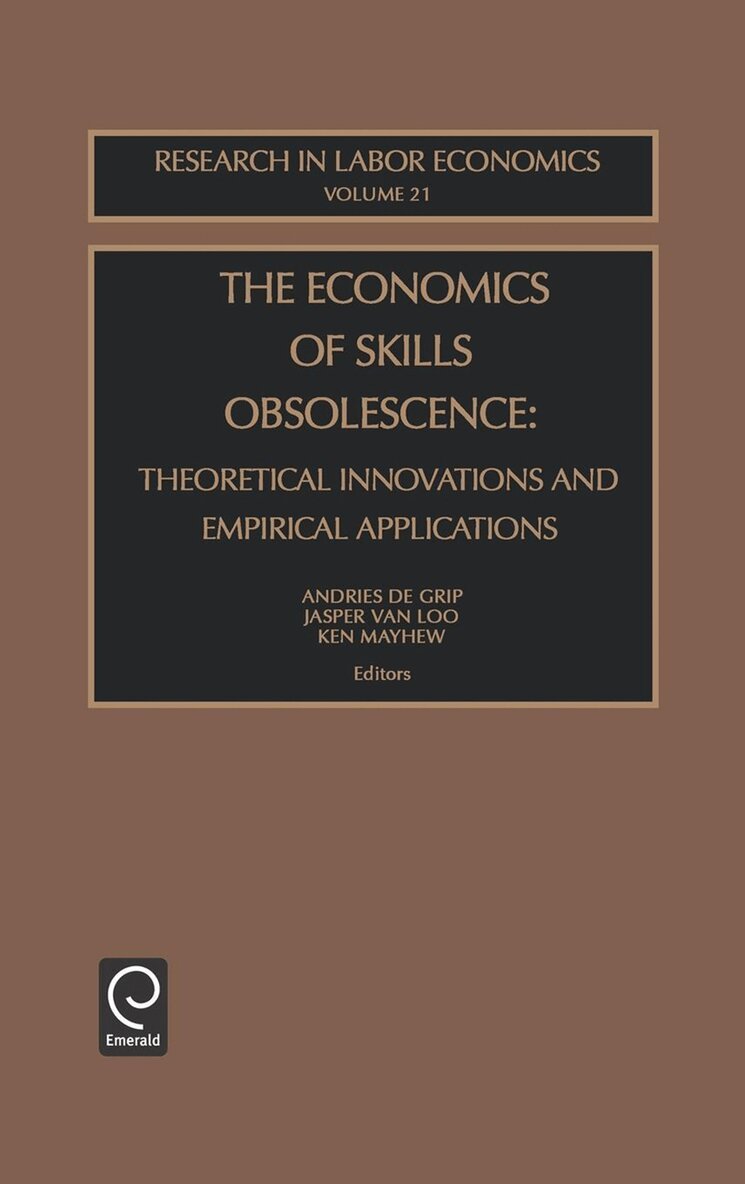
Economics of Skills Obsolescence
Theoretical Innovations and Empirical Applications
Inbunden, Engelska, 2002
1 863 kr
Skickas inom 5-8 vardagar
Increasingly policy makers are focusing on the importance of skills and lifelong learning. The reason for this is that workers with sufficient and up-to-date skills are more productive and have more potential to remain employed. However, the processes that influence skill obsolescence, have largely been neglected in labor economics. It was in the 1990s that skill issues came to the top of the agenda, because of the general awareness of the rapid technological developments that affect the demand for human capital. Although the analysis of skill-biased technological change is at the heart of this debate, in recent years, the literature has become wider than simple consideration of this aspect and has started to embrace other causes of obsolescence. The papers in this volume are selected from the papers presented at a conference on Understanding Skills Obsolescence. They advance both the theoretical and empirical understanding of the causes and the effects of skills obsolescence.
1 923 kr
Skickas inom 7-10 vardagar
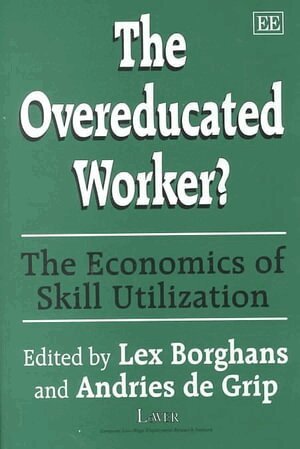
It is often suggested in policy debates that the employment of highly educated workers in jobs traditionally held by lower skilled workers leads to skill wastage and a worsening labour market position for the less educated. This process is generally referred to as 'bumping down' or 'crowding out'.This argument challenges the policy of many developed countries to attach ever greater importance to knowledge as a means to increase international competitiveness. The authors in this book provide insights into the role of education in society by investigating the extent to which these arguments of overeducation and upgrading are valid. They bring together different approaches to obtain a complete picture of the debate in economics about under-utilization of skills and bumping down.
1 736 kr
Skickas inom 7-10 vardagar
Overeducation is one of the most important mechanisms for labour market adjustment when there is an excess supply of highly skilled workers. However, there is much debate about the consequences of this phenomena and the short- and long-term effects for both the overeducated worker and the economy as a whole. This book contributes to our understanding of recent developments in the research on overeducation by providing a detailed overview of the pertinent theoretical and policy issues. The authors study evidence that a substantial number of workers in Europe are overqualified and challenge the wisdom of greater investments in the education of the workforce. Although it may appear a waste of resources if many workers have a higher level of education than their job requires, others argue that overeducation may actually facilitate the development of a competitive and dynamic knowledge-based economy in Europe. They move on to look at labour mobility and skill mismatches in the labour market, and examine the impact of overeducation on earnings. They also address the somewhat controversial issue of how to measure employee overqualification, and propose an income ratio based on the difference between actual and potential earnings as an effective approach. Finally, they look at the effect of overeducation on specific groups in society such as licensed professionals, university graduates and ethnic minorities. Economists, social scientists, and academics interested in labour market theory and policy will find this an insightful and original volume which will make an important addition to the literature on overeducation.