Andrzej Goscinski – författare
Visar alla böcker från författaren Andrzej Goscinski. Handla med fri frakt och snabb leverans.
4 produkter
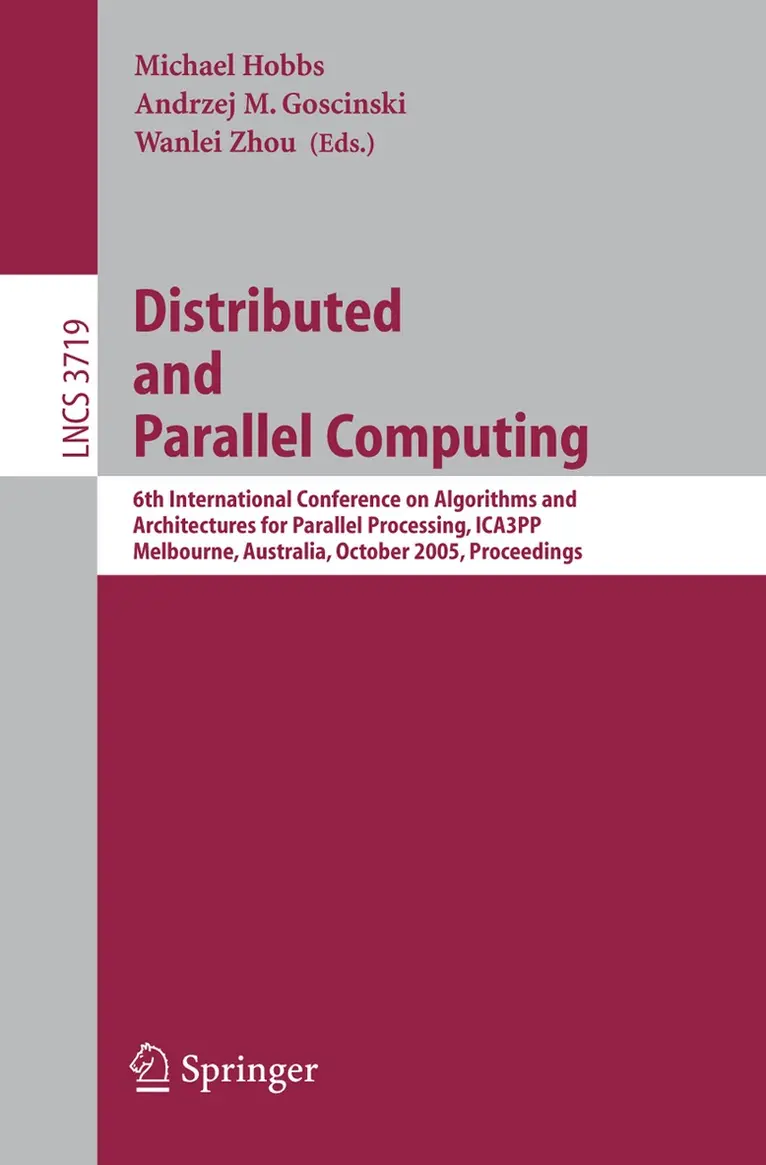
Distributed and Parallel Computing
6th International Conference on Algorithms and Architectures for Parallel Processing, ICA3PP, Melbourne, Australia, October 2-3, 2005, Proceedings
Av Michael Hobbs, Andrzej Goscinski m. fl.
Häftad, 2005
568 kr
Lägg i varukorg
There are many applications that require parallel and distributed processing to allow complicated engineering, business and research problems to be solved in a reasonable time. Parallel and distributed processing is able to improve company profit, lower costs of design, production, and deployment …
Distributed and Parallel Computing
6th International Conference on Algorithms and Architectures for Parallel Processing, ICA3PP, Melbourne, Australia, October 2-3, 2005, Proceedings
Av Wanlei Zhou, Andrzej Goscinski m. fl.
E-bok, 2005
755 kr
Lägg i varukorg
There are many applications that require parallel and distributed processing to allow complicated engineering, business and research problems to be solved in a reasonable time. Parallel and distributed processing is able to improve company profit, lower costs of design, production, and deployment …
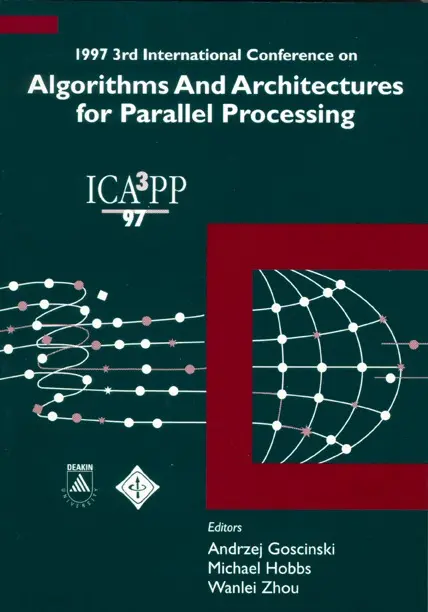
ALGORITHMS AND ARCHITECTURES FOR PARALLEL PROCESSING - PROCEEDINGS OF THE 1997 3RD INTERNATIONAL CONFERENCE
Av MICHAEL HOBBS & ET AL ANDRZEJ GOSCINSKI, Andrzej Goscinski m. fl.
Häftad, 1997
2797 kr
Tillfälligt slut
The IEEE Third International Conference on Algorithms and Architectures for Parallel Processing (ICA3PP-97) will be held in Melbourne, Australia from December 8th to 12th, 1997. The purpose of this important conference is to bring together developers and researchers from universities, industry and …
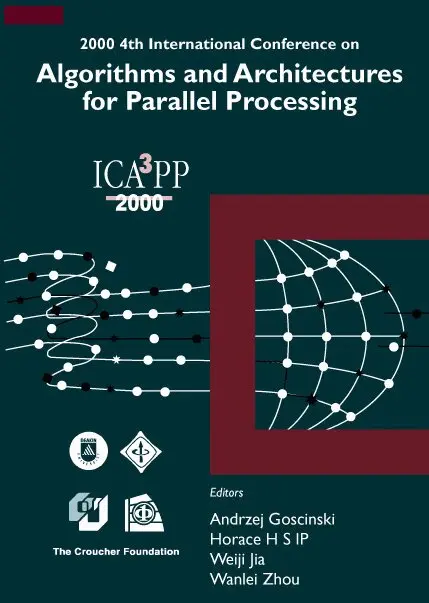
ALGORITHMS & ARCHITECTURES FOR PARALLEL PROCESSING, 4TH INTL CONF
Av GOSCINSKI ANDRZEJ, Andrzej Goscinski m. fl.
Häftad, 2000
3506 kr
Tillfälligt slut
ICA3PP 2000 was an important conference that brought together researchers and practitioners from academia, industry and governments to advance the knowledge of parallel and distributed computing. The proceedings constitute a well-defined set of innovative research papers in two broad areas of …