Andy M. Tyrrell – författare
Visar alla böcker från författaren Andy M. Tyrrell. Handla med fri frakt och snabb leverans.
5 produkter
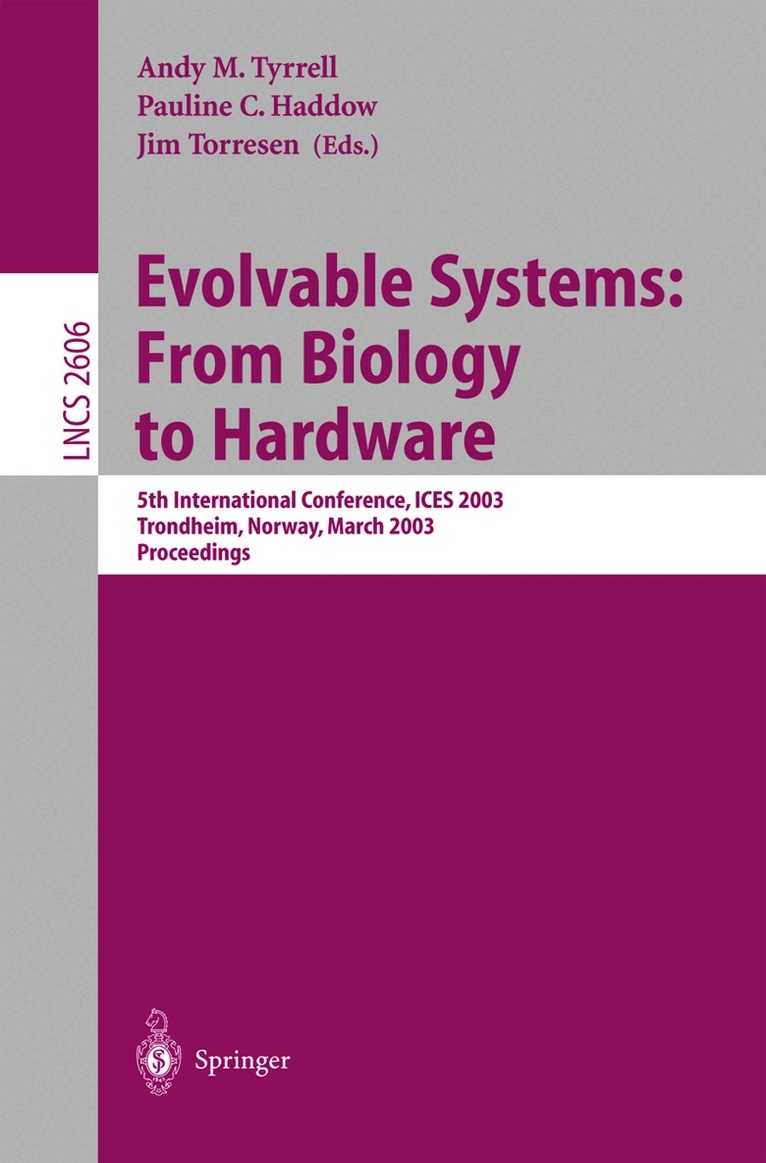
Evolvable Systems: From Biology to Hardware
5th International Conference, ICES 2003, Trondheim, Norway, March 17-20, 2003, Proceedings
Av Andy M. Tyrrell, Pauline C. Haddow m. fl.
Häftad, 2003
567 kr
Lägg i varukorg
The idea of evolving machines, whose origins can be traced to the cybernetics movementofthe1940sand1950s,hasrecentlyresurgedintheformofthenascent ?eld of bio-inspired systems and evolvable hardware. The inaugural workshop, Towards Evolvable Hardware, took place in Lausanne in October 1995, followed …
Evolvable Systems: From Biology to Hardware
5th International Conference, ICES 2003, Trondheim, Norway, March 17-20, 2003, Proceedings
Av Jim Torresen, Pauline C. Haddow m. fl.
E-bok, 2007
718 kr
Lägg i varukorg
The idea of evolving machines, whose origins can be traced to the cybernetics movementofthe1940sand1950s,hasrecentlyresurgedintheformofthenascent ?eld of bio-inspired systems and evolvable hardware. The inaugural workshop, Towards Evolvable Hardware, took place in Lausanne in October 1995, followed …
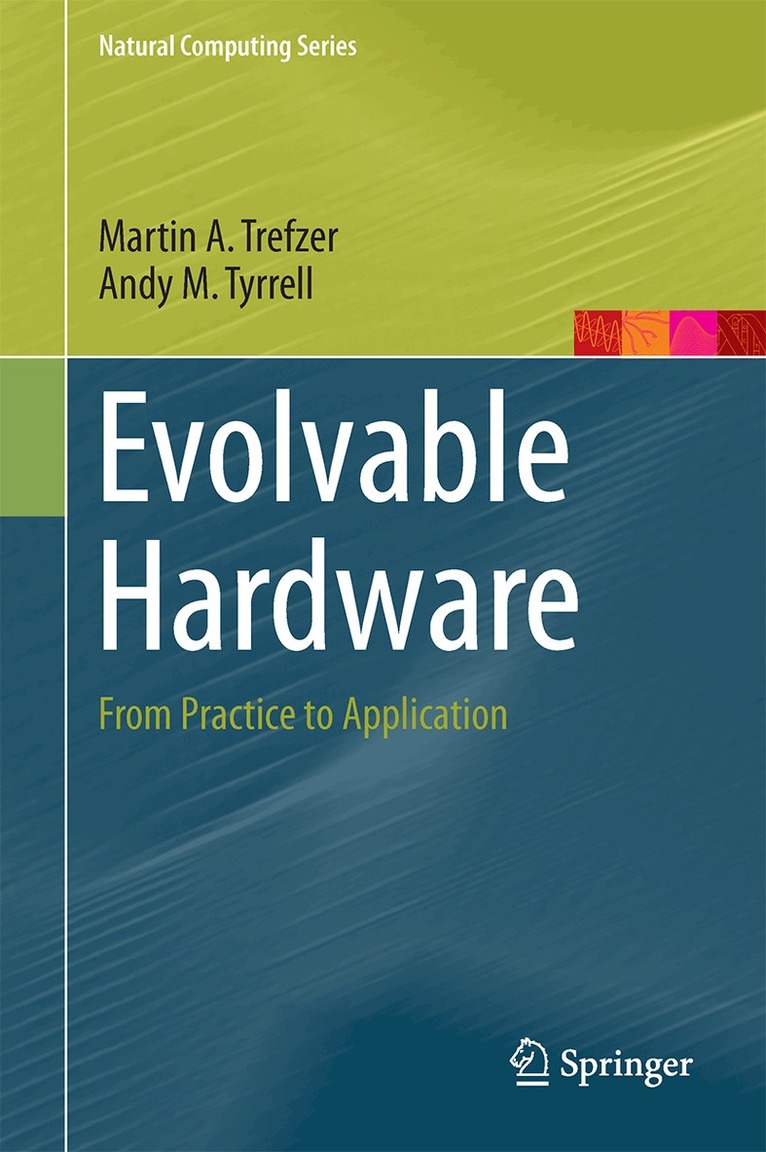
Evolvable Hardware
From Practice to Application
Av Martin A. Trefzer, Andy M. Tyrrell
Inbunden, 2015
567 kr
Lägg i varukorg
This book covers the basic theory, practical details and advanced research of the implementation of evolutionary methods on physical substrates. Most of the examples are from electronic engineering applications, including transistor-level design and system-level implementation. The authors present …
Evolvable Hardware
From Practice to Application
Av Andy M. Tyrrell, Martin A. Trefzer
E-bok, 2015
755 kr
Lägg i varukorg
This book covers the basic theory, practical details and advanced research of the implementation of evolutionary methods on physical substrates. Most of the examples are from electronic engineering applications, including transistor-level design and system-level implementation. The authors present …
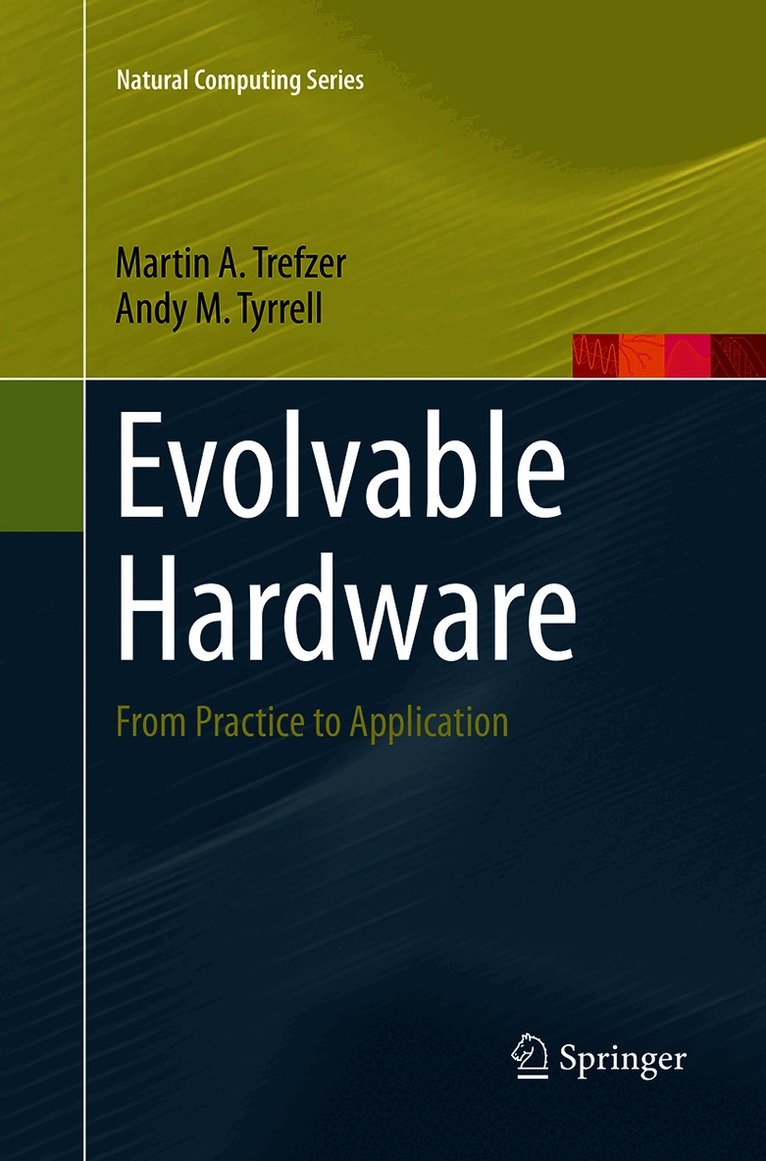
Evolvable Hardware
From Practice to Application
Av Martin A. Trefzer, Andy M. Tyrrell
Häftad, 2016
551 kr
Lägg i varukorg
This book covers the basic theory, practical details and advanced research of the implementation of evolutionary methods on physical substrates. Most of the examples are from electronic engineering applications, including transistor-level design and system-level implementation. The authors present …