Andy Stirling - Böcker
Visar alla böcker från författaren Andy Stirling. Handla med fri frakt och snabb leverans.
5 produkter
5 produkter
495 kr
Skickas inom 10-15 vardagar
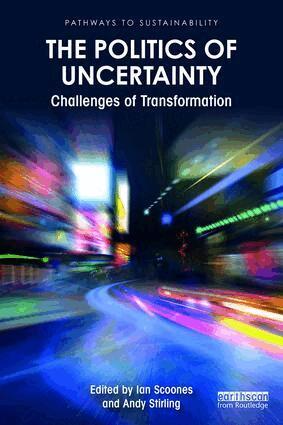
Why is uncertainty so important to politics today? To explore the underlying reasons, issues and challenges, this book’s chapters address finance and banking, insurance, technology regulation and critical infrastructures, as well as climate change, infectious disease responses, natural disasters, migration, crime and security and spirituality and religion.The book argues that uncertainties must be understood as complex constructions of knowledge, materiality, experience, embodiment and practice. Examining in particular how uncertainties are experienced in contexts of marginalisation and precarity, this book shows how sustainability and development are not just technical issues, but depend deeply on political values and choices. What burgeoning uncertainties require lies less in escalating efforts at control, but more in a new – more collective, mutualistic and convivial – politics of responsibility and care. If hopes of much-needed progressive transformation are to be realised, then currently blinkered understandings of uncertainty need to be met with renewed democratic struggle. Written in an accessible style and illustrated by multiple case studies from across the world, this book will appeal to a wide cross-disciplinary audience in fields ranging from economics to law to science studies to sociology to anthropology and geography, as well as professionals working in risk management, disaster risk reduction, emergencies and wider public policy fields.
2 088 kr
Skickas inom 10-15 vardagar
Why is uncertainty so important to politics today? To explore the underlying reasons, issues and challenges, this book’s chapters address finance and banking, insurance, technology regulation and critical infrastructures, as well as climate change, infectious disease responses, natural disasters, migration, crime and security and spirituality and religion.The book argues that uncertainties must be understood as complex constructions of knowledge, materiality, experience, embodiment and practice. Examining in particular how uncertainties are experienced in contexts of marginalisation and precarity, this book shows how sustainability and development are not just technical issues, but depend deeply on political values and choices. What burgeoning uncertainties require lies less in escalating efforts at control, but more in a new – more collective, mutualistic and convivial – politics of responsibility and care. If hopes of much-needed progressive transformation are to be realised, then currently blinkered understandings of uncertainty need to be met with renewed democratic struggle. Written in an accessible style and illustrated by multiple case studies from across the world, this book will appeal to a wide cross-disciplinary audience in fields ranging from economics to law to science studies to sociology to anthropology and geography, as well as professionals working in risk management, disaster risk reduction, emergencies and wider public policy fields.
2 088 kr
Skickas inom 10-15 vardagar
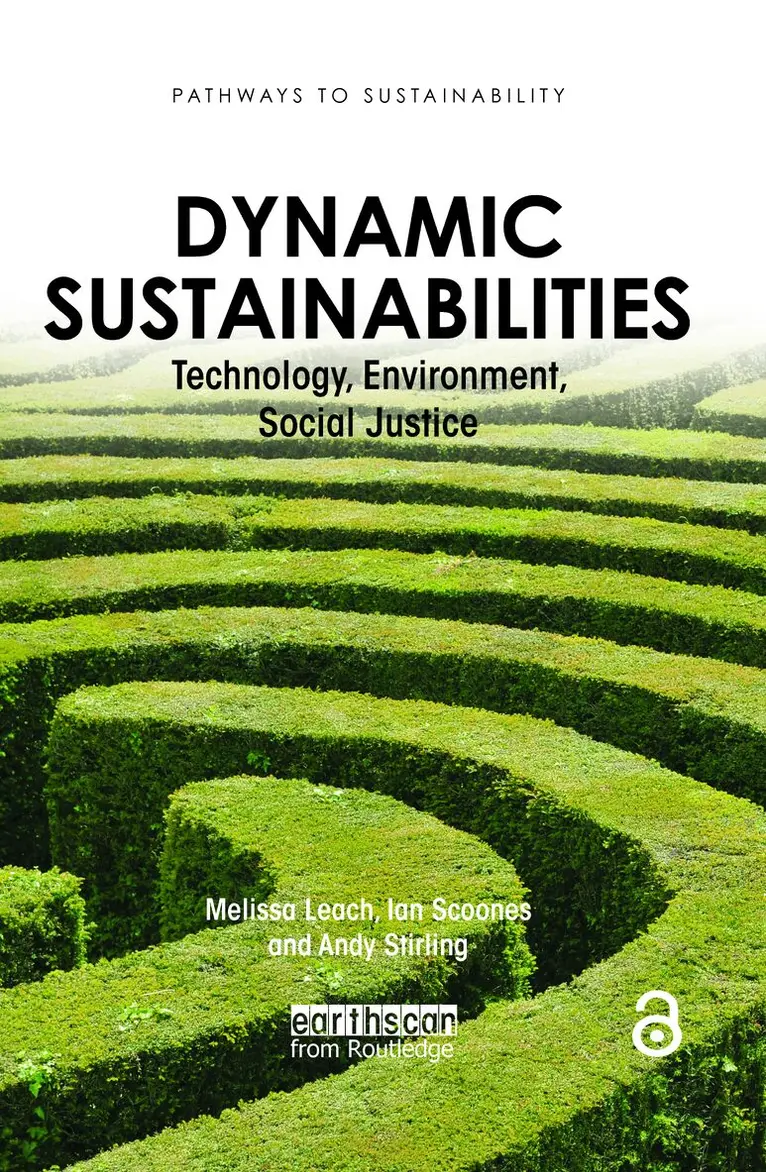
Linking environmental sustainability with poverty reduction and social justice, and making science and technology work for the poor, have become central practical, political and moral challenges of our times. These must be met in a world of rapid, interconnected change in environments, societies and economies, and globalised, fragmented governance arrangements. Yet despite growing international attention and investment, policy attempts often fail. Why is this, and what can be done about it? How might we understand and address emergent threats from epidemic disease, or the challenges of water scarcity in dryland India? In the context of climate change, how might seed systems help African farmers meet their needs, and how might appropriate energy strategies be developed? This book lays out a new 'pathways approach' to address sustainability challenges such as these in today's dynamic world. Through an appreciation of dynamics, complexity, uncertainty, differing narratives and the values-based aims of sustainability, the pathways approach allows us to see how some approaches are dominant, even though they do not produce the desired results, and how to create successful alternative 'pathways' of responding to the challenges we face. As well as offering new ways of thinking about sustainability, the book also suggests a series of practical ways forward - in tools and methods, forms of political engagement, and styles of knowledge-making and communication. Throughout the book, the practicalities of the pathways approach are illustrated using four case studies: water in dryland India, agricultural seeds in Africa, responses to epidemic disease and energy systems/climate change. Published in association with the Economic and Social Research Council (ESRC).
495 kr
Skickas inom 10-15 vardagar
Linking environmental sustainability with poverty reduction and social justice, and making science and technology work for the poor, have become central practical, political and moral challenges of our times. These must be met in a world of rapid, interconnected change in environments, societies and economies, and globalised, fragmented governance arrangements. Yet despite growing international attention and investment, policy attempts often fail. Why is this, and what can be done about it? How might we understand and address emergent threats from epidemic disease, or the challenges of water scarcity in dryland India? In the context of climate change, how might seed systems help African farmers meet their needs, and how might appropriate energy strategies be developed? This book lays out a new 'pathways approach' to address sustainability challenges such as these in today's dynamic world. Through an appreciation of dynamics, complexity, uncertainty, differing narratives and the values-based aims of sustainability, the pathways approach allows us to see how some approaches are dominant, even though they do not produce the desired results, and how to create successful alternative 'pathways' of responding to the challenges we face. As well as offering new ways of thinking about sustainability, the book also suggests a series of practical ways forward - in tools and methods, forms of political engagement, and styles of knowledge-making and communication. Throughout the book, the practicalities of the pathways approach are illustrated using four case studies: water in dryland India, agricultural seeds in Africa, responses to epidemic disease and energy systems/climate change. Published in association with the Economic and Social Research Council (ESRC).
1 887 kr
Skickas inom 10-15 vardagar
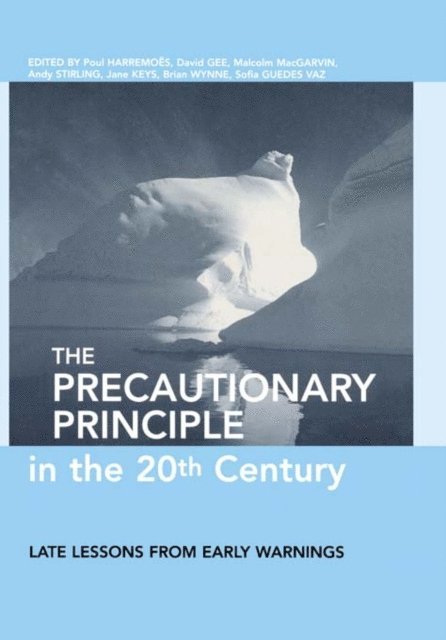
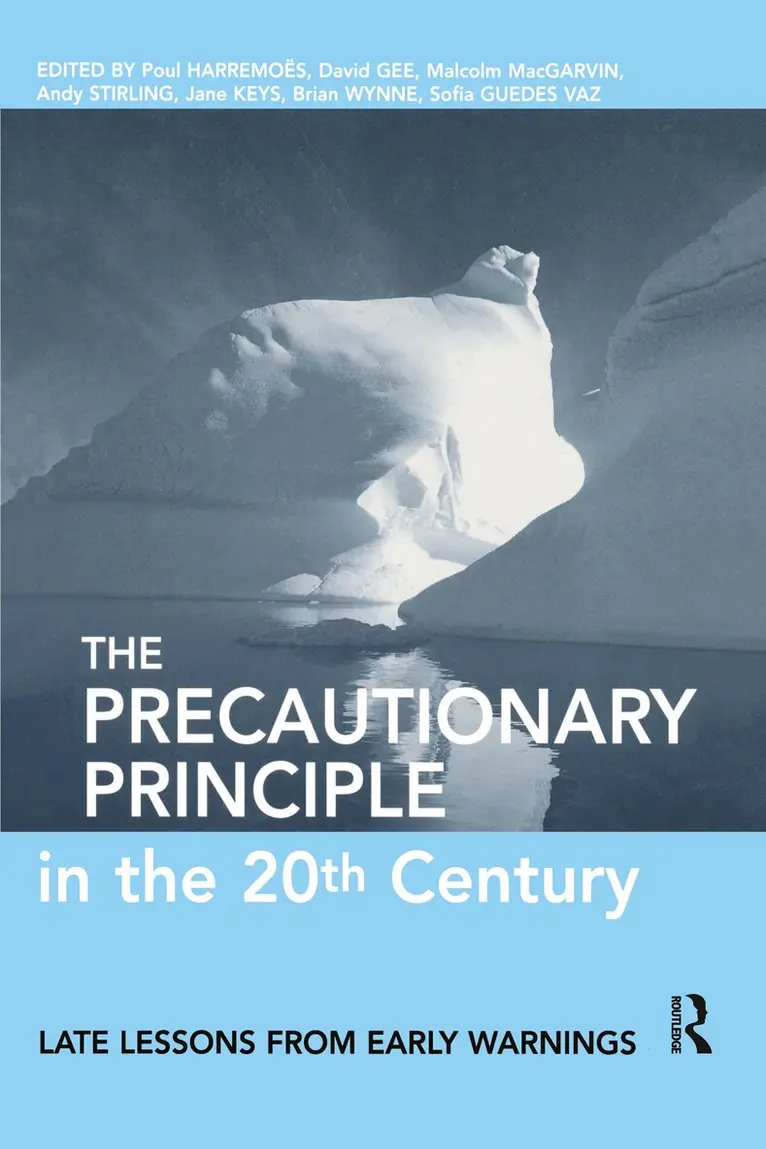
The precautionary principle is widely seen as fundamental to successful policies for sustainability. It has been cited in international courts and trade disputes between the USA and the EU, and invoked in a growing range of political debates. Understanding what it can and cannot achieve is therefore crucial. This volume looks back over the last century to examine the role the principle played or could have played, in a range of major and avoidable public disasters. From detailed investigation of how each disaster unfolded, what the impacts were and what measures were adopted, the authors draw lessons and establish criteria that could help to minimise the health and environmental risks of future technological, economic and policy innovations. This is an informative resource for all those from lawyers and policy-makers, to researchers and students needing to understand or apply the principle.