
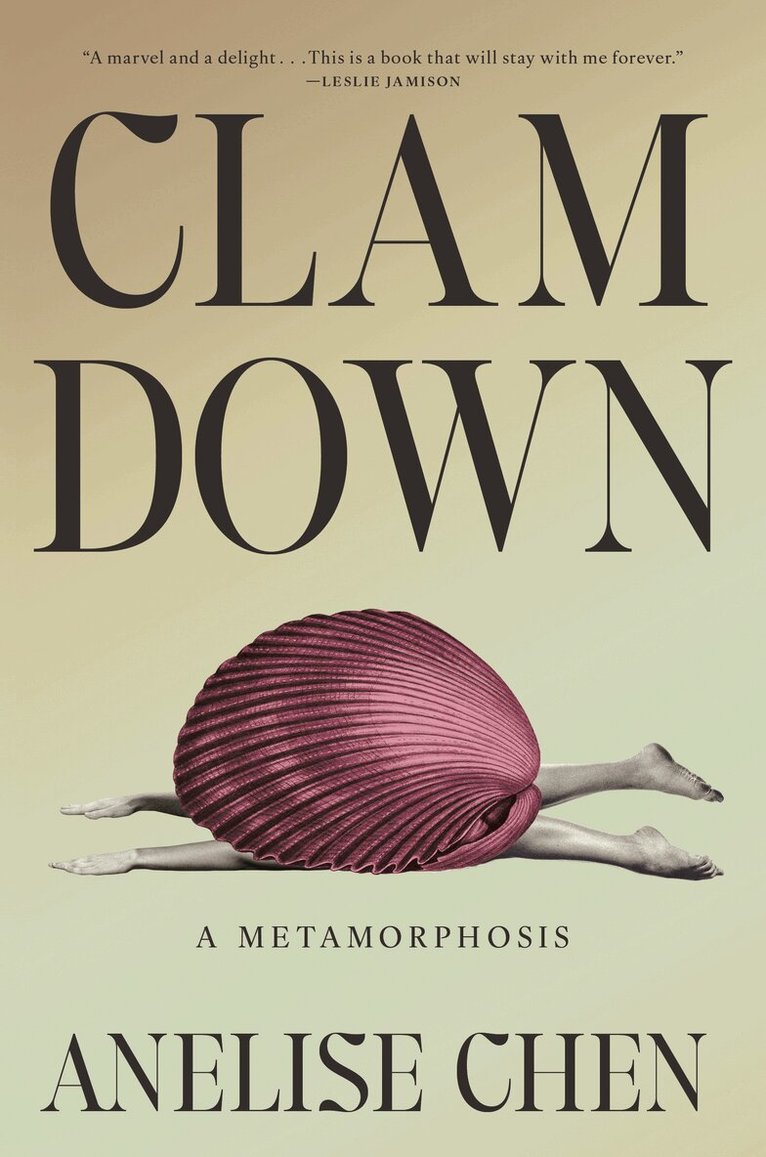
A wondrously unusual memoir about a woman who, in the midst of mourning her divorce, retreats into her shell and renegotiates her relationship to solitude, shame, and connectionfrom an acclaimed 5 Under 35 National Book Foundation honoree.We've all heard the one about waking up as a cockroachbut what if a crisis turned you into a clam?After the dissolution of her marriage, a writer is transformed into a "clam" via typo after her mother keeps texting her to "clam down." The funny if unhelpful command forces her to ask what it means to "clam down" during crisesto retreat, hide, close up, and stay silent. Idiomatically, we are said to "clam up" when we can't speak, and to "come out of our shell" when we reemerge, transformed.In order to understand her path, the clam digs into examples of others who have also "succumbed to shellfish" to embrace lives of reclusiveness and extremity. But this is a story that radiates outward from the kernel of selfhood to family, society, and ecosystem. Finally, the writer must confront her own "clam genealogy" to interview her dad who disappeared for a decade to write a mysterious accounting software called Shell Computing. In learning about his past to better understand his decisions, she learns not only how to forgive him, but also how to move on from her own wounds of abandonment and insecurity.Using a genre-defying structure and written in novelistic prose that draws from art, literature, and natural history, she unfolds a complex story of interspecies connectedness, in which humans learn lessons of adaptation and survival from their mollusk kin. While it makes sense in certain situations to retreat behind fortified walls, the choice to do so also exacts a price. What is the price of building up walls? How can one take them back down when they are no longer necessary?
PULITZER PRIZE FINALIST • In this wondrously unusual memoir, a woman retreats into her shell in the aftermath of her divorce, and must choose between the pleasures and the perils of a closed-up life—a transformation fable from an acclaimed 5 Under 35 National Book Foundation honoree.“A marvel and a delight . . . This is a book that will stay with me forever.”—Leslie Jamison, author of SplintersONE OF CHICAGO TRIBUNE’S TEN BEST BOOKS OF THE YEAR • A BEST BOOK OF THE YEAR: VULTURE, ELECTRIC LIT, SHELF AWARENESSWe’ve all heard the story about waking up as a cockroach—but what if a crisis turned you into a clam? After the dissolution of her marriage, a writer is transformed into a “clam” via typo after her mother keeps texting her to “clam down.” The funny if unhelpful command forces her to ask what it means to “clam down”—to retreat, hide, close up, and stay silent. Idiomatically, we are said to “clam up” when we can’t speak, and to “come out of our shell” when we reemerge, transformed.In order to understand her path, the clam digs into examples of others who have embraced lives of reclusiveness and extremity. Finally, she confronts her own “clam genealogy” to interview her dad, who disappeared for a decade to write a mysterious accounting software called Shell Computing. By excavating his past to better understand his decisions, she learns not only how to forgive him but also how to move on from her own wounds of abandonment and insecurity.Using a genre-defying structure and written in novelistic prose that draws from art, literature, and natural history, Anelise Chen unfolds a complex story of interspecies connectedness, in which humans learn lessons of adaptation and survival from their mollusk kin. While it makes sense in certain situations to retreat behind fortified walls, the choice to do so also exacts a price. What is the price of building up walls? How can one take them back down when they are no longer necessary?
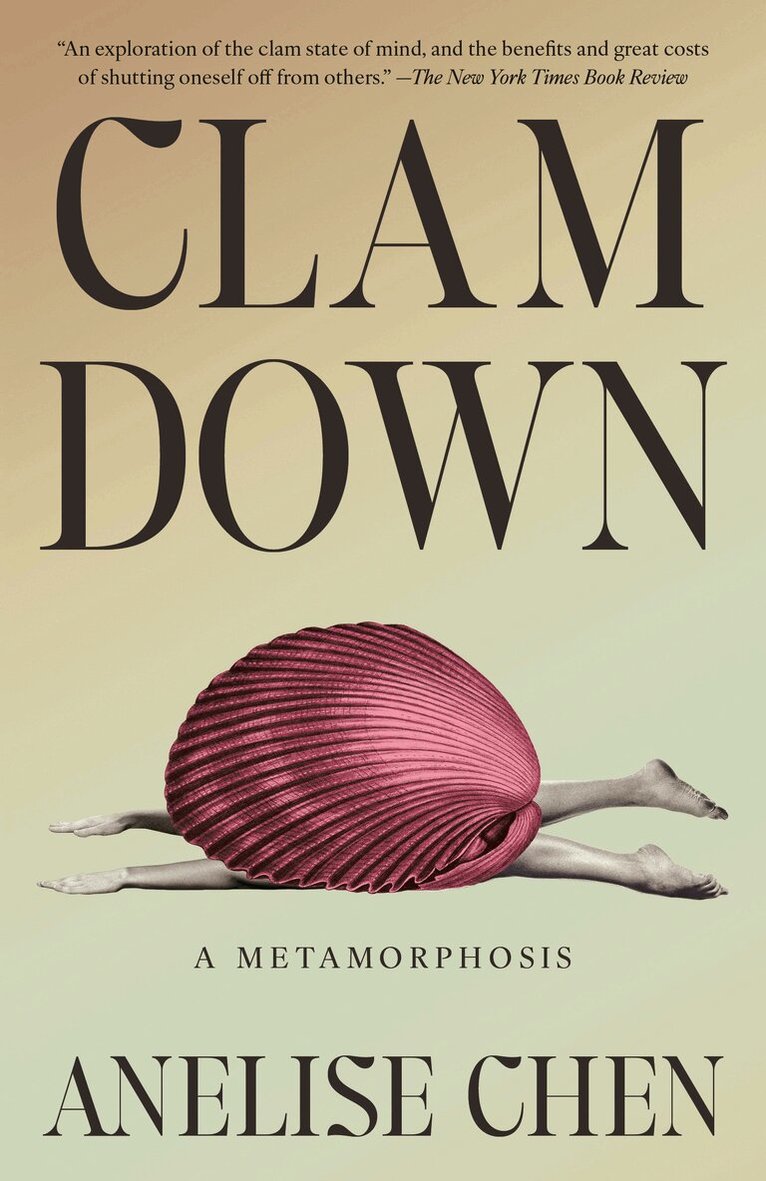
Named one of 5 Writers Under 35 by National Book Foundation, 2019Blending elements of memoir and sports writing, Anelise Chen’s debut novel is an experimental work that perhaps most resembles what the ancient Greeks called hyponemata, or “notes to the self,” in the form of observations, reminders and self-exhortations. Taken together, these notes constitute a personal handbook on “how to live”––or perhaps more urgently “why to live,” a question the narrator, graduate student Athena Chen, desperately needs answering. When Chen hears news that her brilliant friend from college has committed suicide, she is thrown into a fugue of fear and doubt. Through anecdotes and close readings of moments in the sometimes harrowing world of sports, the novel questions the validity of our current narratives of success.Anelise Chen earned her BA in English from UC Berkeley and her MFA in Fiction from NYU. Her fiction, essays and interviews have appeared in The New York Times, Gawker, NPR and elsewhere. She currently teaches writing at Columbia University.
A wondrously unusual memoir about a woman who, in the midst of mourning her divorce, retreats into her shell and renegotiates her relationship to solitude, shame, and connectionfrom an acclaimed 5 Under 35 National Book Foundation honoree.We've all heard the one about waking up as a cockroachbut what if a crisis turned you into a clam?After the dissolution of her marriage, a writer is transformed into a "clam" via typo after her mother keeps texting her to "clam down." The funny if unhelpful command forces her to ask what it means to "clam down" during crisesto retreat, hide, close up, and stay silent. Idiomatically, we are said to "clam up" when we can't speak, and to "come out of our shell" when we reemerge, transformed.In order to understand her path, the clam digs into examples of others who have also "succumbed to shellfish" to embrace lives of reclusiveness and extremity. But this is a story that radiates outward from the kernel of selfhood to family, society, and ecosystem. Finally, the writer must confront her own "clam genealogy" to interview her dad who disappeared for a decade to write a mysterious accounting software called Shell Computing. In learning about his past to better understand his decisions, she learns not only how to forgive him, but also how to move on from her own wounds of abandonment and insecurity.Using a genre-defying structure and written in novelistic prose that draws from art, literature, and natural history, she unfolds a complex story of interspecies connectedness, in which humans learn lessons of adaptation and survival from their mollusk kin. While it makes sense in certain situations to retreat behind fortified walls, the choice to do so also exacts a price. What is the price of building up walls? How can one take them back down when they are no longer necessary?

PULITZER PRIZE FINALIST • In this wondrously unusual memoir, a woman retreats into her shell in the aftermath of her divorce, and must choose between the pleasures and the perils of a closed-up life—a transformation fable from an acclaimed 5 Under 35 National Book Foundation honoree.“A marvel and a delight . . . This is a book that will stay with me forever.”—Leslie Jamison, author of SplintersONE OF CHICAGO TRIBUNE’S TEN BEST BOOKS OF THE YEAR • A BEST BOOK OF THE YEAR: VULTURE, ELECTRIC LIT, SHELF AWARENESSWe’ve all heard the story about waking up as a cockroach—but what if a crisis turned you into a clam? After the dissolution of her marriage, a writer is transformed into a “clam” via typo after her mother keeps texting her to “clam down.” The funny if unhelpful command forces her to ask what it means to “clam down”—to retreat, hide, close up, and stay silent. Idiomatically, we are said to “clam up” when we can’t speak, and to “come out of our shell” when we reemerge, transformed.In order to understand her path, the clam digs into examples of others who have embraced lives of reclusiveness and extremity. Finally, she confronts her own “clam genealogy” to interview her dad, who disappeared for a decade to write a mysterious accounting software called Shell Computing. By excavating his past to better understand his decisions, she learns not only how to forgive him but also how to move on from her own wounds of abandonment and insecurity.Using a genre-defying structure and written in novelistic prose that draws from art, literature, and natural history, Anelise Chen unfolds a complex story of interspecies connectedness, in which humans learn lessons of adaptation and survival from their mollusk kin. While it makes sense in certain situations to retreat behind fortified walls, the choice to do so also exacts a price. What is the price of building up walls? How can one take them back down when they are no longer necessary?
Named one of 5 Writers Under 35 by National Book Foundation, 2019Blending elements of memoir and sports writing, Anelise Chen’s debut novel is an experimental work that perhaps most resembles what the ancient Greeks called hyponemata, or “notes to the self,” in the form of observations, reminders and self-exhortations. Taken together, these notes constitute a personal handbook on “how to live”––or perhaps more urgently “why to live,” a question the narrator, graduate student Athena Chen, desperately needs answering. When Chen hears news that her brilliant friend from college has committed suicide, she is thrown into a fugue of fear and doubt. Through anecdotes and close readings of moments in the sometimes harrowing world of sports, the novel questions the validity of our current narratives of success.Anelise Chen earned her BA in English from UC Berkeley and her MFA in Fiction from NYU. Her fiction, essays and interviews have appeared in The New York Times, Gawker, NPR and elsewhere. She currently teaches writing at Columbia University.