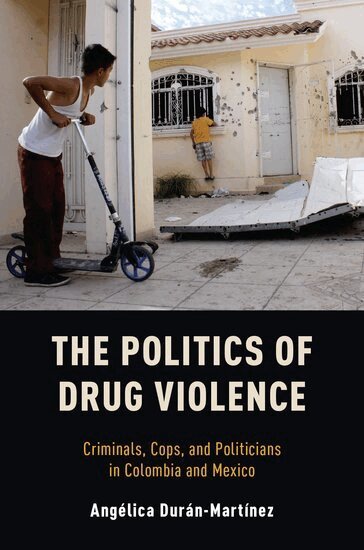
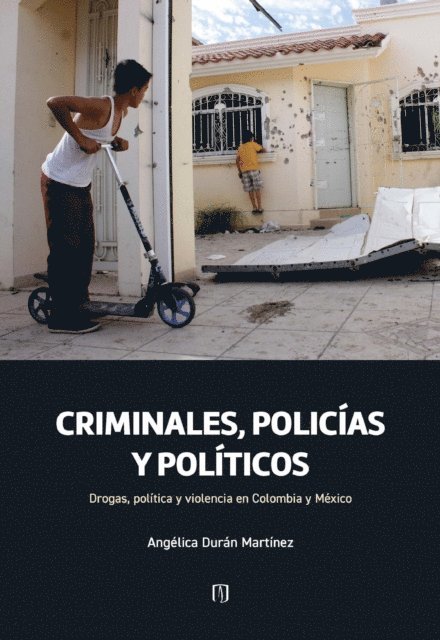
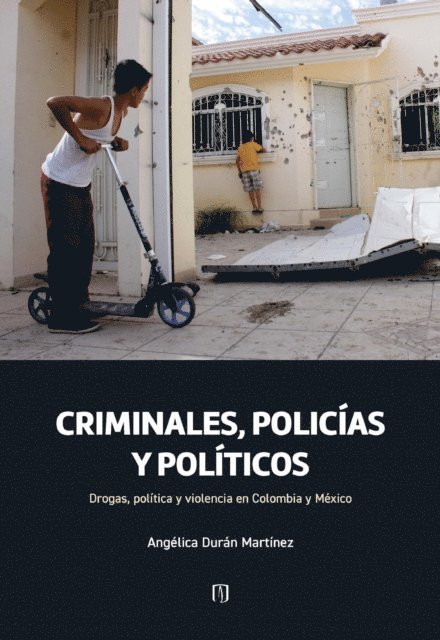
Over the last few decades, drug trafficking organizations in Latin America became infamous for their shocking public crimes, from narcoterrorist assaults on the Colombian political system in the 1980s to the more recent wave of beheadings in Mexico. However, while these highly visible forms of public violence dominate headlines, they are neither the most common form of drug violence nor simply the result of brutality. Rather, they stem from structural conditions that vary from country to country and from era to era. In The Politics of Drug Violence, Angelica Durán-Martínez shows how variation in drug violence results from the complex relationship between state power and criminal competition. Drawing on remarkably extensive fieldwork, this book compares five cities that have been home to major trafficking organizations for the past four decades: Cali and Medellín in Colombia, and Ciudad Juárez, Culiacán, and Tijuana in Mexico. She shows that violence escalates when trafficking organizations compete and the state security apparatus is fragmented. However, when the criminal market is monopolized and the state security apparatus cohesive, violence tends to be more hidden and less frequent. The size of drug profits does not determine violence levels, and neither does the degree of state weakness. Rather, the forms and scale of violent crime derive primarily from the interplay between marketplace competition and state cohesiveness. An unprecedentedly rich empirical account of one of the worst problems of our era, the book will reshape our understanding of the forces driving organized criminal violence in Latin America and elsewhere.
Durante las últimas décadas, las organizaciones de narcotráfico en América Latina se han hecho famosas por sus espantosos crímenes públicos, como los ataques narcoterroristas al sistema político colombiano en los años ochenta o las olas de decapitaciones en México. Sin embargo, si bien estas formas visibles de violencia pública dominan los titulares, no son ni la manifestación más común de violencia relacionada con las drogas ni simplemente el resultado de la brutalidad. Más bien, surgen de condiciones estructurales que varían de un país a otro y de una época a otra. Criminales, policías y políticos da cuenta de cómo esta variación en la violencia resulta de la compleja interacción entre el poder estatal y la competencia criminal. A partir de un extenso trabajo de campo, la autora compara cinco ciudades en las que han operado importantes organizaciones de tráfico durante los últimos cuarenta años: Cali y Medellín, en Colombia, y Ciudad Juárez, Culiacán y Tijuana, en México. Este libro propone que la violencia se intensifica cuando las organizaciones compiten y el aparato de seguridad del Estado se fragmenta. Por el contrario, si el mercado criminal está monopolizado y la seguridad del Estado está cohesionada, la violencia tiende a estar más oculta y ser menos frecuente. Esta obra, que trata uno de los peores problemas de nuestra era, cambiará nuestra comprensión de las fuerzas que impulsan la violencia delictiva organizada en América Latina.