Angelica Fenner – författare
Visar alla böcker från författaren Angelica Fenner. Handla med fri frakt och snabb leverans.
7 produkter
7 produkter
Inbunden, Engelska, 2004
514 kr
Skickas inom 10-15 vardagar
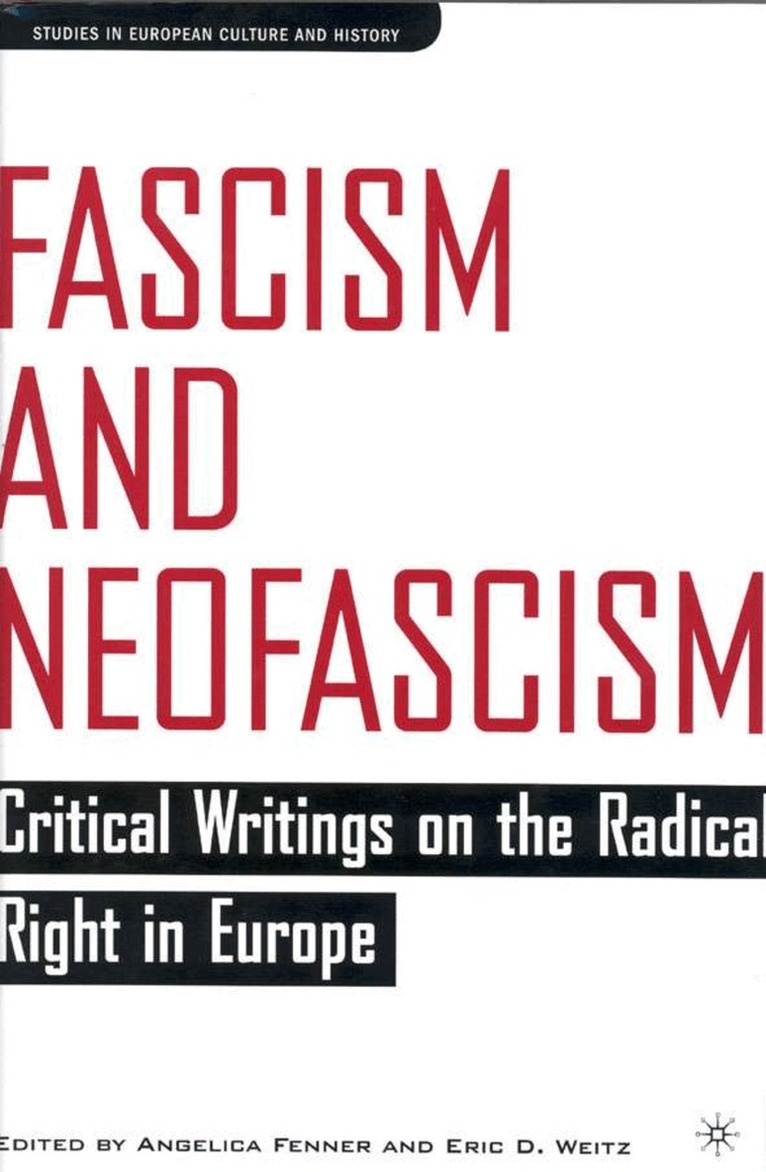
The dramatic transformations of the 1990s - the end of the Cold War, the establishment of political liberties and market economies in Eastern Europe, German unification - quickly led commentators to proclaim the end of all ideologies and the complete triumph of liberal capitalism. Just as quickly, however, right-wing extremism began a surge in Europe that has not significantly abated to this day. Fascism and Neofascism is a collection of essays that is distinctive in two important ways. First, unlike most volumes, which cover either historical fascism or the recent radical right, Fascism and Neofascism spans both periods. Secondly, this volume also aims to bring newer modes of inquiry, rooted in cultural studies, into dialogue with more 'traditional' ways of viewing fascism. The editors' approach is deliberately interdisciplinary, even eclectic.
Inbunden, Engelska, 2011
649 kr
Skickas inom 5-8 vardagar
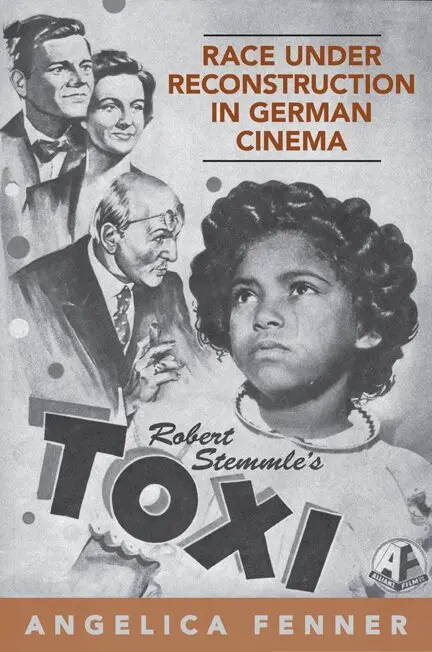
Race Under Reconstruction in German Cinema investigates postwar racial formations via a pivotal West German film by one of the most popular and prolific directors of the era. The release of Robert Stemmle's Toxi (1952) coincided with the enrolment in West German schools of the first five hundred Afro-German children fathered by African-American occupation soldiers. The didactic plot traces the ideological conflicts that arise among members of a patrician family when they encounter an Afro-German child seeking adoption, herein broaching issues of integration at a time when the American civil rights movement was gaining momentum and encountering violent resistance.Perceptions of 'Blackness' in Toxi demonstrate continuities with those prevailing in Wilhelmine Germany, but also signal the influence of American social science discourse and tropes originating in icons of American popular culture, such as Uncle Tom's Cabin, Birth of a Nation, and several Shirley Temple films. By applying a Cultural Studies approach to individual film sequences, publicity photos, and press reviews, Angelica Fenner relates West German discourses around race and integration to emerging economic and political anxieties, class antagonism, and the reinstatement of conventional gender roles.The film Toxi is now available on DVD from the DEFA Film Library.
E-bok
Engelska, 2011827 kr
Läs direkt efter köp
Race Under Reconstruction in German Cinema investigates postwar racial formations via a pivotal West German film by one of the most popular and prolific directors of the era. The release of Robert Stemmle's Toxi (1952) coincided with the enrolment in West German schools of the first five hundred Afro-German children fathered by African-American occupation soldiers. The didactic plot traces the ideological conflicts that arise among members of a patrician family when they encounter an Afro-German child seeking adoption, herein broaching issues of integration at a time when the American civil rights movement was gaining momentum and encountering violent resistance.Perceptions of 'Blackness' in Toxi demonstrate continuities with those prevailing in Wilhelmine Germany, but also signal the influence of American social science discourse and tropes originating in icons of American popular culture, such as Uncle Tom's Cabin, Birth of a Nation, and several Shirley Temple films. By applying a Cultural Studies approach to individual film sequences, publicity photos, and press reviews, Angelica Fenner relates West German discourses around race and integration to emerging economic and political anxieties, class antagonism, and the reinstatement of conventional gender roles.The film Toxi is now available on DVD from the DEFA Film Library.
E-bok
PDF, Engelska, 2011730 kr
Läs direkt efter köp
Race Under Reconstruction in German Cinema investigates postwar racial formations via a pivotal West German film by one of the most popular and prolific directors of the era. The release of Robert Stemmle's Toxi (1952) coincided with the enrolment in West German schools of the first five hundred Afro-German children fathered by African-American occupation soldiers. The didactic plot traces the ideological conflicts that arise among members of a patrician family when they encounter an Afro-German child seeking adoption, herein broaching issues of integration at a time when the American civil rights movement was gaining momentum and encountering violent resistance.Perceptions of 'Blackness' in Toxi demonstrate continuities with those prevailing in Wilhelmine Germany, but also signal the influence of American social science discourse and tropes originating in icons of American popular culture, such as Uncle Tom's Cabin, Birth of a Nation, and several Shirley Temple films. By applying a Cultural Studies approach to individual film sequences, publicity photos, and press reviews, Angelica Fenner relates West German discourses around race and integration to emerging economic and political anxieties, class antagonism, and the reinstatement of conventional gender roles.The film Toxi is now available on DVD from the DEFA Film Library.
Del 11 - Screen Cultures: German Film and the Visual
Autobiographical Turn in Germanophone Documentary and Experimental Film
Inbunden, Engelska, 2014
1 257 kr
Skickas inom 5-8 vardagar
A volume of essays marking out a new, historically and culturally specific model for contemplating autobiographical non-fiction film and video.There is a widespread notion in the scholarly literature on autobiographical nonfiction film that there are unchanging, universal models for the investigation of the self through audiovisual media. By insisting on the cultural andhistorical specificity of that self, the essays in this volume trace the range of politically and theoretically informed taboos, critiques, and proclivities that shape autobiographical filmmaking in German-speaking countries. Indoing so, they delineate a new model for contemplating autobiographical film and video.The essays in this volume examine the parameters shaping the audiovisual self in the Germanophone cultural context across a variety of practices and aesthetic modes, from contemporary artists including Hito Steyerl, Ming Wong, and kate hers to Rolf Dieter Brinkmann's multimedia experiments of the 1970s, and from Helke Misselwitz's challenges to the documentary tradition in the GDR to Peter Liechti's investigations of Swiss ambivalence toward the nation's iconic landscape. The volume thus takes up a number of historically and geographically specific iterations of autobiographical discourse that in each case remain contingent on the space and time in which they are uttered.Contributors: Dagmar Brunow, Steve Choe, Robin Curtis, Tobias Ebbrecht-Hartmann, Angelica Fenner, Marcy Goldberg, Feng-Mei Heberer, Rembert Hüser, Waltraud Maierhofer, Christopher Pavsek, Patrik Sjöberg, Carrie Smith-Prei, Anna Stainton.Robin Curtis is Professor of Theory and Practice of Audiovisual Media at the Heinrich-Heine-University in Düsseldorf, Germany.Angelica Fenner is Associate Professor of German and Cinema Studies at the University of Toronto.
Häftad, Tyska, 2025
337 kr
Skickas inom 3-6 vardagar
E-bok
PDF, Tyska, 2025317 kr
Läs direkt efter köp
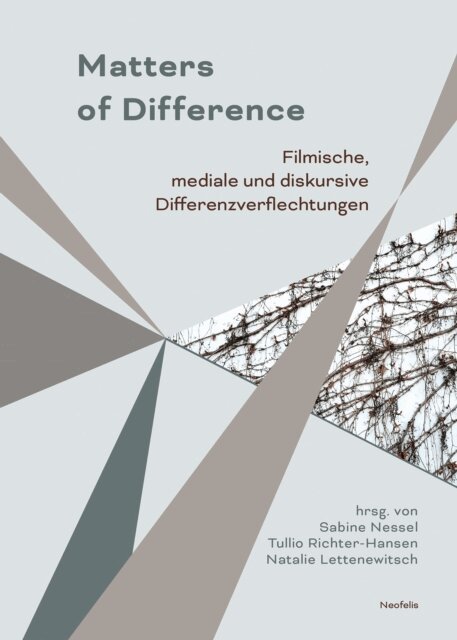
Gegenwartig erleben wir eine zunehmende gesellschaftliche Diversifizierung und zugleich einen rechtskonservativen Backlash gegen diese Tendenz. In dieser paradoxen Situation gleichzeitiger Fort- und Ruckschritte ist eine wissenschaftliche Auseinandersetzung mit Differenz enorm wichtig. Diese kann sich auf Kategorien wie Geschlecht, Klasse, race , Alter oder Mensch/Tier beziehen; Differenzierungen finden sich aber auch in Film und Medien, wenn es um Gegensatze wie hell/dunkel oder Close Up/Totale geht. All diese und weitere Dimensionen von Differenz nimmt der Band als komplexe Gebilde kritisch in den Blick und bezieht sie (neu) aufeinander. Im Mittelpunkt der Beitrage stehen spezifische mediale, materielle und soziale Konstellationen, in denen Differenzen ausgehandelt werden. Diese versammeln dabei ein breites Themenspektrum, etwa verschiedene kunstlerische Verfahren, die Darstellung von Migration und judischer Differenzerfahrung im Film, auf Sport bezogene Unterscheidungen, politische Verhaltnisse in Kolumbien oder queere und diasporische Perspektiven. Im Weiterdenken intersektionaler Forschungen, die vor allem soziale Differenzen produktiv in Beziehung setzen, kommt den Bildausschnitten, Montagen, Dispositiven, Sounds etc. besondere Aufmerksamkeit zu. Die Wendung "e;differences that matter"e;, mit der u.a. Donna Haraway, Sara Ahmed und Karen Barad argumentieren, gibt einen zentralen Impuls fur den Band. 'Unterschiede von materieller Bedeutung' beziehen sich auf entsprechende Forderungen nach Ausdifferenzierung durch kapitalismus- und rassismuskritische Feministinnen of Color bereits seit dem 19. Jahrhundert. Gleichzeitig klingt in Matters of Difference die unterschiedliche Wertigkeit der Kategorisierungen selbst an: In einer konkreten Figuration sind bestimmte Differenzen von gro erem Gewicht als andere, und auch diese Unterscheidung ist sowohl hergestellt als auch mit materiellen und politischen Implikationen verbunden. Inwiefern kann die Orientierung an komplexen Differenzbeziehungen politisch produktiv sein und welche Rolle spielen dabei filmische, mediale und diskursive Dimensionen?Matters of Difference bildet den Auftakt der neuen Reihe Figurationen Filmische und mediale Verflechtungen von Differenz , die sich mit Fragen, Prozessen und Wahrnehmungen von Differenzverhaltnissen befasst. Mit Beitragen von Svea Braunert, Angelica Fenner, Natascha Frankenberg, Karin Harrasser, Bettina Henzler, Till Kadritzke, Katrin Koppert, Gwendolin Lehnerer, Vera Mader, Winfried Pauleit, Drehli Robnik, Julia Schumacher / Lea Wohl von Haselberg, Markus Stauff und Susann Winsel.