Angelo Moreno - Böcker
Visar alla böcker från författaren Angelo Moreno. Handla med fri frakt och snabb leverans.
3 produkter
3 produkter
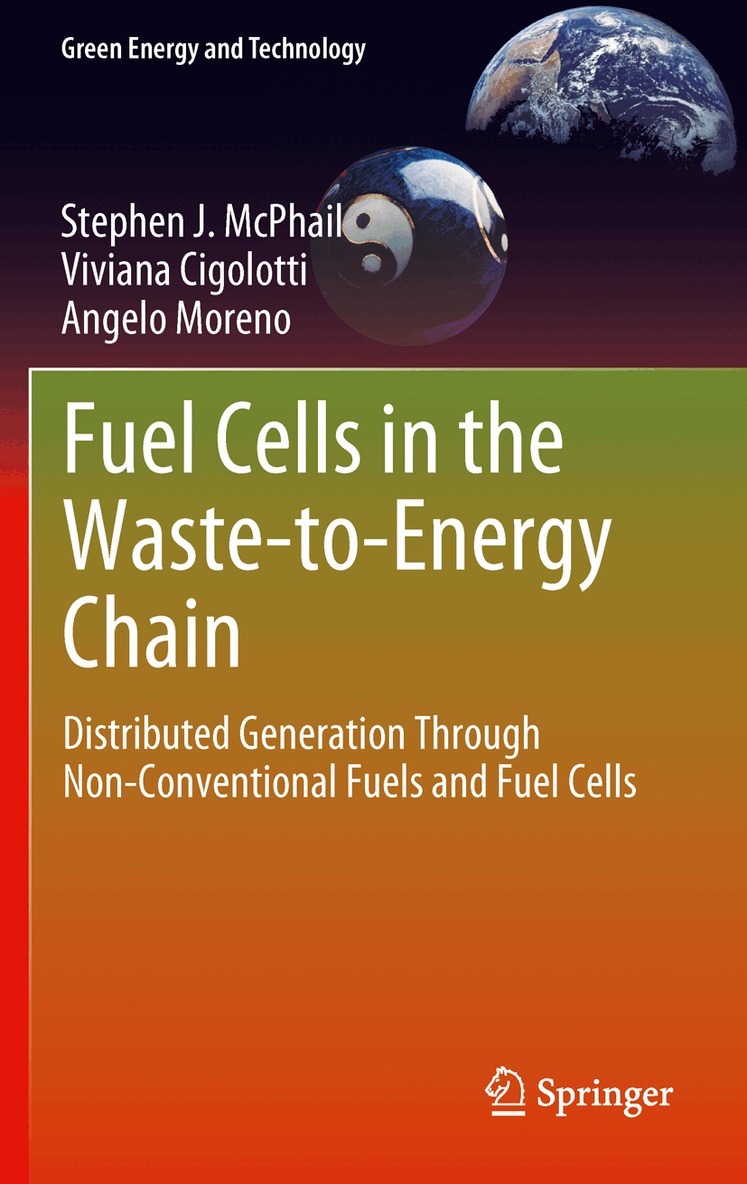
Fuel Cells in the Waste-to-Energy Chain
Distributed Generation Through Non-Conventional Fuels and Fuel Cells
Inbunden, Engelska, 2012
1 589 kr
Skickas inom 10-15 vardagar
As the availability of fossils fuels becomes more limited, the negative impact of their consumption becomes an increasingly relevant factor in our choices with regards to primary energy sources. The exponentially increasing demand for energy is reflected in the mass generation of by-products and waste flows which characterize current society’s development and use of fossil sources. The potential for recoverable material and energy in these ever-increasing refuse flows is huge, even after the separation of hazardous constituent elements, allowing safe and sustainable further exploitation of an otherwise 'wasted' resource. Fuel Cells in the Waste-to-Energy Chain explores the concept of waste-to-energy through a 5 step process which reflects the stages during the transformation of refuse flows to a valuable commodity such as clean energy.By providing selected, integrated alternatives to the current centralized, wasteful, fossil-fuel based infrastructure, Fuel Cells in the Waste-to-Energy Chain explores how the concept of waste-to-energy can be constructed and developed into a realistic solution. The entire spectrum of current and future energy problems is illuminated through the explanation of the operational, integration and marketing implications of high efficiency technological solutions using the real context of developed regions such as Europe. Up-to-date reviews are provided on the status of technology and demonstration, implementation and marketing perspectives. The detailed technological information and insight gathered from over twenty years of experience in the field makes Fuel Cells in the Waste-to-Energy Chain a valuable resource for all engineers and researchers in the fields of energy supply systems and waste conversion, as well as providing a key reference for discussions by policy makers, marketing experts and industry developers working in energy supply and waste management.
Fuel Cells in the Waste-to-Energy Chain
Distributed Generation Through Non-Conventional Fuels and Fuel Cells
Häftad, Engelska, 2014
1 589 kr
Skickas inom 10-15 vardagar
As the availability of fossils fuels becomes more limited, the negative impact of their consumption becomes an increasingly relevant factor in our choices with regards to primary energy sources. The exponentially increasing demand for energy is reflected in the mass generation of by-products and waste flows which characterize current society’s development and use of fossil sources. The potential for recoverable material and energy in these ever-increasing refuse flows is huge, even after the separation of hazardous constituent elements, allowing safe and sustainable further exploitation of an otherwise 'wasted' resource. Fuel Cells in the Waste-to-Energy Chain explores the concept of waste-to-energy through a 5 step process which reflects the stages during the transformation of refuse flows to a valuable commodity such as clean energy.By providing selected, integrated alternatives to the current centralized, wasteful, fossil-fuel based infrastructure, Fuel Cells in the Waste-to-Energy Chain explores how the concept of waste-to-energy can be constructed and developed into a realistic solution. The entire spectrum of current and future energy problems is illuminated through the explanation of the operational, integration and marketing implications of high efficiency technological solutions using the real context of developed regions such as Europe. Up-to-date reviews are provided on the status of technology and demonstration, implementation and marketing perspectives. The detailed technological information and insight gathered from over twenty years of experience in the field makes Fuel Cells in the Waste-to-Energy Chain a valuable resource for all engineers and researchers in the fields of energy supply systems and waste conversion, as well as providing a key reference for discussions by policy makers, marketing experts and industry developers working in energy supply and waste management.
728 kr
Skickas inom 3-6 vardagar
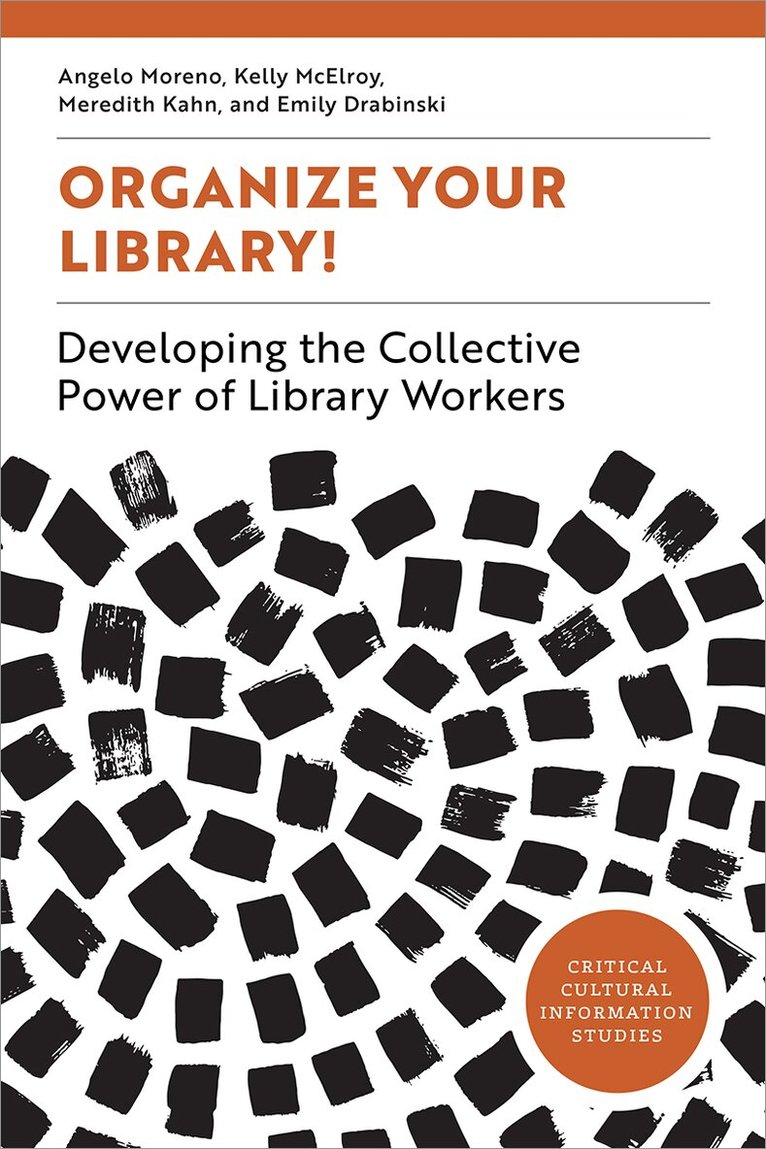
Foreword by Jane Slaughter Interest in unions and the real, day-to-day benefits they secure for employees is on the rise—including among library workers, who are beginning to realize that on their own they have little leverage. But with a union they have the power of numbers, and their working conditions are decided by a collectively negotiated agreement rather than by the malleable judgement of an individual administrator or library board. This handbook will equip readers with the knowledge, skills, and strategies necessary for organizing and maintaining a union at their library. Peppered throughout by illuminating stories from successful library union leaders and members, this book discusses why library workers need unions and explores some of the benefits that a collective bargaining agreement can assure, such as job security, increased salaries, codification of the rules for overtime pay and time off, and protection from harassment by patrons; explains why a contract won't limit employees' autonomy; walks readers through how to launch a union drive, including the basics of talking with co-workers, combating apathy and fear, and running a campaign; offers an overview of the steps involved in building a new union, from forming an organizing committee to getting recognition and setting up a governance structure; sketches out the key issues relating to contracts, the details of bargaining and negotiation, and arbitration; lays out approaches and strategies for dealing with supervisors and administrators in the context of your union work, including effective communication between labor and management, contract enforcement, and handling bad behavior such as unfair labor practices and retaliation; gives advice on pursuing changes in your workplace in a right-to-work state; explores the constructive roles that bosses can play to support the union efforts of the workers who organize them; and provides an Action Plan at the end of each chapter with suggested readings, questions for reflection, and activities designed to help deepen your knowledge, broaden your network, and practice important skills.