Angie Maxwell – författare
Visar alla böcker från författaren Angie Maxwell. Handla med fri frakt och snabb leverans.
10 produkter
10 produkter
Inbunden, Engelska, 2019
509 kr
Skickas inom 5-8 vardagar
The Southern Strategy is traditionally understood as a Goldwater and Nixon-era effort by the Republican Party to win over disaffected white voters in the Democratic stronghold of the American South. To realign these voters with the GOP, the party abandoned its past support for civil rights and used racially coded language to capitalize on southern white racial angst. However, that decision was but one in a series of decisions the GOP made not just on race, but on feminism and religion as well, in what Angie Maxwell and Todd Shield call the "Long Southern Strategy." In the wake of Second-Wave Feminism, the GOP dropped the Equal Rights Amendment from its platform and promoted traditional gender roles in an effort to appeal to anti-feminist white southerners, particularly women. And when the leadership of the Southern Baptist Convention became increasingly fundamentalist and politically active, the GOP tied its fate to the Christian Right. With original, extensive data on national and regional opinions and voting behavior, Maxwell and Shields show why all three of those decisions were necessary for the South to turn from blue to red. To make inroads in the South, however, GOP politicians not only had to take these positions, but they also had to sell them with a southern "accent." Republicans embodied southern white culture by emphasizing an "us vs. them" outlook, preaching absolutes, accusing the media of bias, prioritizing identity over the economy, encouraging defensiveness, and championing a politics of retribution. In doing so, the GOP nationalized southern white identity, rebranded itself to the country at large, and fundamentally altered the vision and tone of American politics.
E-bok
PDF, Engelska, 2019248 kr
Läs direkt efter köp
The Southern Strategy was but one in a series of decisions the GOP made not just on race, but on feminism and religion as well, in what Angie Maxwell and Todd Shields call the "Long Southern Strategy." The Southern Strategy is traditionally understood as a Goldwater and Nixon-era effort by the Republican Party to win over disaffected white voters in the Democratic stronghold of the American South. To realign these voters with the GOP, the party abandoned its past support for civil rights and used racially coded language to capitalize on southern white racial angst. However, that decision was but one in a series of decisions the GOP made not just on race, but on feminism and religion as well, in what Angie Maxwell and Todd Shields call the "Long Southern Strategy." In the wake of Second-Wave Feminism, the GOP dropped the Equal Rights Amendment from its platform and promoted traditional gender roles in an effort to appeal to anti-feminist white southerners, particularly women. And when the leadership of the Southern Baptist Convention became increasingly fundamentalist and politically active, the GOP tied its fate to the Christian Right. With original, extensive data on national and regional opinions and voting behavior, Maxwell and Shields show why all three of those decisions were necessary for the South to turn from blue to red. To make inroads in the South, however, GOP politicians not only had to take these positions, but they also had to sell them with a southern "accent." Republicans embodied southern white culture by emphasizing an "us vs. them" outlook, preaching absolutes, accusing the media of bias, prioritizing identity over the economy, encouraging defensiveness, and championing a politics of retribution. In doing so, the GOP nationalized southern white identity, rebranded itself to the country at large, and fundamentally altered the vision and tone of American politics.
E-bok
Engelska, 2019248 kr
Läs direkt efter köp
The Southern Strategy was but one in a series of decisions the GOP made not just on race, but on feminism and religion as well, in what Angie Maxwell and Todd Shields call the "Long Southern Strategy." The Southern Strategy is traditionally understood as a Goldwater and Nixon-era effort by the Republican Party to win over disaffected white voters in the Democratic stronghold of the American South. To realign these voters with the GOP, the party abandoned its past support for civil rights and used racially coded language to capitalize on southern white racial angst. However, that decision was but one in a series of decisions the GOP made not just on race, but on feminism and religion as well, in what Angie Maxwell and Todd Shields call the "Long Southern Strategy." In the wake of Second-Wave Feminism, the GOP dropped the Equal Rights Amendment from its platform and promoted traditional gender roles in an effort to appeal to anti-feminist white southerners, particularly women. And when the leadership of the Southern Baptist Convention became increasingly fundamentalist and politically active, the GOP tied its fate to the Christian Right. With original, extensive data on national and regional opinions and voting behavior, Maxwell and Shields show why all three of those decisions were necessary for the South to turn from blue to red. To make inroads in the South, however, GOP politicians not only had to take these positions, but they also had to sell them with a southern "accent." Republicans embodied southern white culture by emphasizing an "us vs. them" outlook, preaching absolutes, accusing the media of bias, prioritizing identity over the economy, encouraging defensiveness, and championing a politics of retribution. In doing so, the GOP nationalized southern white identity, rebranded itself to the country at large, and fundamentally altered the vision and tone of American politics.
Häftad, Engelska, 2021
344 kr
Skickas inom 5-8 vardagar
The Southern Strategy was but one in a series of decisions the GOP made not just on race, but on feminism and religion as well, in what Angie Maxwell and Todd Shields call the "Long Southern Strategy." The Southern Strategy is traditionally understood as a Goldwater and Nixon-era effort by the Republican Party to win over disaffected white voters in the Democratic stronghold of the American South. To realign these voters with the GOP, the party abandoned its past support for civil rights and used racially coded language to capitalize on southern white racial angst. However, that decision was but one in a series of decisions the GOP made not just on race, but on feminism and religion as well, in what Angie Maxwell and Todd Shields call the "Long Southern Strategy." In the wake of Second-Wave Feminism, the GOP dropped the Equal Rights Amendment from its platform and promoted traditional gender roles in an effort to appeal to anti-feminist white southerners, particularly women. And when the leadership of the Southern Baptist Convention became increasingly fundamentalist and politically active, the GOP tied its fate to the Christian Right. With original, extensive data on national and regional opinions and voting behavior, Maxwell and Shields show why all three of those decisions were necessary for the South to turn from blue to red. To make inroads in the South, however, GOP politicians not only had to take these positions, but they also had to sell them with a southern "accent." Republicans embodied southern white culture by emphasizing an "us vs. them" outlook, preaching absolutes, accusing the media of bias, prioritizing identity over the economy, encouraging defensiveness, and championing a politics of retribution. In doing so, the GOP nationalized southern white identity, rebranded itself to the country at large, and fundamentally altered the vision and tone of American politics.
Häftad, Engelska, 2014
443 kr
Skickas inom 10-15 vardagar
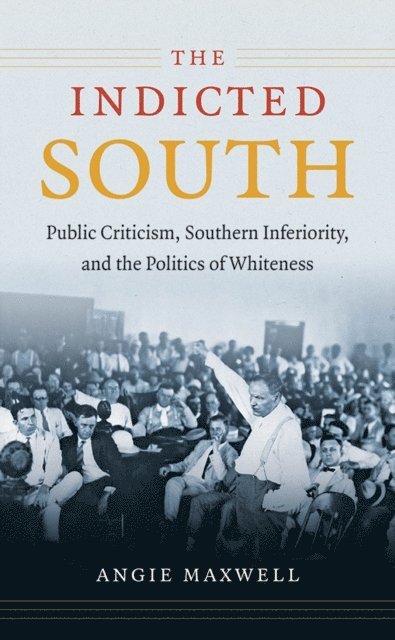
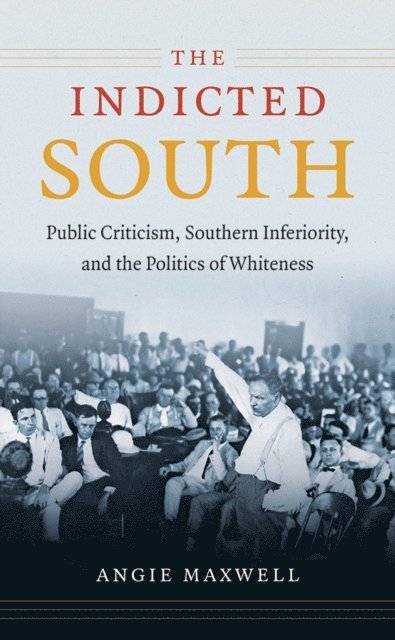
By the 1920s, the sectional reconciliation that had seemed achievable after Reconstruction was foundering, and the South was increasingly perceived and portrayed as impoverished, uneducated, and backward. In this interdisciplinary study, Angie Maxwell examines and connects three key twentieth-century moments in which the South was exposed to intense public criticism, identifying in white southerners' responses a pattern of defensiveness that shaped the region's political and cultural conservatism. Maxwell exposes the way the perception of regional inferiority confronted all types of southerners, focusing on the 1925 Scopes trial in Dayton, Tennessee, and the birth of the anti-evolution movement; the publication of I'll Take My Stand and the turn to New Criticism by the Southern Agrarians; and Virginia's campaign of Massive Resistance and Interposition in response to the Brown v. Board of Education decision. Tracing the effects of media scrutiny and the ridicule that characterised national discourse in each of these cases, Maxwell reveals the reactionary responses that linked modern southern whiteness with anti-elitism, states' rights, fundamentalism, and majoritarianism.
E-bok
Engelska, 2011441 kr
Läs direkt efter köp
Over sixty years ago, political scientist V.O. Key Jr. published his seminal work, Southern Politics in State and Nation. Key''s book redefined the field of southern politics and remains one of the most cited and influential works in twentieth-century political science and southern history. In Unlocking V.O. Key Jr., prominent southern scholars in history, political science, and southern and American studies reconsider Key''s analysis, debating his omissions as well as highlighting the timeless elements of his work. Charles Reagan Wilson, Kari Frederickson, and Pearl K. Ford argue that Key''s exclusion of religion, violence, and African American political participation altered the field of southern politics. Keith Gaddie and Justin Wert draw attention to Key''s methodological innovations, while Margaret Reid questions Key''s limited and gendered vision of the southern electorate. Harold Stanley discusses the complexity of teaching Key in the twenty-first century. Byron E. Shafer and Richard Johnston argue for the role that class and the economy played in the realignment of the South with the Republican Party, while Dan T. Carter points to race as the driving factor in this major shift. Susan MacManus tracks immigration trends in the region to explain contemporary southern political behavior. Supported with a foreword by Byron E. Shafer that provides an overview of Key''s major contributions as a political scientist, and concluding with Wayne Parent''s discussion of Key and the contemporary student, Unlocking V.O. Key Jr. is a must-read companion to the classic Southern Politics in State and Nation.
Häftad, Engelska, 2018
362 kr
Skickas inom 10-15 vardagar
This book chronicles the influence of second wave feminism on everything from electoral politics to LGBTQ rights. The original descriptions of second wave feminism focused on elite, white voices, obscuring the accomplishments of many activists, as third wave feminists rightly criticized.
Inbunden, Engelska, 2018
1 243 kr
Skickas inom 10-15 vardagar
This book chronicles the influence of second wave feminism on everything from electoral politics to LGBTQ rights. The original descriptions of second wave feminism focused on elite, white voices, obscuring the accomplishments of many activists, as third wave feminists rightly criticized.
E-bok
Engelska, 2017428 kr
Läs direkt efter köp
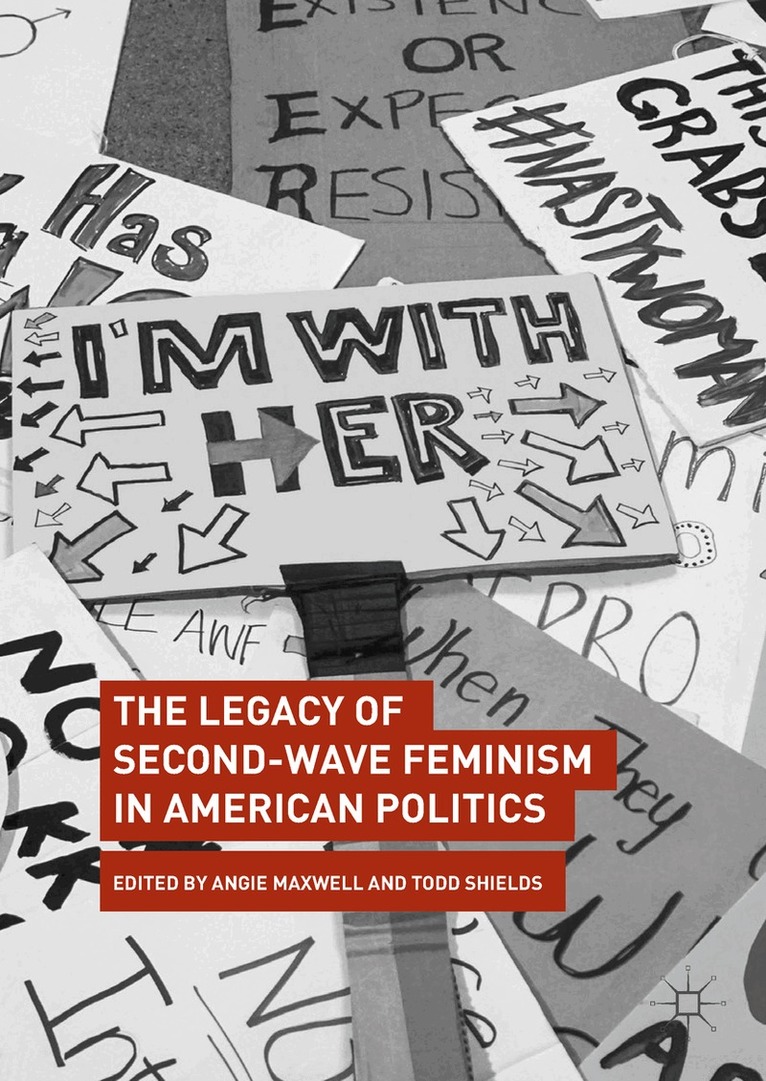
This book chronicles the influence of second wave feminism on everything from electoral politics to LGBTQ rights. The original descriptions of second wave feminism focused on elite, white voices, obscuring the accomplishments of many activists, as third wave feminists rightly criticized. Those limited narratives also prematurely marked the end of the movement, imposing an imaginary timeline on what is a continuous struggle for women’s rights. Within the chapters of this volume, scholars provide a more complex description of second wave feminism, in which the sustained efforts of women from many races, classes, sexual orientations, and religious traditions, in the fight for equality have had a long-term impact on American politics. These authors argue that even the “Second Wave” metaphor is incomplete, and should be replaced by a broader, more-inclusive metaphor that accurately depicts the overlapping and extended battle waged by women activists. With the gift of hindsight and theawareness of the limitations of and backlash to this “Second Wave,” the time is right to reflect on the feminist cause in America and to chart its path forward.
Häftad, Engelska, 2024
198 kr
Skickas inom 5-8 vardagar