Anita Konzelmann Ziv – författare
Visar alla böcker från författaren Anita Konzelmann Ziv. Handla med fri frakt och snabb leverans.
9 produkter
Shadows of the Soul
Philosophical Perspectives on Negative Emotions
Av Anita Konzelmann Ziv, Fabrice Teroni m. fl.
E-bok, 2018
813 kr
Lägg i varukorg
Negative emotions are familiar enough, but they have rarely been a topic of study in their own right. This volume brings together fourteen chapters on negative emotions, written in a highly accessible style for non-specialists and specialists alike. It starts with chapters on general issues raised …
Shadows of the Soul
Philosophical Perspectives on Negative Emotions
Av Anita Konzelmann Ziv, Fabrice Teroni m. fl.
E-bok, 2018
813 kr
Lägg i varukorg
Negative emotions are familiar enough, but they have rarely been a topic of study in their own right. This volume brings together fourteen chapters on negative emotions, written in a highly accessible style for non-specialists and specialists alike. It starts with chapters on general issues raised …
Shadows of the Soul
Philosophical Perspectives on Negative Emotions
Av Christine Tappolet, Fabrice Teroni m. fl.
Inbunden, 2018
2510 kr
Lägg i varukorg
Negative emotions are familiar enough, but they have rarely been a topic of study in their own right. This volume brings together fourteen chapters on negative emotions, written in a highly accessible style for non-specialists and specialists alike. It starts with chapters on general issues raised …
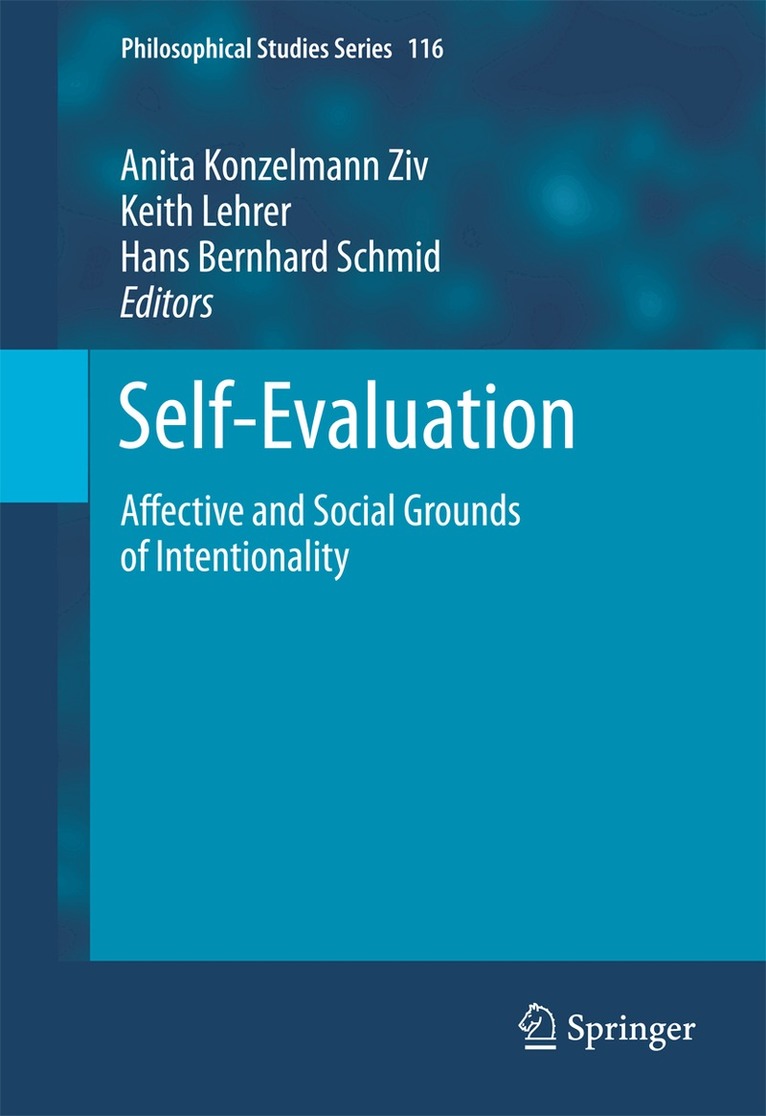
Self-Evaluation
Affective and Social Grounds of Intentionality
Av Anita Konzelmann Ziv, Keith Lehrer m. fl.
Inbunden, 2011
1065 kr
Lägg i varukorg
The book contains contributions by leading figures in philosophy of mind and action, emotion theory, and phenomenology. As the focus of the volume is truly innovative we expect the book to sell well to both philosophers and scholars from neighboring fields such as social and cognitive science. The …
Self-Evaluation
Affective and Social Grounds of Intentionality
Av Hans Bernhard Schmid, Keith Lehrer m. fl.
E-bok, 2011
1459 kr
Lägg i varukorg
The book contains contributions by leading figures in philosophy of mind and action, emotion theory, and phenomenology. As the focus of the volume is truly innovative we expect the book to sell well to both philosophers and scholars from neighboring fields such as social and cognitive science. The …
Self-Evaluation
Affective and Social Grounds of Intentionality
Av Anita Konzelmann Ziv, Keith Lehrer m. fl.
Häftad, 2013
1096 kr
Lägg i varukorg
The book contains contributions by leading figures in philosophy of mind and action, emotion theory, and phenomenology. As the focus of the volume is truly innovative we expect the book to sell well to both philosophers and scholars from neighboring fields such as social and cognitive science. The …
Institutions, Emotions, and Group Agents
Contributions to Social Ontology
Av Anita Konzelmann Ziv, Hans Bernhard Schmid
Inbunden, 2013
1096 kr
Lägg i varukorg
The contributions gathered in this volume present the state of the art in key areas of current social ontology. They focus on the role of collective intentional states in creating social facts, and on the nature of intentional properties of groups that allow characterizing them as responsible …
Institutions, Emotions, and Group Agents
Contributions to Social Ontology
Av Hans Bernhard Schmid, Anita Konzelmann Ziv
E-bok, 2013
1459 kr
Lägg i varukorg
The contributions gathered in this volume present the state of the art in key areas of current social ontology. They focus on the role of collective intentional states in creating social facts, and on the nature of intentional properties of groups that allow characterizing them as responsible …
Institutions, Emotions, and Group Agents
Contributions to Social Ontology
Av Anita Konzelmann Ziv, Hans Bernhard Schmid
Häftad, 2016
1096 kr
Lägg i varukorg
The contributions gathered in this volume present the state of the art in key areas of current social ontology. They focus on the role of collective intentional states in creating social facts, and on the nature of intentional properties of groups that allow characterizing them as responsible …