Anjali A. Palav – författare
Visar alla böcker från författaren Anjali A. Palav. Handla med fri frakt och snabb leverans.
4 produkter
4 produkter
Häftad, Engelska, 2003
1 123 kr
Skickas inom 10-15 vardagar
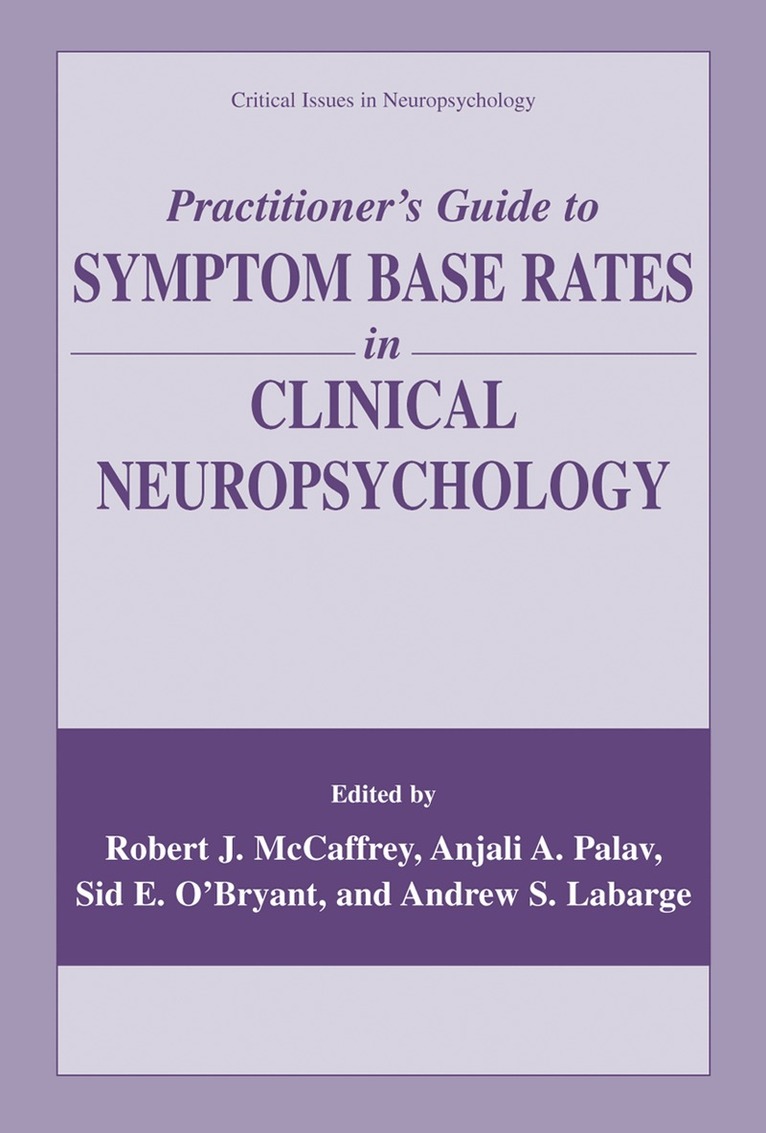
This volume is intended to serve as an aid in the process of differential diagnosis which frequently confronts neuropsychologists. The guide is a compendium of information of the base rates of symptoms across a variety of disorders which neuropsychologists encounter. In addition to serving as a convenient source of information on symptom base rates, this volume also contains detailed cross referencing of symptoms across disorders.This book is intended for use by clinical neuropsychologists and psychologists.
Häftad, Engelska, 2006
621 kr
Skickas inom 10-15 vardagar
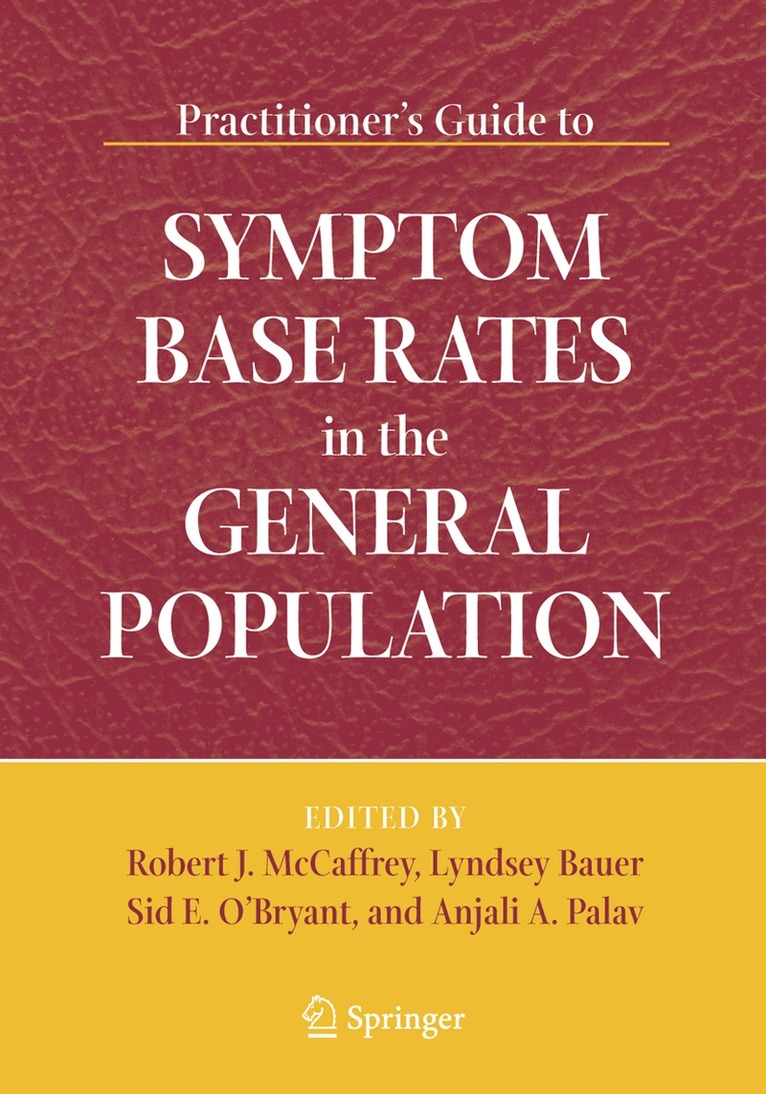
SUMMARY Meehl and Rosen (1955) Wrst demonstrated the importance of base rates in psychologicalassessmentnearlyWvedecadesago. Theseauthorsstated,"Thechief reasonforourignoranceofthebaseratesisnothingmoresubtlethanourfailureto computethem"(pg. 213). Researcherscontinuetoreportthatbaseratesarestill largelybeingignored(Duncan&Snow,1987;Gouvier,Hayes,&Smiroldo,1998). It isbecauseofthisgapintheliteraturethatthecurrentbookPractitioner'sGuideto SymptomBaseRatesintheGeneralPopulationandthepreviousbookPractitioner's GuidetoSymptomBaseRatesinClinicalNeuropsychology(McCaVreyetal. 2003) werecreated. Ifthediagnosticaccuracyofourclinicaldecision-makingprocessand ourtestinginstrumentsaretobeestimated,wemustcalculatethebaseratesofthe symptoms,disorders,anddiseasesweassessforonaregularbasis. Itishopedthatthepresentbookwillaidneuropsychologicalpractitionersand otherhealthcareprofessionalsintheevaluationofthepresentingcomplaintsoftheir patients. Baseratesareofutmostimportanceintheestimationofdiagnosticaccuracy ofneuropsychologicalandpsychologicalassessment,aswellasanyotherformof testing,aswellasintheinterviewanddiVerentialdiagnosticprocess.Itishopedthat thesetwovolumeswillencourageadditionalresearcherstoreportbaserateinfor- tion as well as detailed information regarding the population from which this informationwasobtained. Inordertoestimatetheaccuracyofourclinicaldi- noses/decisionsthataremadeonadailybasis,wemustunderstandtheimportanceof baserateinformationandmakeeveryattempttocollectandreportthisdata. Last, thecurrentintroductionismeanttoprovideabriefoverviewofbaseratesandtheir utilityinclinicalneuropsychology. Ifthereaderwishestogainmoredetailedund- standing regarding base rates s/he is referred to Practitioner's Guide to Symptom BaseRatesinClinical Neuropsychology(McCaVrey,Palav,O'Bryant,&Labarge, 2003)aswellasothersources(e. g. ,Gordon,1977;Gouvier1999,2001;Meehl& Rosen,1955). Key for Using Tables Gender: Males/Females Age: Mean (Standard Deviation); Range Race: Caucasian/African American/Hispanic/Asian Native American/Other Timeframe: timeframe of symptom report SAMPLE TABLE CHARACTERISTICS Schaughency, et al.(1994) n = 943 Diagnostic Criteria: Gender: 483/460 Age: 15 Race: Population Setting: community Nationality: New Zealand Other Sample Characteristics: Method of Reporting: self-report Timeframe: current 5 II / Control Groups: Adult COLLEGE STUDENTS Machulda, et al. (1998) Population Setting: college n = 141 undergraduates Diagnostic Criteria: Nationality: US Gender: 49/92 Other Sample Characteristics: Age: 20. 7 (18-22) Method of Reporting: self-report Race: 268/88/66/7/0/9 Timeframe: Symptom % Symptom % anxiety 87 headache 57 concentration difference 80 irritability 74 depression 71 sensitive to light 26 disordered sleep 41 sensitive to sound 16 dizziness 19 fatigue 83 Freeston, et al. (1996) Population Setting: university n = 583 undergraduates Diagnostic Criteria: Nationality: Canada Gender: 216/367 Other Sample Characteristics: Age: 22. 6 (4. 6) Method of Reporting: self-report Race: 268/88/66/7/0/9 Timeframe: Symptom % Symptom % difficulty concentrating or 16. 5 muscle tension, aches, or 17.
E-bok
PDF, Engelska, 2006727 kr
Läs direkt efter köp
E-bok
PDF, Engelska, 20121 408 kr
Läs direkt efter köp
This volume is intended to serve as an aid in the process of differential diagnosis which frequently confronts neuropsychologists. The guide is a compendium of information of the base rates of symptoms across a variety of disorders which neuropsychologists encounter. In addition to serving as a convenient source of information on symptom base rates, this volume also contains detailed cross referencing of symptoms across disorders.
This book is intended for use by clinical neuropsychologists and psychologists.