
Ann Andersson – författare
Visar alla böcker från författaren . Handla med fri frakt och snabb leverans.
2 produkter
2 produkter
Inbunden, Engelska, 2016
480 kr
Skickas inom 5-8 vardagar
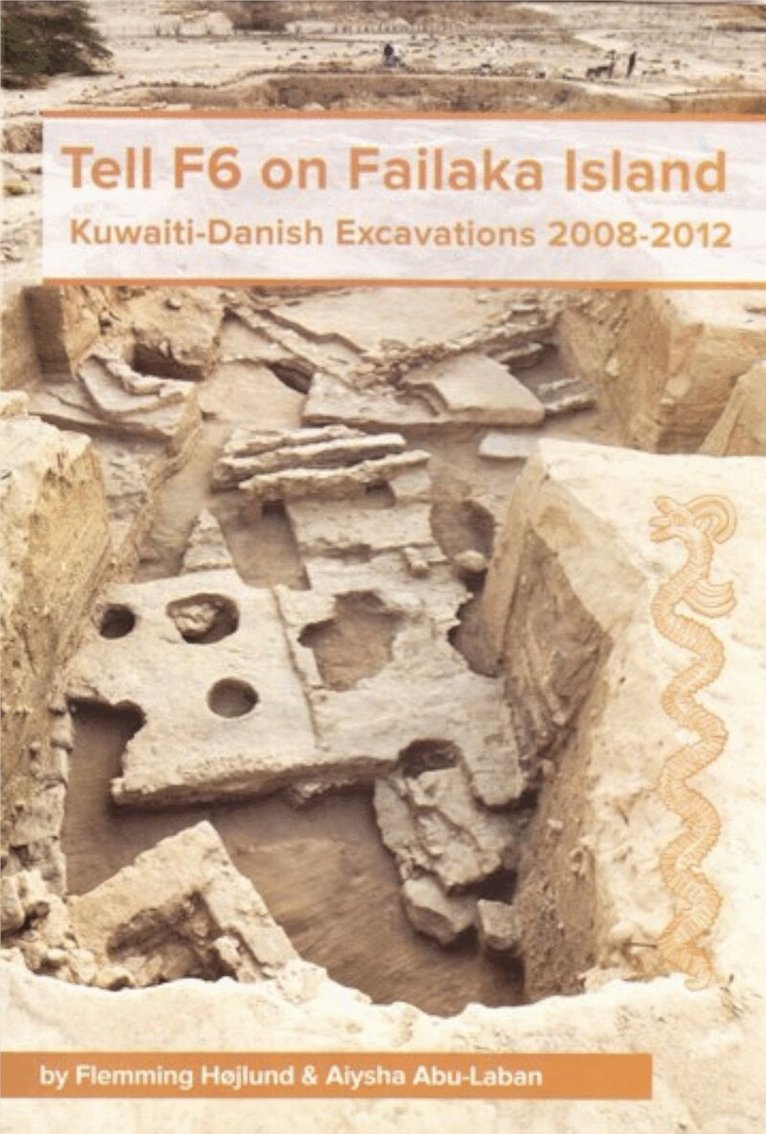
In the 3rd and 2nd millennium BC, the Arabian Gulf was an important waterway linking the large cities and states of Mesopotamia and Iran with Southeast Arabia and the Indus Valley. Trade along the Lower Sea, as the Gulf was named, demanded supporting stations, and civilizations grew and declined with the fortunes of this trade. In the 1950s, Danish investigations along the southern shores of the Gulf discovered remains of two of these ancient civilazations, Dilmun and Makkan (Bibby 1969). Survey and excavation in Kuwait beginning in 1958 revealed that the upper Gulf was an important part of Dilmun in the early 2nd millennium. Both before, during and after the flourishing of the Dilmun civilization the island of Failaka located off the Kuwait mainland formed an important role in several Near Eastern trade networks with Mesopotamia as the dominant partner.
Inbunden, Engelska, 2022
202 kr
Skickas inom 5-8 vardagar
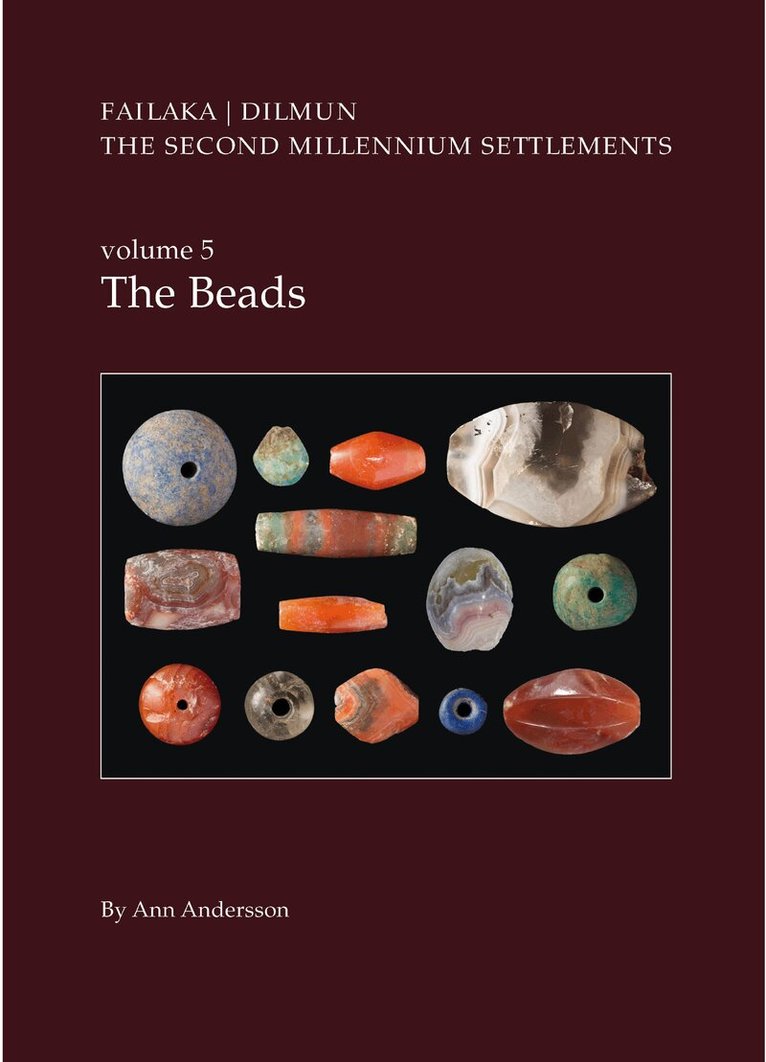
Excavations in 1958-1963 on the island of Failaka in Kuwait uncovered a small community of Dilmun traders from the second millennium BC. Prominent among the finds were 629 beads, most of them made of semi-precious stone, such as different varieties of chalcedony (agate, carnelian, jasper, and moss agate) and quartz (rock crystal, milky quartz, and smoky quartz), and a range of other stone types, such as calcite, chlorite, lapis lazuli, turquoise and porphyry. Additionally, part of the beads was made of glass: a new prestige material of the second millennium. The study consists of a typology, a classification of materials and an analysis of the dating and distribution of the beads. Manufacturing techniques, including perforation and use-wear, are also considered. In a final discussion, the bead corpus from Failaka is compared with similar material from contemporary sites on Failaka and in Bahrain, along with some thoughts on connections and trade relations, which may be inferred from the materials and forms in the bead assemblage. The study proposes far-reaching connections with the Indus in the east and the Aegean in the west.