Anna-Lena Hogenauer – författare
657 kr
Skickas inom 10-15 vardagar
687 kr
Läs direkt efter köp
This book offers a comprehensive overview of the role of parliamentary administrations in the control of European Union policy-making. It questions whether the decision to give parliaments greater powers in the aftermath of the Lisbon Treaty had only the intended effect of political debate on European policies, or whether it has also resulted in the bureaucratisation of parliaments. The authors argue that the challenges of information-management faced by parliaments lead them to delegate an extensive set of tasks to their administrations. They offer a broad empirical picture, analysing the challenges faced by national parliaments and the role and response of their administrations in the case of the European Parliament, national parliaments and regional parliaments. In addition, the book studies the interaction between different administrations and their contribution to interparliamentary cooperation. It presents a new and different perspective on the challenges and dynamics of multi-level parliamentarism.
2 151 kr
Skickas inom 10-15 vardagar
763 kr
Läs direkt efter köp
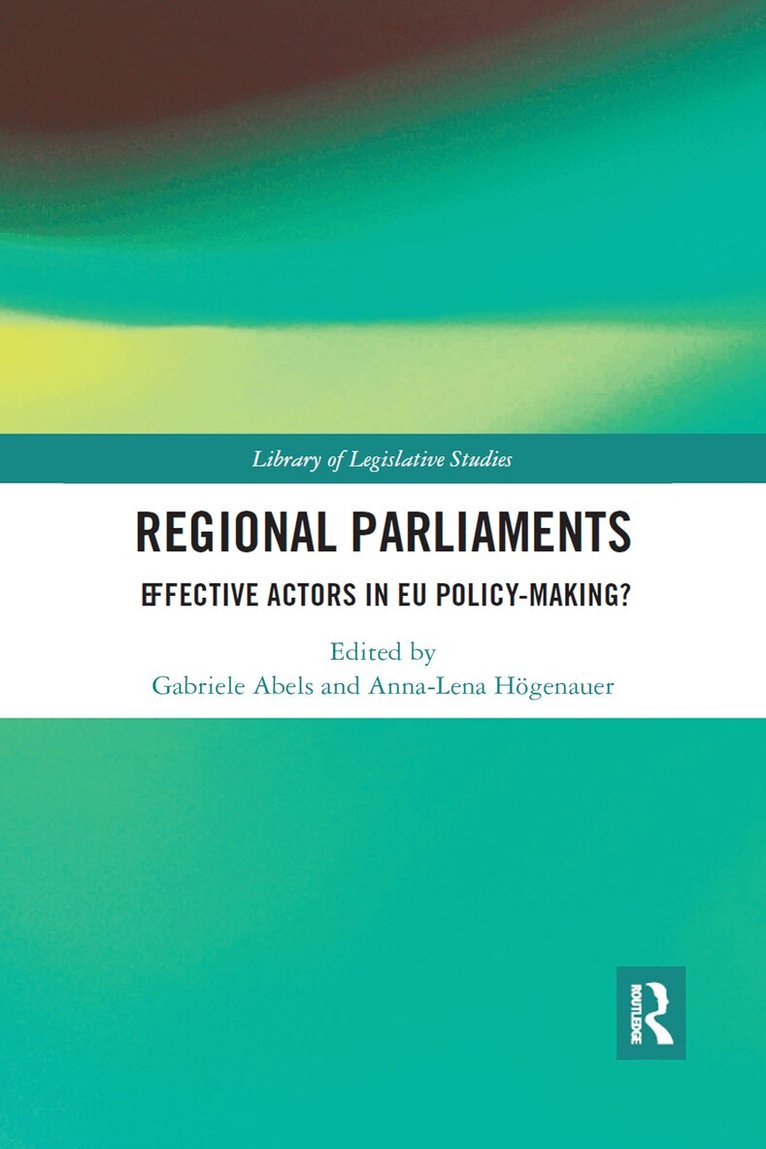
In an attempt to strengthen the legitimacy of European Union (EU) policy-making, the 2009 Lisbon Treaty strengthened the principle of parliamentary control in EU affairs. This pertains to parliaments at all levels ranging from the regional to the supranational level. This book analyses the potential of regional parliaments – the parliaments closest to the citizens – to engage in EU affairs and to fill the perceived legitimacy gap. Eight member states have a total of 73 regional parliaments with legislative powers, and there are further trends towards decentralization in Europe. On its quest to understand the role that regional parliaments can plan in the EU multi-level parliamentary system, the book addresses key questions: What are the formal powers and functions of regional parliaments in EU policy-making? How do they use their powers in practice? How active are they in EU politics, and what do they try to achieve? What factors can explain their degree of (in-)activity?
The chapters in this book were originally published in a special issue of The Journal of Legislative Studies.