Anna M. Agathangelou - Böcker
Visar alla böcker från författaren Anna M. Agathangelou. Handla med fri frakt och snabb leverans.
4 produkter
4 produkter
2 401 kr
Skickas inom 10-15 vardagar
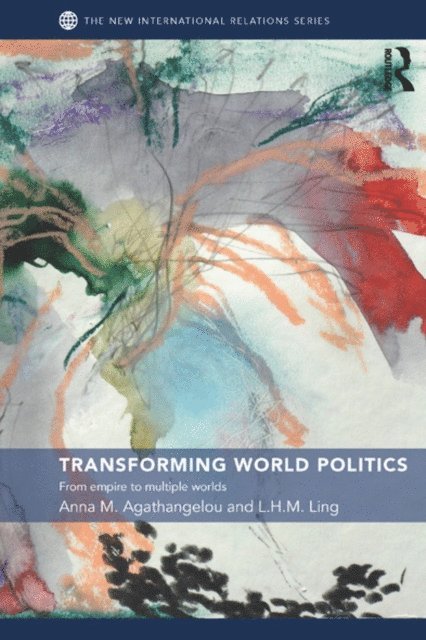
This book provides a critical understanding of contemporary world politics by arguing that the neoliberal approach to international relations seduces many of us into investing our lives in projects of power and alienation. These projects offer few options for emancipation; consequently, many feel they have little choice but to retaliate against violence with more violence. The authors of this pioneering work articulate worldism as an alternative approach to world politics. It intertwines non-Western and Western traditions by drawing on Marxist, postcolonial, feminist and critical security approaches with Greek and Chinese theories of politics, broadly defined. The authors contend that contemporary world politics cannot be understood outside the legacies of these multiple worlds, including axes of power configured by gender, race, class, and nationality, which are themselves linked to earlier histories of colonizations and their contemporary formations. With fiction and poetry as exploratory methods, the authors build on their ‘multiple worlds’ approach to consider different sites of world politics, arguing that a truly emancipatory understanding of world politics requires more than just a shift in ways of thinking; above all, it requires a shift in ways of being.Transforming World Politics will be of vital interest to students and scholars of International Relations, Political Science, Postcolonial Studies, Social Theory, Women's Studies, Asian Studies, European Union and Mediterranean Studies, and Security Studies.
772 kr
Skickas inom 10-15 vardagar
This book provides a critical understanding of contemporary world politics by arguing that the neoliberal approach to international relations seduces many of us into investing our lives in projects of power and alienation. These projects offer few options for emancipation; consequently, many feel they have little choice but to retaliate against violence with more violence. The authors of this pioneering work articulate worldism as an alternative approach to world politics. It intertwines non-Western and Western traditions by drawing on Marxist, postcolonial, feminist and critical security approaches with Greek and Chinese theories of politics, broadly defined. The authors contend that contemporary world politics cannot be understood outside the legacies of these multiple worlds, including axes of power configured by gender, race, class, and nationality, which are themselves linked to earlier histories of colonizations and their contemporary formations. With fiction and poetry as exploratory methods, the authors build on their ‘multiple worlds’ approach to consider different sites of world politics, arguing that a truly emancipatory understanding of world politics requires more than just a shift in ways of thinking; above all, it requires a shift in ways of being.Transforming World Politics will be of vital interest to students and scholars of International Relations, Political Science, Postcolonial Studies, Social Theory, Women's Studies, Asian Studies, European Union and Mediterranean Studies, and Security Studies.
Time, Climate Change, Global Racial Capitalism and Decolonial Planetary Ecologies
Inbunden, Engelska, 2022
2 150 kr
Skickas inom 10-15 vardagar
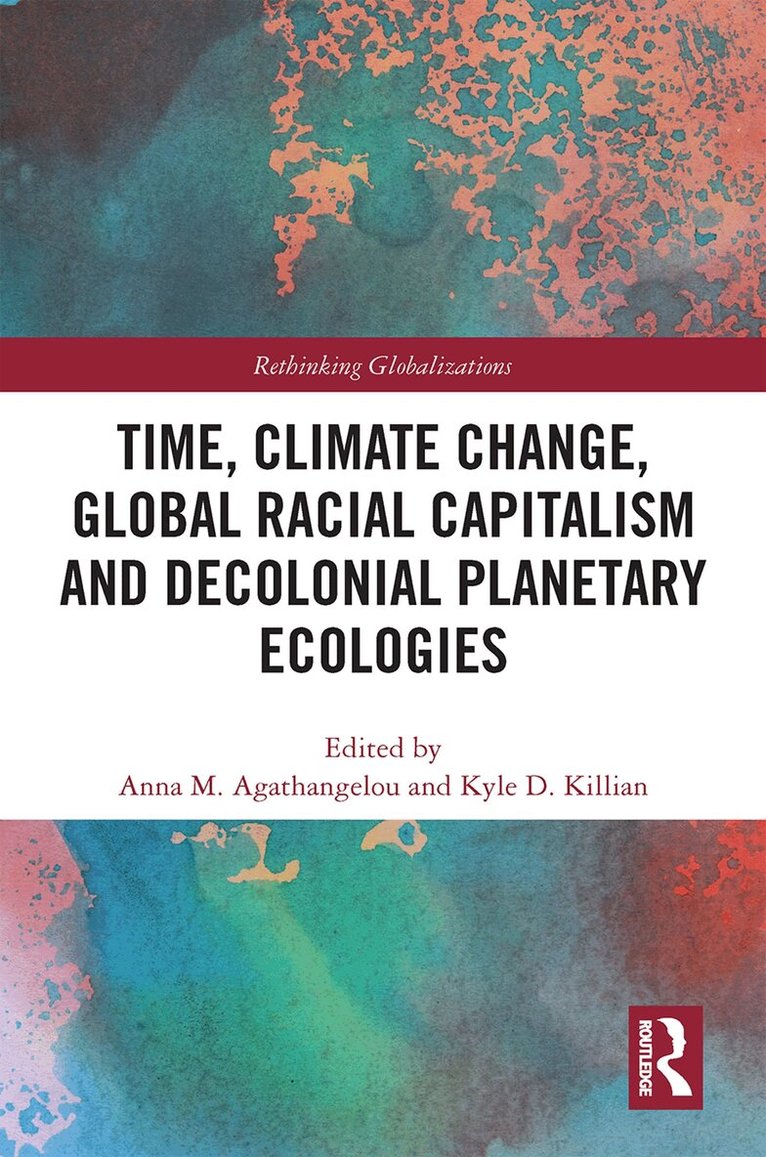
This book probes the interconnections of time and ecology in order to spark our imagination and inspire us to re-think the planetary, ecology, and otherwise. It presents debates that interrogate and elucidate the anxieties of the known and the unknown of this world and the planetary beyond, sifting through temporal accounts of the Anthropocene, human beings, and climate change.The chapters in this edited volume spur conversations with different thought systems and their underlying assumptions about the composition of structures of time and contingent temporalities. The authors engage rising temperatures in the oceans and air, the consequences, intended and unintended, of investments in various forms of "development", and the potential catastrophe unfolding in real time. Recent temporal strategies such as mitigation and adaptation to the "climate crisis" are challenged as they further compound and commodify the inquiry, the understanding and responses to environmental degradations, extractions, and displacements. Anti-colonial and decolonial debates about the structures of time, the planetary, and ecology are crucial contributions of this volume. Further, privileging the vantage points of the colonized and enslaved, the authors of this volume challenge dominant universal, cyclical, and retrospective structures of time and the planetary. Through research, poetry, art, and popular cultural analyses, the authors attend to the ways that the struggles of the "submerged," indigenous and black communities for climate justice become coded as a global warming crisis. This volume grapples with how racial climate struggles and unrest become mobilized both as a source of paralysis and as an opportunity for further expropriation and expansion of data accumulation markets for settler planetary projects all in the name of global warming. Ultimately, the authors in this volume argue that conventional attempts at exploiting the planetary all depend upon ideas of conquest and the mastery and control of ecologies, global governance, and individual behaviors. In this sense, fears about the unknown future of our planet miss what is at stake in the structures of time, the question of creation and invention.The chapters in this book were originally published as a special issue of the journal, Globalizations.
Time, Climate Change, Global Racial Capitalism and Decolonial Planetary Ecologies
Häftad, Engelska, 2024
635 kr
Skickas inom 10-15 vardagar
This book probes the interconnections of time and ecology in order to spark our imagination and inspire us to re-think the planetary, ecology, and otherwise. It presents debates that interrogate and elucidate the anxieties of the known and the unknown of this world and the planetary beyond, sifting through temporal accounts of the Anthropocene, human beings, and climate change.The chapters in this edited volume spur conversations with different thought systems and their underlying assumptions about the composition of structures of time and contingent temporalities. The authors engage rising temperatures in the oceans and air, the consequences, intended and unintended, of investments in various forms of "development", and the potential catastrophe unfolding in real time. Recent temporal strategies such as mitigation and adaptation to the "climate crisis" are challenged as they further compound and commodify the inquiry, the understanding and responses to environmental degradations, extractions, and displacements. Anti-colonial and decolonial debates about the structures of time, the planetary, and ecology are crucial contributions of this volume. Further, privileging the vantage points of the colonized and enslaved, the authors of this volume challenge dominant universal, cyclical, and retrospective structures of time and the planetary. Through research, poetry, art, and popular cultural analyses, the authors attend to the ways that the struggles of the "submerged," indigenous and black communities for climate justice become coded as a global warming crisis. This volume grapples with how racial climate struggles and unrest become mobilized both as a source of paralysis and as an opportunity for further expropriation and expansion of data accumulation markets for settler planetary projects all in the name of global warming. Ultimately, the authors in this volume argue that conventional attempts at exploiting the planetary all depend upon ideas of conquest and the mastery and control of ecologies, global governance, and individual behaviors. In this sense, fears about the unknown future of our planet miss what is at stake in the structures of time, the question of creation and invention.The chapters in this book were originally published as a special issue of the journal, Globalizations.