
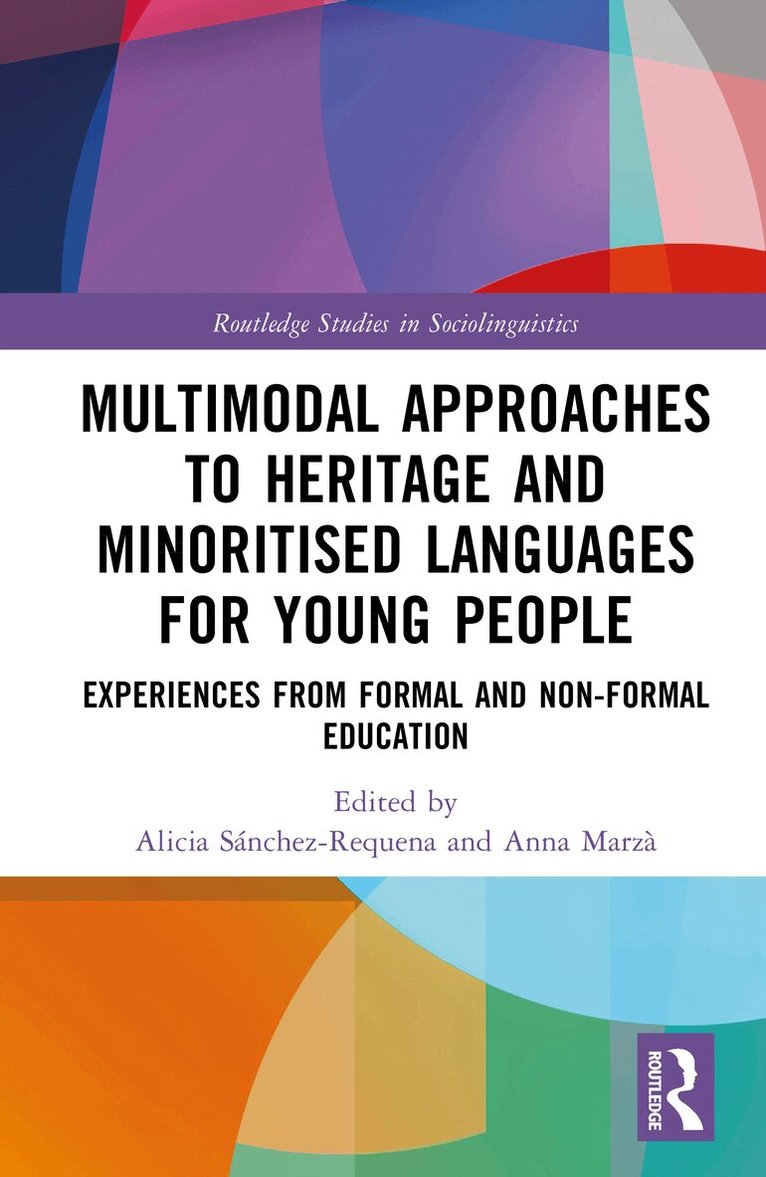
This collection brings together research from established and emerging scholars on maintaining and revitalising minoritized and heritage languages among children and young people through multimodal projects in formal and non-formal educational contexts.The volume brings insights into teaching practices and social programmes at both primary and secondary education levels that enhance the learning and use of these languages. Part I examines minoritised languages in non-formal settings, highlighting the role of digital practices, social media, and arts-based initiatives in fostering pluriliteracies beyond the classroom. Part II focuses on heritage languages in formal education, illustrating how multimodal pedagogies can support inclusion, critical multilingual awareness, and culturally responsive teaching. Across contexts, the volume emphasises learner agency, identity affirmation and critical engagement, offering concrete implications for educators, teacher educators, policymakers, and community practitioners.This book will therefore appeal to students and scholars in multilingualism, sociolinguistics, and language education, as well as teacher educators and policymakers working in multilingual and multimodal educational environments.
Aquest és el primer estudi comparatiu dels sistemes televisius en llengua catalana. El llibre s''estructura en dues parts: la primera presenta la descripció macrotextual d''aquests sistemes, i la segona analitza, en l''àmbit microtextual, productes audiovisuals concrets del valencià i el balear.Amb un plantejament teòric i metodològic molt rigorós, La llengua perifèrica examina la complexitat dels sistemes i els seus condicionants legals, socioeconòmics, lingüístics i professionals i de quina manera aquests condicionants influeixen en les decisions dels traductors. S''adreça, doncs, a docents i a investigadors de l''àmbit de la traducció audiovisual, com també als professionals dels mitjans audiovisuals, especialment els responsables dels processos de doblatge.