Anna Pagès – författare
Visar alla böcker från författaren . Handla med fri frakt och snabb leverans.
7 produkter
7 produkter
Inbunden, Engelska, 2021
1 479 kr
Skickas inom 5-8 vardagar
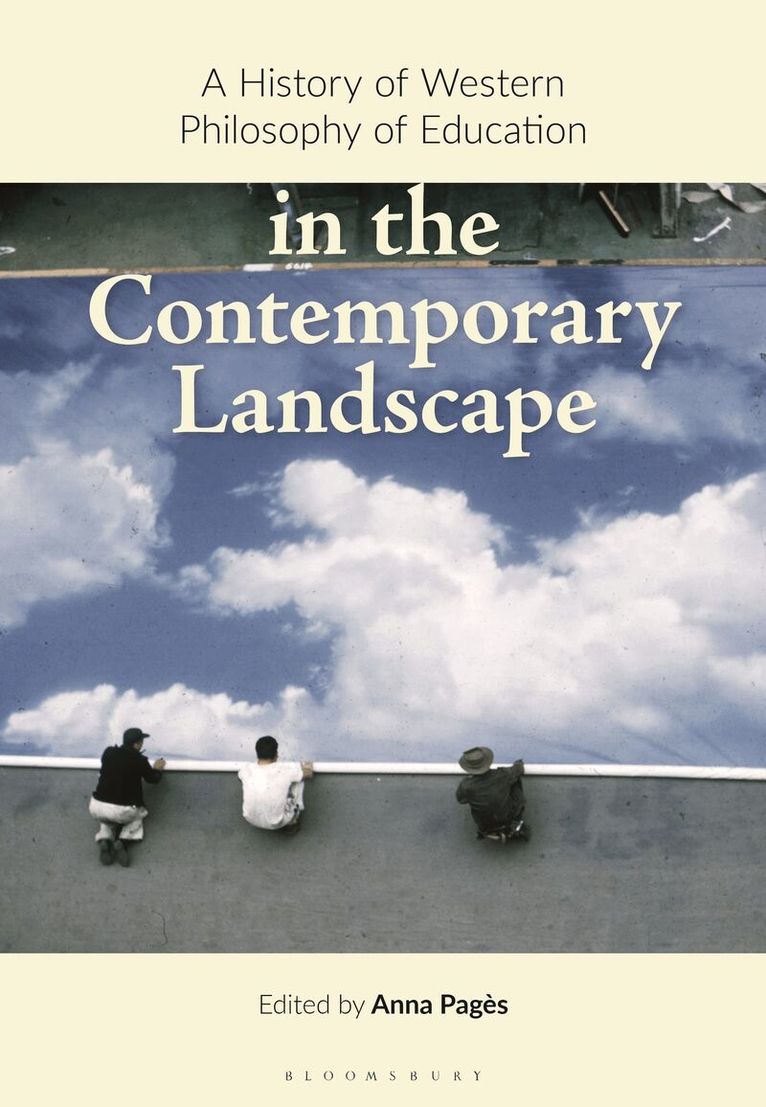
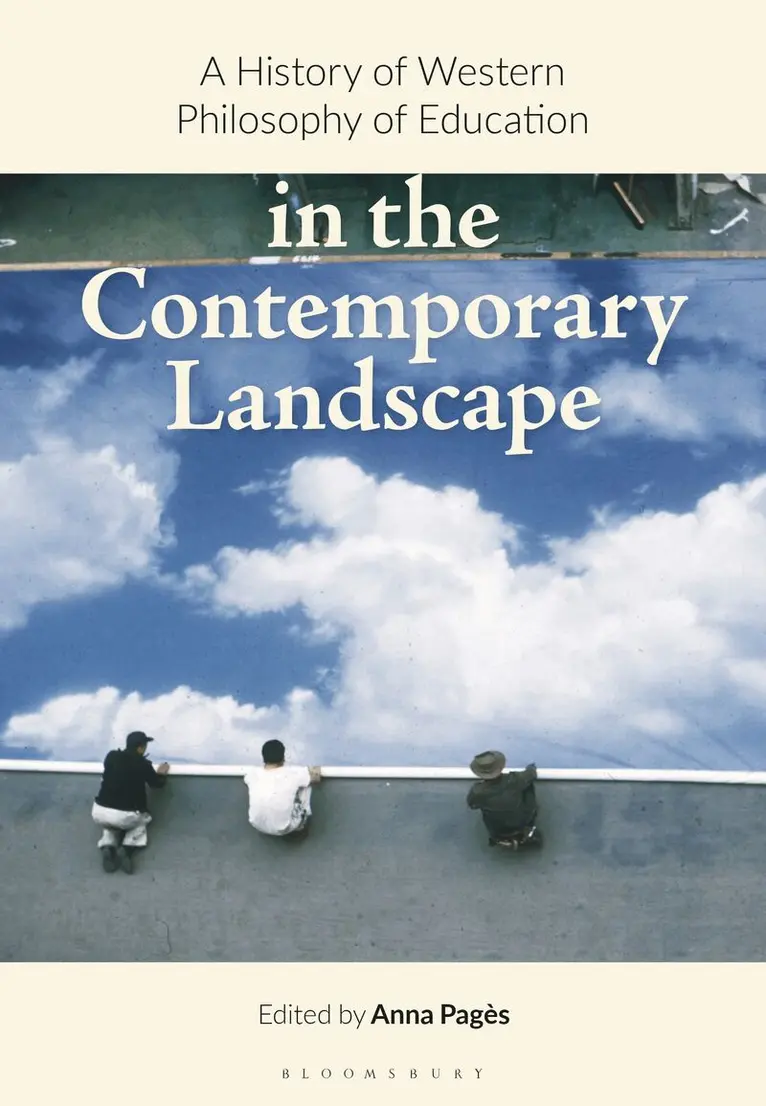
This volume traces the history of Western philosophy of education in the contemporary landscape (1914-2020). The volume covers the Cuban Revolution in 1959, the events of May 1968 in Paris, the Zapatista Revolution in 1994, and the Arab Spring revolutions from 2010 to 2012. It also covers the two World Wars, the Cold War, the fall of the Berlin Wall, and the triumph of science and technology until the hegemony of post-liberal societies. The philosophical problems covered include justice, freedom, critical thought, equity, philosophy for children, decolonialism, liberal education, feminism, and plurality. These problems are discussed in relation to the key philosophers and pedagogues of the period including Jacques Derrida, Paulo Freire, Simone De Beauvoir, Judith Butler, R.S. Peters, bell hooks, Martha Nussbaum, Matthew Lipman, Giorgio Agamben, Maxine Greene, and Simone Weil, among others. About A History of Western Philosophy of Education:An essential resource for researchers, scholars, and students of education, this five-volume set that traces the development of philosophy of education through Western culture and history. Focusing on philosophers who have theorized education and its implementation, the series constitutes a fresh, dynamic, and developing view of educational philosophy. It expands our educational possibilities by reinvigorating philosophy’s vibrant critical tradition, connecting old and new perspectives, and identifying the continuity of critique and reconstruction. It also includes a timeline showing major historical events, including educational initiatives and the publication of noteworthy philosophical works.
E-bok
Engelska, 2021397 kr
Läs direkt efter köp
This volume traces the history of Western philosophy of education in the contemporary landscape (1914-2020). The volume covers the Cuban Revolution in 1959, the events of May 1968 in Paris, the Zapatista Revolution in 1994, and the Arab Spring revolutions from 2010 to 2012. It also covers the two World Wars, the Cold War, the fall of the Berlin Wall, and the triumph of science and technology until the hegemony of post-liberal societies. The philosophical problems covered include justice, freedom, critical thought, equity, philosophy for children, decolonialism, liberal education, feminism, and plurality. These problems are discussed in relation to the key philosophers and pedagogues of the period including Jacques Derrida, Paulo Freire, Simone De Beauvoir, Judith Butler, R.S. Peters, bell hooks, Martha Nussbaum, Matthew Lipman, Giorgio Agamben, Maxine Greene, and Simone Weil, among others. About A History of Western Philosophy of Education:An essential resource for researchers, scholars, and students of education, this five-volume set that traces the development of philosophy of education through Western culture and history. Focusing on philosophers who have theorized education and its implementation, the series constitutes a fresh, dynamic, and developing view of educational philosophy. It expands our educational possibilities by reinvigorating philosophy''s vibrant critical tradition, connecting old and new perspectives, and identifying the continuity of critique and reconstruction. It also includes a timeline showing major historical events, including educational initiatives and the publication of noteworthy philosophical works.
E-bok
PDF, Engelska, 2021397 kr
Läs direkt efter köp
This volume traces the history of Western philosophy of education in the contemporary landscape (1914-2020). The volume covers the Cuban Revolution in 1959, the events of May 1968 in Paris, the Zapatista Revolution in 1994, and the Arab Spring revolutions from 2010 to 2012. It also covers the two World Wars, the Cold War, the fall of the Berlin Wall, and the triumph of science and technology until the hegemony of post-liberal societies. The philosophical problems covered include justice, freedom, critical thought, equity, philosophy for children, decolonialism, liberal education, feminism, and plurality. These problems are discussed in relation to the key philosophers and pedagogues of the period including Jacques Derrida, Paulo Freire, Simone De Beauvoir, Judith Butler, R.S. Peters, bell hooks, Martha Nussbaum, Matthew Lipman, Giorgio Agamben, Maxine Greene, and Simone Weil, among others. About A History of Western Philosophy of Education:An essential resource for researchers, scholars, and students of education, this five-volume set that traces the development of philosophy of education through Western culture and history. Focusing on philosophers who have theorized education and its implementation, the series constitutes a fresh, dynamic, and developing view of educational philosophy. It expands our educational possibilities by reinvigorating philosophy''s vibrant critical tradition, connecting old and new perspectives, and identifying the continuity of critique and reconstruction. It also includes a timeline showing major historical events, including educational initiatives and the publication of noteworthy philosophical works.
Häftad, Engelska, 2023
368 kr
Skickas inom 5-8 vardagar
A History of Western Philosophy of Education comprises five volumes which traces the development of philosophy of education through Western culture and history. The historical periods covered are:Antiquity (500BCE-500CE)The Middle Ages and Renaissance (1000-1600)The Age of Enlightenment (1700-1850)The Modern Era (1850-1914)The Contemporary Landscape (1914-present)Focusing on philosophers who have theorized education and its implementation, the series constitutes a fresh, dynamic, and developing view of educational philosophy. It expands our educational possibilities by reinvigorating philosophy’s vibrant critical tradition, connecting old and new perspectives, and identifying the continuity of critique and reconstruction. It also includes a timeline showing major historical events, including educational initiatives and the publication of noteworthy philosophical works.About Volume 5: A History of Western Philosophy of Education in the Contemporary LandscapeThis volume traces the history of Western philosophy of education in the contemporary landscape (1914-2020). The volume covers the Cuban Revolution in 1959, the events of May 1968 in Paris, the Zapatista Revolution in 1994, and the Arab Spring revolutions from 2010 to 2012. It also covers the two World Wars, the Cold War, the fall of the Berlin Wall, and the triumph of science and technology until the hegemony of post-liberal societies. The philosophical problems covered include justice, freedom, critical thought, equity, philosophy for children, decolonialism, liberal education, feminism, and plurality. These problems are discussed in relation to the key philosophers and pedagogues of the period including Jacques Derrida, Paulo Freire, Simone De Beauvoir, Judith Butler, R.S. Peters, bell hooks, Martha Nussbaum, Matthew Lipman, Giorgio Agamben, Maxine Greene, and Simone Weil, among others.
E-bok
Spanska, 201844 kr
Läs direkt efter köp
Hay filosofías nacidas para consolar y otras diseñadas quizá para herir a martillazos. Todas tienen, si embargo, algo en común: interpelarnos. La filosofía constituye, en este sentido, un fenómeno unitario, pero es evidente que no "suena" igual en todas partes.La aridez de la filosofía clásica alemana dista mucho del lenguaje casi coloquial de ciertos pensadores anglosajones. Por ejemplo, ¿cómo "suena" la filosofía que se hace hoy en Cataluña?Este libro contiene una antología de textos que permiten otear ese panorama concreto, aparte de mostrar cuáles son, en general, los focos de atención de la filosofía actual. En todo caso no se trata de un libro sobre Cataluña ni su situación política, sino de una aproximación –un "tast", como se dice en catalán— a la obra de algunos pensadores.Con la muy premeditada intención de contrastar miradas, las aportaciones de los diferentes autores son diversas, aunque confluyen en una idea tácita. Transitar la complejidad es interesante cuando sirve para emanciparnos de nuestros prejuicios. Por suerte o por desgracia, la Cataluña de hoy vive inmersa en esa complejidad.
E-bok
Spanska, 2018125 kr
Läs direkt efter köp
En El banquete, Platón nos describe la cena en la que varios filósofos discuten sobre el tema del Eros. Solo a una mujer, Diotima de Mantinea, le será permitido exponer su pensamiento, pero no con su voz sino a través de Sócrates, el principal orador. Así, Diotima es un ahogo silencioso dentro del texto, la resonancia de un pensamiento filosófico que necesita de un portavoz para que pueda ser escuchada.En este libro, Anna Pagés trata de encontrar las resonancias de la voz femenina en el núcleo mismo de la filosofía, formulando un programa polifónico de cuestiones con distintos tonos y preguntas. Y Diotima es el punto de partida para desmenuzar el tema de la feminidad más allá de los argumentos culturales del género o de la reivindicación política de la igualdad de derechos. Cenar con Diotima pretende despegar la feminidad del cuadro típico en el que la tradición patriarcal la ha encuadrado definiéndola antes de darle la palabra, llevándola al mero susurro como a Diotima para rescatar su voz incansable, trabajadora, hacedora de surcos en la oquedad del edificio filosófico. Ya es hora de que Diotima esté presente en el banquete para hablar con propia voz.
E-bok
Spanska, 2021113 kr
Läs direkt efter köp
¿Qué es la voz en el momento de leer, de escribir y de pensar? ¿Cómo localizarla en el texto, encarnarla en el cuerpo, o sufrirla en la locura?En este libro se exploran distintas dimensiones de la voz más allá del logos filosófico que tan bien conocemos como razonamiento, argumento o idea. A través de un coro de autores de la literatura, la filosofía y el psicoanálisis, la voz se desliza entre las letras y acoge otras tonalidades: Sócrates, Aristóteles, Barbara Cassin, Jacques Lacan, Hélène Cixous, Anne Carson, Friedrich Nietzsche, Helmut Plessner, Roland Barthes …La voz es una manera de respirar lo que se dice. La mujer del retrato en la portada del libro esboza una ligera sonrisa, en silencio. Su voz está suspendida entre el silencio y la palabra en un instante breve, de expectativa entre lecturas.