Annabelle Collinet – författare
Visar alla böcker från författaren Annabelle Collinet. Handla med fri frakt och snabb leverans.
2 produkter
2 produkter
E-bok
Engelska, 2021122 kr
Läs direkt efter köp
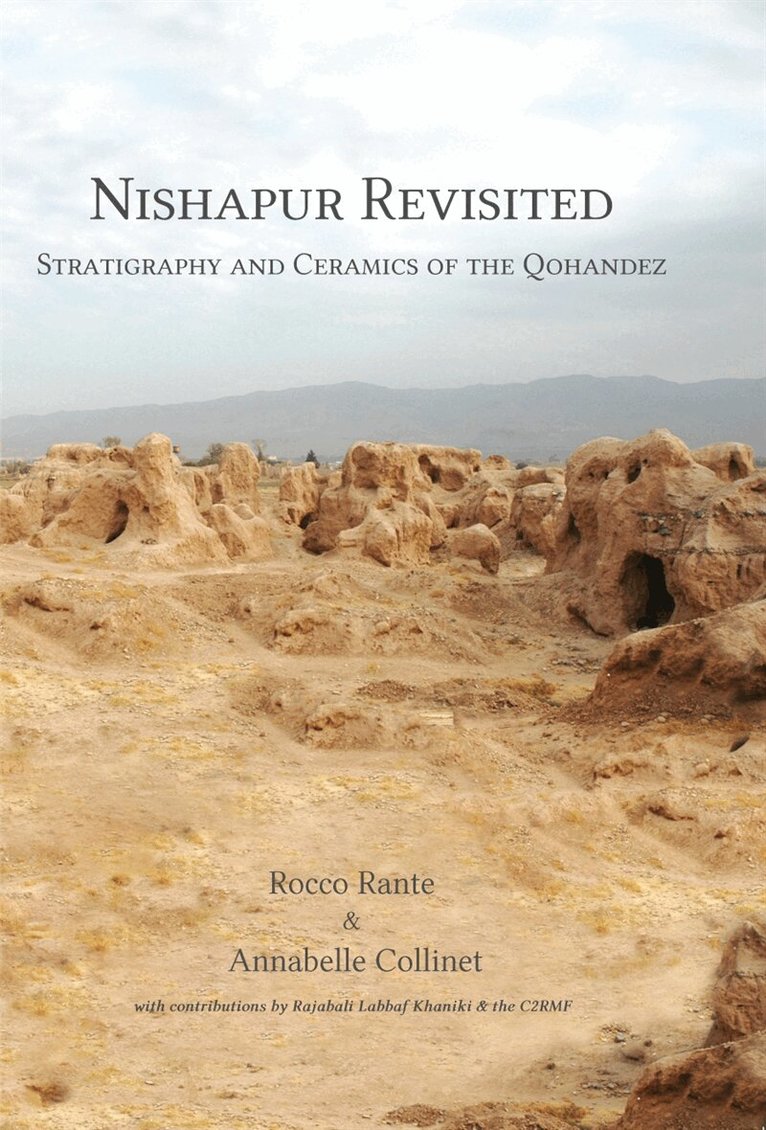
Nishapur in eastern Iran was an important Silk Road city, its position providing links to central Asia and China, Afghanistan and India, the Persian Gulf and the west. Despite previous excavations there are many unresolved questions surrounding the site; when was the city founded? Is Nishapur a Sasanian city? Was it founded by the Sasanian king Shapur I or II? The question of chronology of occupation and the ceramic sequence is also problematic particularly for late antiquity and the medieval period, as well as a complete topography of the site. The Irano-French archaeological mission at Nishapur (2004 to 2007) (CNRS-MAEE-Musée du Louvre) focused on the Qohandez, or citadel, the oldest part of Nishapur. Excavations were conducted in different areas of the mound, in order to address these questions. After an introduction to the site and the former American and Iranian excavations, this book presents the stratigraphy and the pottery of the site. The difficulties involved in establishing a precise history of the site, as well as the complexities of studying the pottery led to a program of analysis undertaken by the Research Centre of French Museums (C2RMF). Chemical and petrographic analysis, thermoluminescence (TL) dating and archaeomagnetism analysis as support to the TL results were done. A pottery database has been created regrouping the stratigraphical and laboratory analyses data, in order to manage and present an organised corpus of 1000 samples. The combination of the data from the stratigraphical and laboratory analyses gives an accurate and completely new chronology of the site. Moreover, the study also brought to light a new typological sequence of the ceramic, as well as new data about the pottery production at Nishapur.
Inbunden, Engelska, 2023
970 kr
Skickas inom 7-10 vardagar
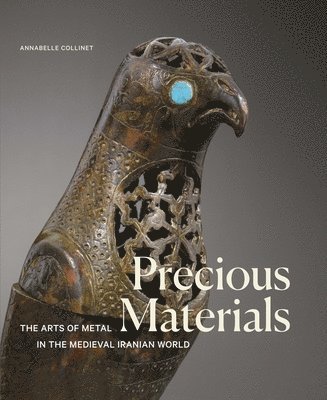
Medieval metalwork is one of the artistic highlights of the Iranian world, as well as of the Departement des Arts de l'Islam at the Louvre in Paris, which holds more than one hundred and fifty objects from this period. A new approach to the study of a historic collection, Precious Material: The Arts of Metal in the Medieval Iranian World is a comprehensive overview of the production of metalin medieval Iran. Although this is one of the most important collections in the world, the objects, some well-known but many more unpublished, have never been studied or published as an ensemble. This volume includes a presentation of the collection through the lens of its centers of manufacture, a full technical analysis, as well as the functions and contexts in which the pieces were used. Each object is fully described and illustrated in color with close-up or X-ray images, and many inscriptions have been translated and are included in the catalog entries