Anne Cronin – författare
2 179 kr
Skickas inom 10-15 vardagar
665 kr
Skickas inom 10-15 vardagar
2 934 kr
Skickas inom 5-8 vardagar
539 kr
Skickas inom 10-15 vardagar
1 723 kr
Skickas inom 3-6 vardagar
763 kr
Läs direkt efter köp
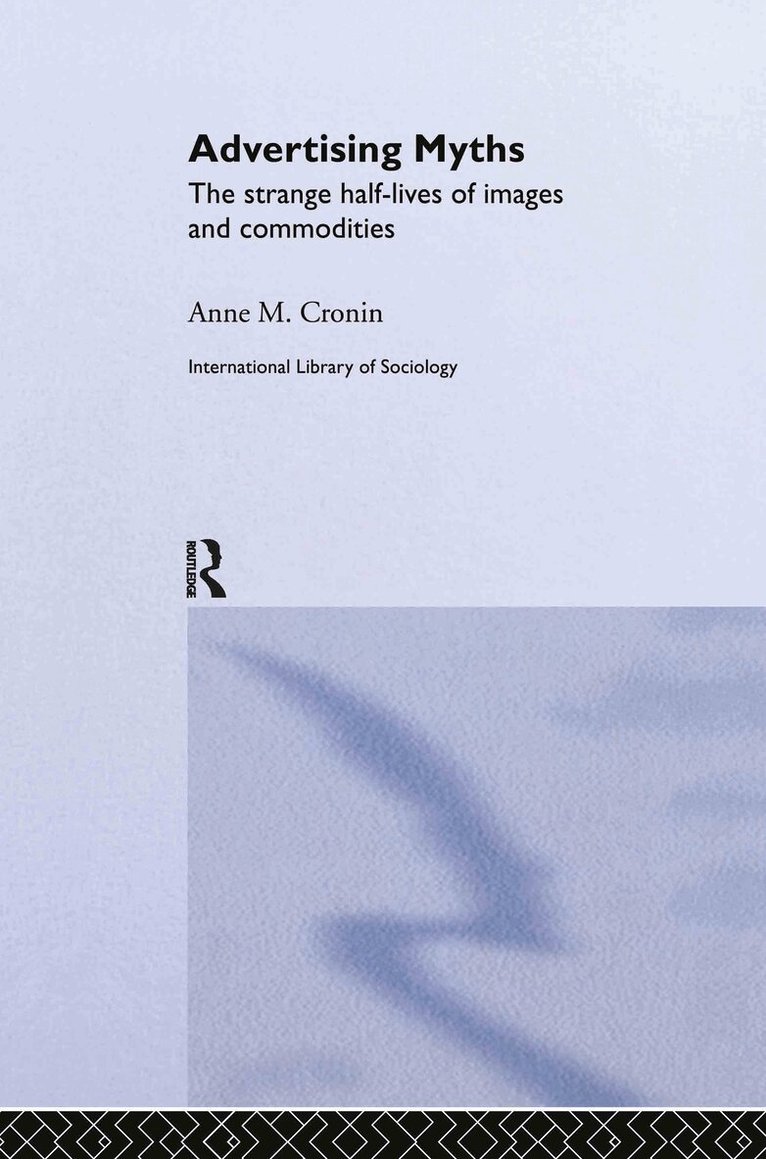
Advertising is often portrayed negatively, as corrupting a mythically pure relationship between people and things. In Advertising Myths Anne Cronin argues that it is better understood as a ''matrix of transformation'' that performs divisions in the social order and arranges classificatory regimes. Focusing on consumption controversies, Cronin contends that advertising is constituted of ''circuits of belief'' that flow between practitioners, clients, regulators, consumers and academics. Controversies such as those over tobacco and alcohol advertising, she argues, distil these beliefs and articulate with programmes of social engineering aimed at altering consumption patterns. This book will be essential reading for students and academics of advertising and consumption.
763 kr
Läs direkt efter köp
Advertising is often portrayed negatively, as corrupting a mythically pure relationship between people and things. In Advertising Myths Anne Cronin argues that it is better understood as a ''matrix of transformation'' that performs divisions in the social order and arranges classificatory regimes. Focusing on consumption controversies, Cronin contends that advertising is constituted of ''circuits of belief'' that flow between practitioners, clients, regulators, consumers and academics. Controversies such as those over tobacco and alcohol advertising, she argues, distil these beliefs and articulate with programmes of social engineering aimed at altering consumption patterns. This book will be essential reading for students and academics of advertising and consumption.
617 kr
Läs direkt efter köp
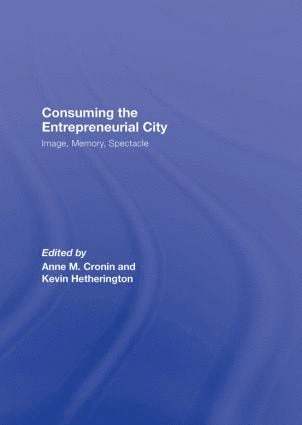
This collection offers a global perspective on the changing character of cities and the increasing importance that consumer culture plays in defining their symbolic economies. Increasingly, forms of spectacle have come to shape how cities are imagined and to influence their character and the practices through which we know them - from advertising and the selling of real estate, to youth cultural consumption practices and forms of entrepreneurship, to the regeneration of urban areas under the guise of the heritage industry and the development of a WiFi landscape. Using examples of cities such as New York, Sydney, Atlantic City, Barcelona, Rio de Janeiro, Douala, Liverpool, San Juan, Berlin and Harbin this book illustrates how image and practice have become entangled in the performance of the symbolic economy. It also argues that it is not just how the urban present is being shaped in this way that is significant to the development of cities but also that a prominent feature of their development has been the spectacular imagining of the past as heritage and through regeneration. Yet the ghosts that this conjures up in practice offer us a possible form of political unsettlement and alternative ways of viewing cities that is only just beginning to be explored.
Through this important collection by some of the leading analysts of consumption, cities and space Consuming the Entrepreneurial City offers a cutting edge analysis of the ways in which cities are developing and the implications this has for their future. It is essential reading for students of Urban Studies, Geography, Sociology, Cultural Studies, Heritage Studies and Anthropology.
617 kr
Läs direkt efter köp
This collection offers a global perspective on the changing character of cities and the increasing importance that consumer culture plays in defining their symbolic economies. Increasingly, forms of spectacle have come to shape how cities are imagined and to influence their character and the practices through which we know them - from advertising and the selling of real estate, to youth cultural consumption practices and forms of entrepreneurship, to the regeneration of urban areas under the guise of the heritage industry and the development of a WiFi landscape. Using examples of cities such as New York, Sydney, Atlantic City, Barcelona, Rio de Janeiro, Douala, Liverpool, San Juan, Berlin and Harbin this book illustrates how image and practice have become entangled in the performance of the symbolic economy. It also argues that it is not just how the urban present is being shaped in this way that is significant to the development of cities but also that a prominent feature of their development has been the spectacular imagining of the past as heritage and through regeneration. Yet the ghosts that this conjures up in practice offer us a possible form of political unsettlement and alternative ways of viewing cities that is only just beginning to be explored.
Through this important collection by some of the leading analysts of consumption, cities and space Consuming the Entrepreneurial City offers a cutting edge analysis of the ways in which cities are developing and the implications this has for their future. It is essential reading for students of Urban Studies, Geography, Sociology, Cultural Studies, Heritage Studies and Anthropology.