Anne Marcovich – författare
Visar alla böcker från författaren Anne Marcovich. Handla med fri frakt och snabb leverans.
4 produkter
4 produkter
E-bok
PDF, Engelska, 2014522 kr
Läs direkt efter köp
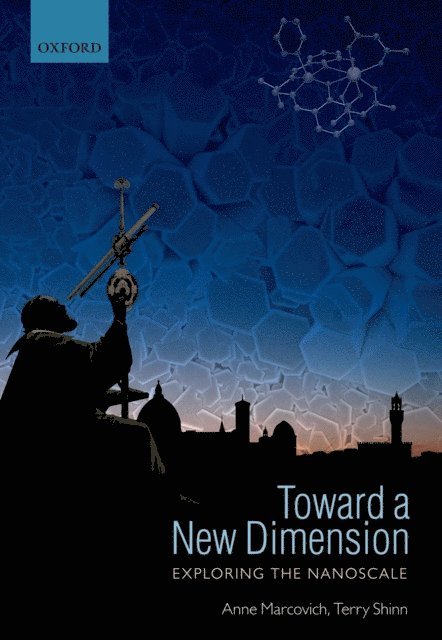
Over the course of the last thirty years, the investigation of objects at the nano scale has rocketed. Nanoscale scientific research has not only powerfully affected the amount and orientation of knowledge, it has perhaps even more significantly redirected the ways in which much research work is carried out, changed scientists'' methodology and reasoning processes, and influenced aspects of the structure of career trajectory and the functioning of scientificdisciplines.This book identifies key historical moments and episodes in the birth and evolution of nanoscience, discusses the novel repertory of epistemological concerns of practitioners, and signals sociological propensities. As Galileo''s telescope explored the moon''s surface four hundred years ago, nano instrumentation now makes it possible to see the surface of single molecules. Moreover, practitioners are able to manipulate individual atoms and molecules at will to produce pre-designed syntheticmaterials, non-existent in nature. The combinatorial of heightened observational capacity and the tailoring of synthetic artificial materials exhibiting hitherto novel physical properties has widened and transformed the worlds of scientific knowledge and technical artefact. This book invites the question:to what extent does nanoscale scientific research constitute a kind of ''scientific revolution''?
E-bok
Engelska, 2014522 kr
Läs direkt efter köp
Over the course of the last thirty years, the investigation of objects at the nano scale has rocketed. Nanoscale scientific research has not only powerfully affected the amount and orientation of knowledge, it has perhaps even more significantly redirected the ways in which much research work is carried out, changed scientists'' methodology and reasoning processes, and influenced aspects of the structure of career trajectory and the functioning of scientificdisciplines.This book identifies key historical moments and episodes in the birth and evolution of nanoscience, discusses the novel repertory of epistemological concerns of practitioners, and signals sociological propensities. As Galileo''s telescope explored the moon''s surface four hundred years ago, nano instrumentation now makes it possible to see the surface of single molecules. Moreover, practitioners are able to manipulate individual atoms and molecules at will to produce pre-designed syntheticmaterials, non-existent in nature. The combinatorial of heightened observational capacity and the tailoring of synthetic artificial materials exhibiting hitherto novel physical properties has widened and transformed the worlds of scientific knowledge and technical artefact. This book invites the question:to what extent does nanoscale scientific research constitute a kind of ''scientific revolution''?
Inbunden, Engelska, 2014
677 kr
Skickas inom 7-10 vardagar
Over the course of the last thirty years, the investigation of objects at the nano scale has rocketed. Nanoscale scientific research has not only powerfully affected the amount and orientation of knowledge, it has perhaps even more significantly redirected the ways in which much research work is carried out, changed scientists' methodology and reasoning processes, and influenced aspects of the structure of career trajectory and the functioning of scientific disciplines. This book identifies key historical moments and episodes in the birth and evolution of nanoscience, discusses the novel repertory of epistemological concerns of practitioners, and signals sociological propensities. As Galileo's telescope explored the moon's surface four hundred years ago, nano instrumentation now makes it possible to see the surface of single molecules. Moreover, practitioners are able to manipulate individual atoms and molecules at will to produce pre-designed synthetic materials, non-existent in nature. The combinatorial of heightened observational capacity and the tailoring of synthetic artificial materials exhibiting hitherto novel physical properties has widened and transformed the worlds of scientific knowledge and technical artefact. This book invites the question: to what extent does nanoscale scientific research constitute a kind of 'scientific revolution'?
E-bok
Franska, 2001226 kr
Läs direkt efter köp
Qu’est-ce qui fait changer nos sociétés ? Anne Marcovich montre que parmi les facteurs d’évolution bien identifiés — les crises économiques, les guerres internationales, les luttes politiques, les innovations techniques, les rythmes démographiques, etc. — il en est un moins bien connu, qui anime pourtant les sociétés de l’intérieur : l’image plus ou moins idéalisée qu’elles se font d’elles-mêmes et qu’elles poursuivent sans fin, comme un rêve. Rêve de peuple mythique comme les Hittites pour les Turcs ou les Mèdes pour les Kurdes. Rêve d’histoire fabuleuse comme dans les odyssées écossaises ou galloises. Rêve de héros fondateur comme le Grand Teck des Boers d’Afrique du Sud. Rêve de conquête de l’espace comme aux États-Unis. Rêve de nation comme en Inde ou en France. Rêve de pureté raciale ou religieuse, hier comme aujourd’hui, ici ou ailleurs, et qui vire toujours au cauchemar. Anne Marcovich est chercheur en sciences sociales, actuellement chargée de conférences à l’EHESS.