Anne-Mareike Wetter – författare
Visar alla böcker från författaren . Handla med fri frakt och snabb leverans.
7 produkter
7 produkter
Inbunden, Engelska, 2015
1 929 kr
Skickas inom 10-15 vardagar
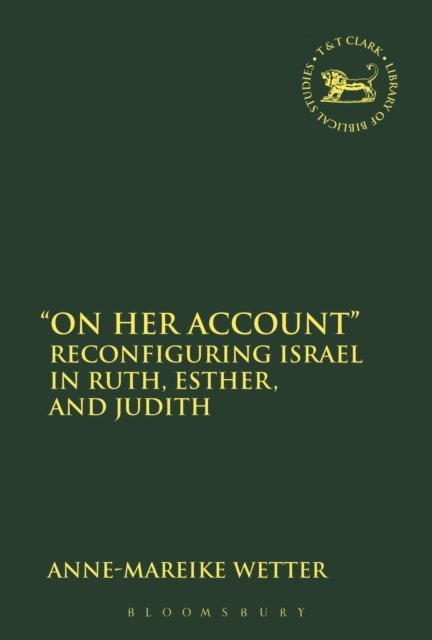
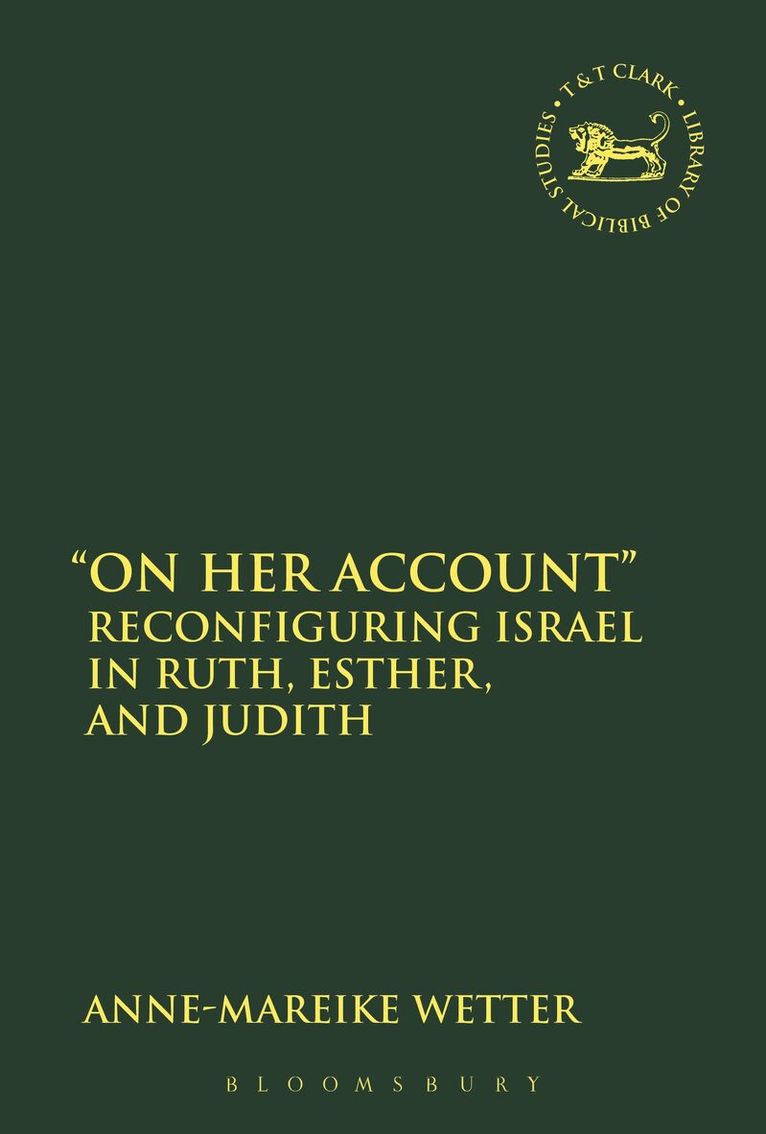
Anne-Mareike Wetter investigates how the books of Ruth, Esther and Judith contribute to the discussion about Israel’s ethnic and religious identity in the formative period following the Babylonian Exile. Although each of these narratives deals with variations of the theme of survival in a hostile world, the question underlying them is a different one: “Who are we, and who is our ‘other’?” The narratives are presented as sequels to Israel’s history as put forward in other (now biblical) texts, and presuppose God’s continuing involvement with his people. However, they subtly modify the way in which Israel can or should relate to her God by suggesting alternatives for official Temple worship or bypassing the latter altogether. While older prophetic texts make use of metaphoric language portraying Israel as YHWH’s unfaithful wife, grieving widow, or ravaged virgin, Ruth, Esther and Judith can be construed as embodiments of Israel of a different kind. Wetter argues for a revisioning of Israel in and through the bodies of the three female characters, as a community which is simultaneously vulnerable and inviolable, marginalized and empowered. Their tricksterism, in all its comicality, underlines the precarious situation in which the women and the community they represent are caught. Yet it also has the power to both defeat threats from outside and amend Israel’s self-perception on the inside. Israel no longer has to perceive of itself as a battered wife but as one who can deploy her qualities – seductive and otherwise – for the survival of the community.
E-bok
PDF, Engelska, 2015545 kr
Läs direkt efter köp
Anne-Mareike Wetter investigates how the books of Ruth, Esther and Judith contribute to the discussion about Israel''s ethnic and religious identity in the formative period following the Babylonian Exile. Although each of these narratives deals with variations of the theme of survival in a hostile world, the question underlying them is a different one: “Who are we, and who is our ''other''?” The narratives are presented as sequels to Israel''s history as put forward in other (now biblical) texts, and presuppose God''s continuing involvement with his people. However, they subtly modify the way in which Israel can or should relate to her God by suggesting alternatives for official Temple worship or bypassing the latter altogether. While older prophetic texts make use of metaphoric language portraying Israel as YHWH''s unfaithful wife, grieving widow, or ravaged virgin, Ruth, Esther and Judith can be construed as embodiments of Israel of a different kind. Wetter argues for a revisioning of Israel in and through the bodies of the three female characters, as a community which is simultaneously vulnerable and inviolable, marginalized and empowered. Their tricksterism, in all its comicality, underlines the precarious situation in which the women and the community they represent are caught. Yet it also has the power to both defeat threats from outside and amend Israel''s self-perception on the inside. Israel no longer has to perceive of itself as a battered wife but as one who can deploy her qualities – seductive and otherwise – for the survival of the community.
Häftad, Engelska, 2018
501 kr
Skickas inom 10-15 vardagar
Anne-Mareike Wetter investigates how the books of Ruth, Esther and Judith contribute to the discussion about Israel’s ethnic and religious identity in the formative period following the Babylonian Exile. Although each of these narratives deals with variations of the theme of survival in a hostile world, the question underlying them is a different one: “Who are we, and who is our ‘other’?” The narratives are presented as sequels to Israel’s history as put forward in other (now biblical) texts, and presuppose God’s continuing involvement with his people. However, they subtly modify the way in which Israel can or should relate to her God by suggesting alternatives for official Temple worship or bypassing the latter altogether. While older prophetic texts make use of metaphoric language portraying Israel as YHWH’s unfaithful wife, grieving widow, or ravaged virgin, Ruth, Esther and Judith can be construed as embodiments of Israel of a different kind. Wetter argues for a revisioning of Israel in and through the bodies of the three female characters, as a community which is simultaneously vulnerable and inviolable, marginalized and empowered. Their tricksterism, in all its comicality, underlines the precarious situation in which the women and the community they represent are caught. Yet it also has the power to both defeat threats from outside and amend Israel’s self-perception on the inside. Israel no longer has to perceive of itself as a battered wife but as one who can deploy her qualities – seductive and otherwise – for the survival of the community.
E-bok
PDF, Engelska, 20162 186 kr
Läs direkt efter köp
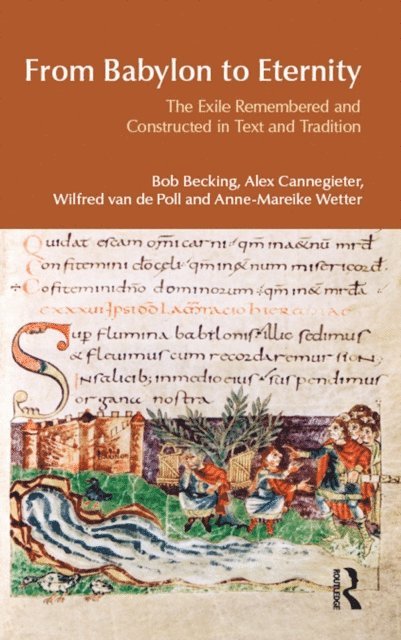
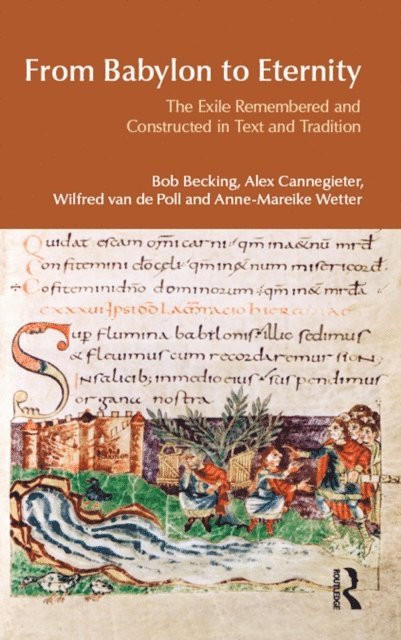
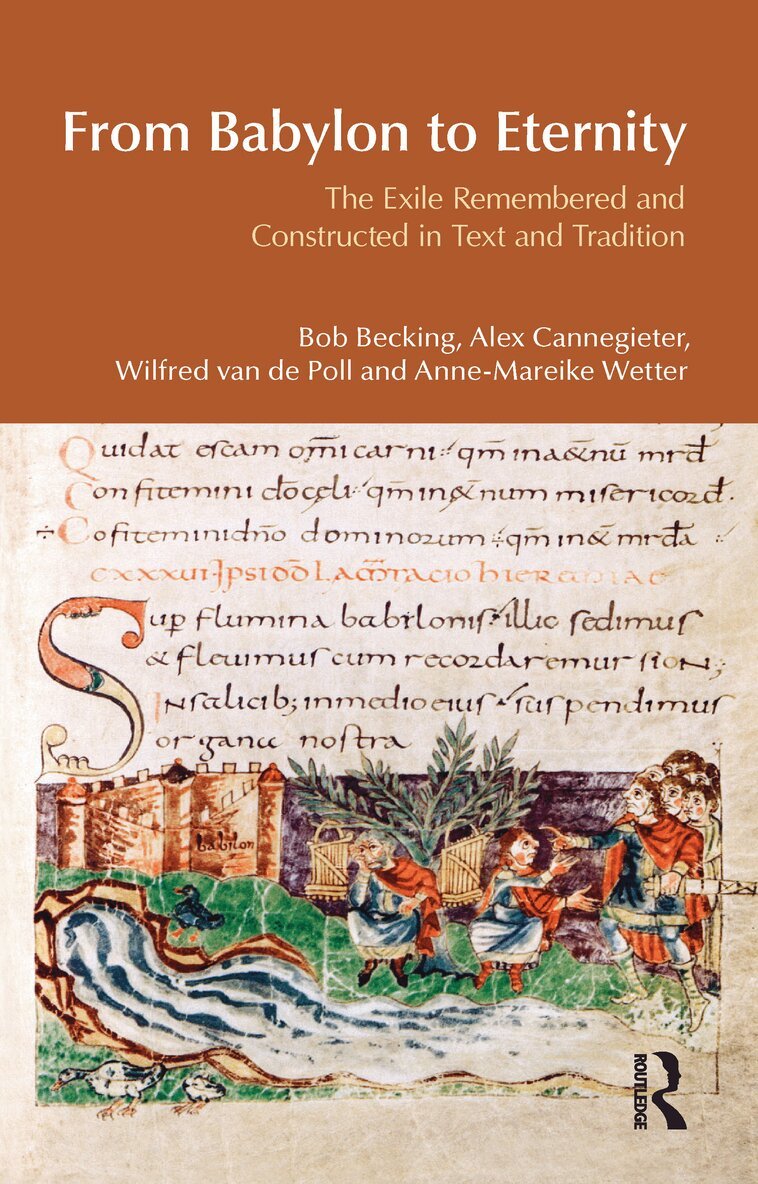
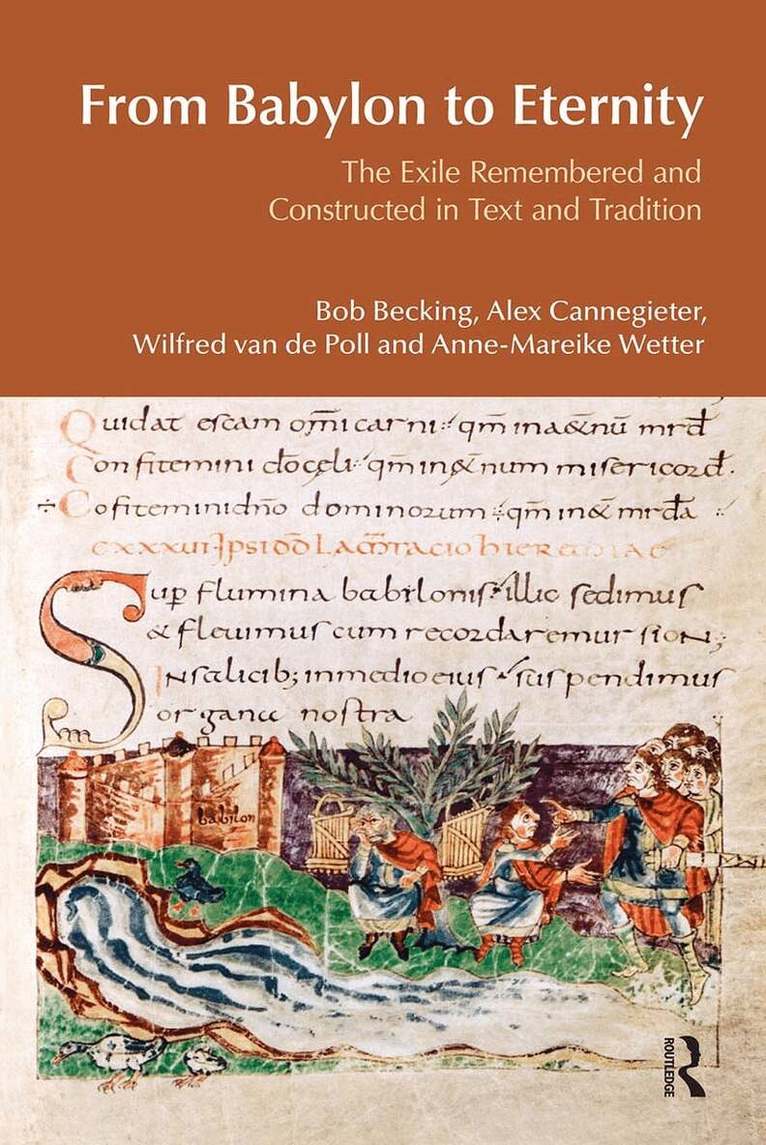
First Published in 2014. Generally, readers have a negative idea of the Exile. Psalm 137 has fuelled the idea that this was a time of sorrow and despair. This image of the Exile influenced, for instance, Luther’s ideas on the Babylonian Captivity of the Church. The four essays in this volume deconstruct and reconstruct this image. Bob Becking tries to recreate a history of the Exile. On the basis of the available evidence, this could be no more than a fragmented history, nevertheless showing that the fate of the exiles was not as bad as often supposed. Anne-Mareike Wetter reveals that the biblical image of exile is multi-faceted. She shows how a tradition of a people tied to their God-given land was challenged by the reality of foreign occupation. And how that people eventually succeeded in translating this experience, appropriating it through a transformation into a counter-tradition that enabled them to cope with the new situation, without breaking entirely with their cultural and religious heritage. Jewish ideas on exile are discussed by Wilfred van de Poll. He concentrates on the use of the concept of galut, which refers to the paradigmatic and identity-shaping function of the dispersion of the people of Israel and showed that the Exile in Jewish thinking had become a permanent reality up until the present day. From the perspective of intertextual reading, Alex Cannegieter discusses four texts of varying ages and background – Augustine, Petrarch, Luther, and a Dutch sermon held after the end of the Second World War. She explores the ways authors chose biblical texts to appropriate them a new context, thereby changing the meaning of the new, as well as the source texts.
E-bok
Engelska, 20162 186 kr
Läs direkt efter köp
First Published in 2014. Generally, readers have a negative idea of the Exile. Psalm 137 has fuelled the idea that this was a time of sorrow and despair. This image of the Exile influenced, for instance, Luther’s ideas on the Babylonian Captivity of the Church. The four essays in this volume deconstruct and reconstruct this image. Bob Becking tries to recreate a history of the Exile. On the basis of the available evidence, this could be no more than a fragmented history, nevertheless showing that the fate of the exiles was not as bad as often supposed. Anne-Mareike Wetter reveals that the biblical image of exile is multi-faceted. She shows how a tradition of a people tied to their God-given land was challenged by the reality of foreign occupation. And how that people eventually succeeded in translating this experience, appropriating it through a transformation into a counter-tradition that enabled them to cope with the new situation, without breaking entirely with their cultural and religious heritage. Jewish ideas on exile are discussed by Wilfred van de Poll. He concentrates on the use of the concept of galut, which refers to the paradigmatic and identity-shaping function of the dispersion of the people of Israel and showed that the Exile in Jewish thinking had become a permanent reality up until the present day. From the perspective of intertextual reading, Alex Cannegieter discusses four texts of varying ages and background – Augustine, Petrarch, Luther, and a Dutch sermon held after the end of the Second World War. She explores the ways authors chose biblical texts to appropriate them a new context, thereby changing the meaning of the new, as well as the source texts.
Inbunden, Engelska, 2010
2 387 kr
Skickas inom 10-15 vardagar
This book takes the reader in wider circles from Babylon to Eternity and deals with the appropriation of the exilic motif in Jewish texts. It examines the way the exilic tradition–interpreting the Exile as a religious experience – was created by the writers of the Hebrew Bible.
Häftad, Engelska, 2010
1 806 kr
Skickas inom 10-15 vardagar
This book takes the reader in wider circles from Babylon to Eternity and deals with the appropriation of the exilic motif in Jewish texts. It examines the way the exilic tradition–interpreting the Exile as a religious experience – was created by the writers of the Hebrew Bible.