Anne-Marie Singh – författare
Visar alla böcker från författaren Anne-Marie Singh. Handla med fri frakt och snabb leverans.
6 produkter
6 produkter
Häftad, Engelska, 2020
637 kr
Skickas inom 10-15 vardagar
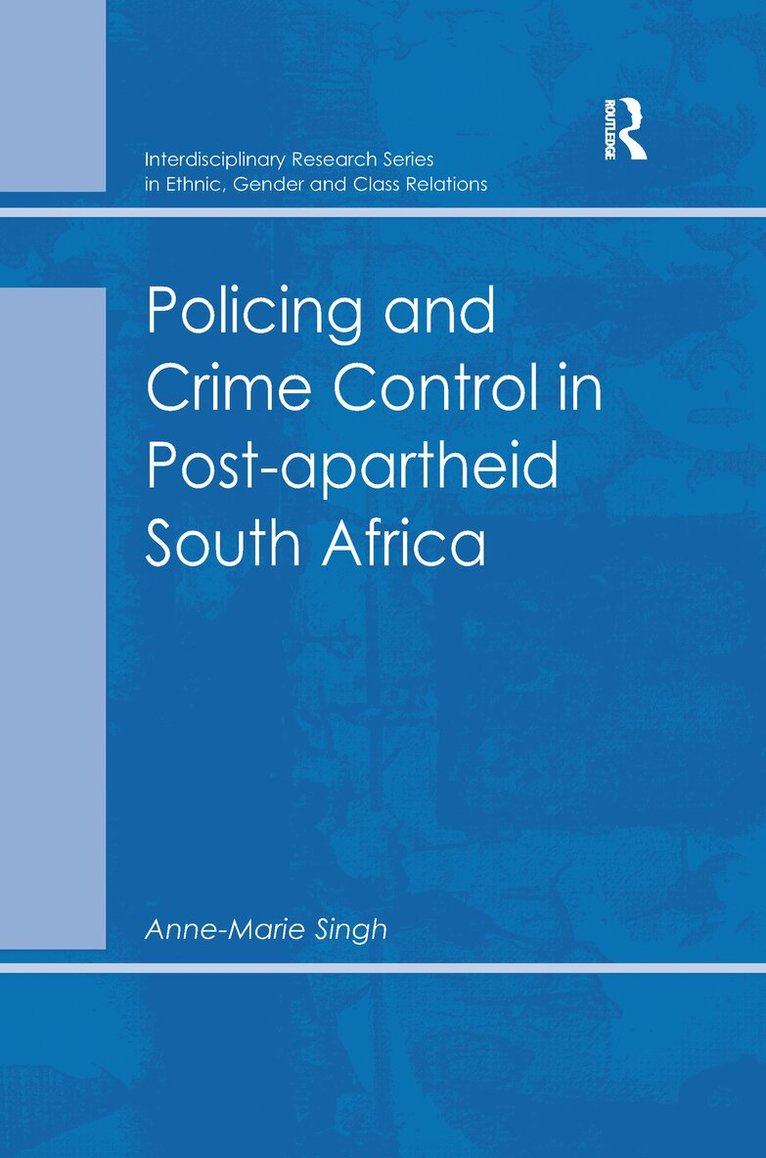
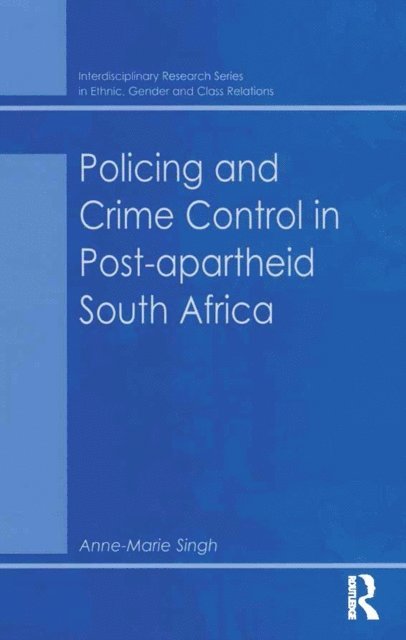
Once a marginal political issue, crime control now occupies a central place on the social, political and economic agenda of contemporary liberal democracies. Nowhere more so than in post-apartheid South Africa, where the transition from apartheid rule to democratic rule was marked by a shift in concern from political to criminal violence. In this book Anne-Marie Singh offers a comprehensive account of policing transformations in post-apartheid South Africa. Her analysis of crime and mechanisms for its control is linked to an analysis of neo-liberal policies, providing the basis for a critique of existing analyses of liberal democratic governance. Themes addressed in the book include the exercise of coercive authority, state and non-state expertise in policing, the 'rationally-choosing' criminal, and the importance of developing an active and responsible citizenship.
Inbunden, Engelska, 2008
2 249 kr
Skickas inom 10-15 vardagar
Once a marginal political issue, crime control now occupies a central place on the social, political and economic agenda of contemporary liberal democracies. Nowhere more so than in post-apartheid South Africa, where the transition from apartheid rule to democratic rule was marked by a shift in concern from political to criminal violence. In this book Anne-Marie Singh offers a comprehensive account of policing transformations in post-apartheid South Africa. Her analysis of crime and mechanisms for its control is linked to an analysis of neo-liberal policies, providing the basis for a critique of existing analyses of liberal democratic governance. Themes addressed in the book include the exercise of coercive authority, state and non-state expertise in policing, the 'rationally-choosing' criminal, and the importance of developing an active and responsible citizenship.
Del 8 - Sociology of Crime, Law and Deviance
Police Occupational Culture
New Debates and Directions
Inbunden, Engelska, 2007
1 217 kr
Skickas inom 5-8 vardagar
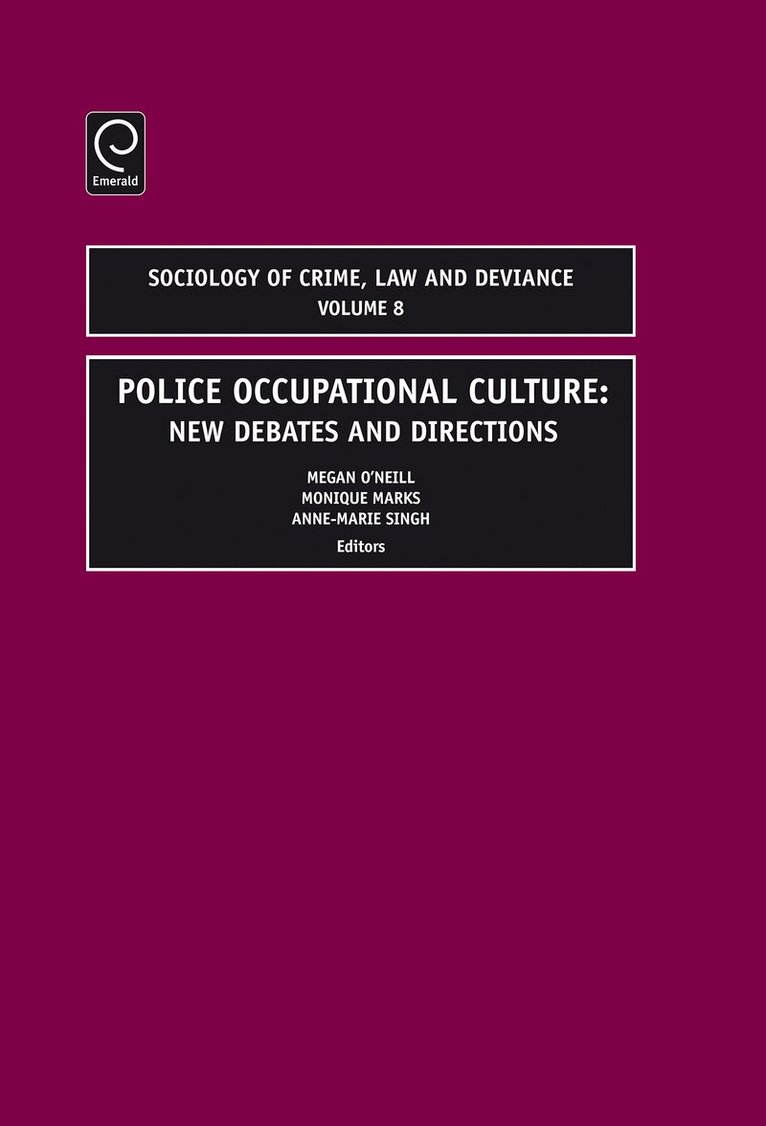
The idea of police occupational culture or cop culture has been a source of academic interest and debate since research into policing began in earnest in the 1960s. Police culture has become a lens through which a number of aspects of the police and policing more broadly have been studied, including the use of discretion, police corruption, institutional racism, sexism and police reform. For the most part, these studies have been done in topical isolation from each other and have focused rather narrowly on Anglo-American state policing forms. Using studies from Australia, Britain, the United States, Africa and Canada, this book offers a contemporary look at police culture from an international perspective by questioning established silos in topics, by presenting new ways of thinking about police culture and suggesting forms that police culture is likely to take in the future.In revisiting the meaning of police culture in the light of key developments in the field of policing, including the pluralization of policing governance and delivery, new management practices and the increased diversification and representation within police organizations, the chapters in this book offer both explanatory and normative approaches to the topic. The chapters also point to new topics in police cultural studies, such as the impact of tertiary education opportunities on police culture, police unions as counter-cultural groupings, the coming together of private and public policing cultures, and the impact of new identity groupings on police organizational culture.Students and researchers in police and policing studies, crime and criminal justice, as well as police practitioners themselves, should find this volume of the "Sociology of Crime, Law and Deviance" series a particularly interesting read. It presents a timely reassessment of the new dimensions of police occupational culture Proposes a new schema for thinking and writing about policing culture. It considers aspects of the police occupational culture from an international perspective through including studies from Australia, Britain, the United States, Africa and Canada - one often neglected in Anglo-American research. It revisits the meaning of police culture in the light of key developments in the field of policing including the pluralization of policing governance and delivery; new management practices and the increased diversification and representation within police organizations.
E-bok
PDF, 20071 188 kr
Läs direkt efter köp
The idea of police occupational culture or cop culture has been a source of academic interest and debate since research into policing began in earnest in the 1960s. Police culture has become a lens through which a number of aspects of the police and policing more broadly have been studied, including the use of discretion, police corruption, institutional racism, sexism and police reform. For the most part, these studies have been done in topical isolation from each other and have focused rather narrowly on Anglo-American state policing forms. Using studies from Australia, Britain, the United States, Africa and Canada, this book offers a contemporary look at police culture from an international perspective by questioning established silos in topics, by presenting new ways of thinking about police culture and suggesting forms that police culture is likely to take in the future.In revisiting the meaning of police culture in the light of key developments in the field of policing, including the pluralization of policing governance and delivery, new management practices and the increased diversification and representation within police organizations, the chapters in this book offer both explanatory and normative approaches to the topic. The chapters also point to new topics in police cultural studies, such as the impact of tertiary education opportunities on police culture, police unions as counter-cultural groupings, the coming together of private and public policing cultures, and the impact of new identity groupings on police organizational culture.Students and researchers in police and policing studies, crime and criminal justice, as well as police practitioners themselves, should find this volume of the "e;Sociology of Crime, Law and Deviance"e; series a particularly interesting read. It presents a timely reassessment of the new dimensions of police occupational culture Proposes a new schema for thinking and writing about policing culture. It considers aspects of the police occupational culture from an international perspective through including studies from Australia, Britain, the United States, Africa and Canada - one often neglected in Anglo-American research. It revisits the meaning of police culture in the light of key developments in the field of policing including the pluralization of policing governance and delivery; new management practices and the increased diversification and representation within police organizations.
E-bok
Engelska, 2016730 kr
Läs direkt efter köp
Once a marginal political issue, crime control now occupies a central place on the social, political and economic agenda of contemporary liberal democracies. Nowhere more so than in post-apartheid South Africa, where the transition from apartheid rule to democratic rule was marked by a shift in concern from political to criminal violence. In this book Anne-Marie Singh offers a comprehensive account of policing transformations in post-apartheid South Africa. Her analysis of crime and mechanisms for its control is linked to an analysis of neo-liberal policies, providing the basis for a critique of existing analyses of liberal democratic governance. Themes addressed in the book include the exercise of coercive authority, state and non-state expertise in policing, the ''rationally-choosing'' criminal, and the importance of developing an active and responsible citizenship.
E-bok
PDF, Engelska, 2016730 kr
Läs direkt efter köp
Once a marginal political issue, crime control now occupies a central place on the social, political and economic agenda of contemporary liberal democracies. Nowhere more so than in post-apartheid South Africa, where the transition from apartheid rule to democratic rule was marked by a shift in concern from political to criminal violence. In this book Anne-Marie Singh offers a comprehensive account of policing transformations in post-apartheid South Africa. Her analysis of crime and mechanisms for its control is linked to an analysis of neo-liberal policies, providing the basis for a critique of existing analyses of liberal democratic governance. Themes addressed in the book include the exercise of coercive authority, state and non-state expertise in policing, the ''rationally-choosing'' criminal, and the importance of developing an active and responsible citizenship.