Anne Pippin Burnett – författare
Visar alla böcker från författaren Anne Pippin Burnett. Handla med fri frakt och snabb leverans.
9 produkter
Pindar's Songs for Young Athletes of Aigina
E-bok, 2005
1624 kr
Lägg i varukorg
This book consists of individual studies of Pindar''s eleven odes for Aiginetan victors, preceded by a brief survey of the history of the island and the nature of its aristocracy. Anne Pippin Burnett''s discussion is particularly attentive to questions of mythic self-presentation, as exemplified in …
Pindar's Songs for Young Athletes of Aigina
Inbunden, 2005
2863 kr
Lägg i varukorg
This book consists of individual studies of Pindar's eleven odes for Aiginetan victors, preceded by a brief survey of the history of the island and the nature of its aristocracy. Anne Pippin Burnett's discussion is particularly attentive to questions of mythic self-presentation, as exemplified in …
Revenge in Attic and Later Tragedy
Inbunden, 1998
1012 kr
Lägg i varukorg
Modern readings of ancient Athenian drama tend to view it as a presentation of social or moral problems, as if ancient drama showed the same realism seen on the present-day stage. Such views are belied by the plays themselves, in which supremely violent actions occur in a legendary time and place …
Revenge in Attic and Later Tragedy
E-bok, 1998
1208 kr
Lägg i varukorg
Modern readings of ancient Athenian drama tend to view it as a presentation of social or moral problems, as if ancient drama showed the same realism seen on the present-day stage. Such views are belied by the plays themselves, in which supremely violent actions occur in a legendary time and place …
Art of Bacchylides
Inbunden, 1985
308 kr
Lägg i varukorg
Anne Burnett shows us the art of Bacchylides in the context of Greek lyric traditions. She discusses the beginnings of choral poetry and the functions of the choral myth; she describes the purposes of the victory song in particular and the practices of Bacchylides and Pindar as they fulfilled their …
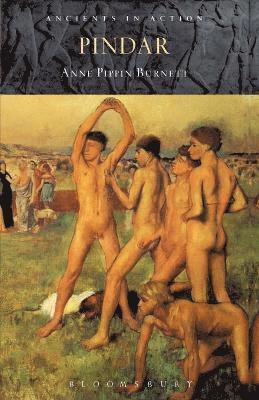
Pindar
E-bok, 2013
484 kr
Lägg i varukorg
Of all the lyric poets of ancient Greece, Pindar is the one whose work has been best preserved. His odes to victorious Greek athletes were entertainments designed for performance in a hospitable atmosphere of drinking, dining and jokes. The victor has known the favour of the god whose contest he …
Pindar
E-bok, 2013
484 kr
Lägg i varukorg
Of all the lyric poets of ancient Greece, Pindar is the one whose work has been best preserved. His odes to victorious Greek athletes were entertainments designed for performance in a hospitable atmosphere of drinking, dining and jokes. The victor has known the favour of the god whose contest he …
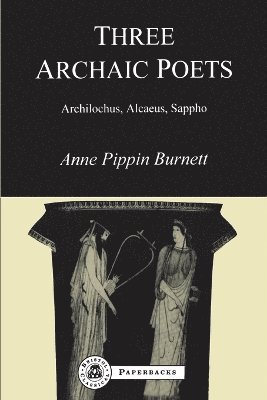
Three Archaic Poets
Archilochus, Alcaeus, Sappho
Häftad, 1998
413 kr
Lägg i varukorg
This study of early Greek lyric provides portraits of Archilochus, Alcaeus and Sappho and their poetry. It looks at their social setting, and their purposes within it.
Pindar
Häftad, 2008
445 kr
Lägg i varukorg
Of all the lyric poets of ancient Greece, Pindar is the one whose work has been best preserved. His odes to victorious Greek athletes were entertainments designed for performance in a hospitable atmosphere of drinking, dining and jokes. The victor has known the favour of the god whose contest he …