Anne Sheppard - Böcker
Visar alla böcker från författaren Anne Sheppard. Handla med fri frakt och snabb leverans.
7 produkter
7 produkter
638 kr
Skickas inom 5-8 vardagar
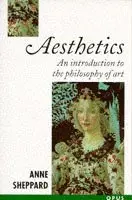
This book provides an accessible introduction to aesthetics, especially in relation to literature, and is particularly useful for readers new to literary theory and contemporary philosophy. Anne Sheppard discusses what it is that all works of art have in common - what gives them their value as art - and asks, wisely, whether there can ever be one correct interpretation of a work of art. The scope of the book includes chapters on form, beauty and aesthetic appreciation, and the relationship between art and morals.
876 kr
Skickas inom 5-8 vardagar
1 833 kr
Skickas inom 10-15 vardagar
With a thorough examination of ancient views of literary and artistic realism, allegory and symbolism, The Poetics of Phantasia brings together a study of the ways in which the concept of imagination (phantasia in Greek) was used in ancient aesthetics and literary theory.The Greeks and Romans tended to think of the production of works of art in terms of imitation, either of the world around us or of a transcendent ideal world, rather than in terms of originality and creativity. Study of the way phantasia is used in ancient writing about literature and art reveals important features of the ancient approach to the arts and in doing so will also shed light on modern concepts of imagination and the literary and artistic differences between realism and allegory.Covering a range of literary and philosophical material from the beginnings of Greek literature down to the Neoplatonist philosophers of late antiquity, The Poetics of Phantasia discusses three discrete senses of imagination in ancient thought. Firstly, phantasia as visualization is explored: when a writer 'brings before his eyes' what he is describing and enables his audience or reader to visualise it likewise. The second theory of phantasia is that which is capable not only of conveying images from sense-perception but also of receiving images from intellectual and supra-intellectual faculties in the soul, and thus helping people grasp mathematical, metaphysical or even mystical concepts. Finally, phantasia is seen as a creative power which can conjure up an image that points beyond itself and to express ideas outside our everyday experience.
528 kr
Skickas inom 10-15 vardagar
With a thorough examination of ancient views of literary and artistic realism, allegory and symbolism, The Poetics of Phantasia brings together a study of the ways in which the concept of imagination (phantasia in Greek) was used in ancient aesthetics and literary theory.The Greeks and Romans tended to think of the production of works of art in terms of imitation, either of the world around us or of a transcendent ideal world, rather than in terms of originality and creativity. Study of the way phantasia is used in ancient writing about literature and art reveals important features of the ancient approach to the arts and in doing so will also shed light on modern concepts of imagination and the literary and artistic differences between realism and allegory.Covering a range of literary and philosophical material from the beginnings of Greek literature down to the Neoplatonist philosophers of late antiquity, The Poetics of Phantasia discusses three discrete senses of imagination in ancient thought. Firstly, phantasia as visualization is explored: when a writer 'brings before his eyes' what he is describing and enables his audience or reader to visualise it likewise. The second theory of phantasia is that which is capable not only of conveying images from sense-perception but also of receiving images from intellectual and supra-intellectual faculties in the soul, and thus helping people grasp mathematical, metaphysical or even mystical concepts. Finally, phantasia is seen as a creative power which can conjure up an image that points beyond itself and to express ideas outside our everyday experience.
Del 98 - Bulletin of the Institute of Classical Studies Supplements
Studies on Porphyry (BICS Supplement 98)
Häftad, Engelska, 2006
480 kr
Skickas inom 5-8 vardagar
Del 117 - Bulletin of the Institute of Classical Studies Supplements
Ancient approaches to Plato’s ‘Republic’
Häftad, Engelska, 2013
494 kr
Skickas inom 5-8 vardagar
454 kr
Skickas inom 7-10 vardagar
Ennead I.8 was written not long before Plotinus’ death in 270 AD, at a time when he was particularly concerned with ethical issues. The treatise’ primary purpose is to argue that evil is not intrinsic to the soul, but since Plotinus always considers ethical issues within a metaphysical framework, it includes an account of the ontological status of matter. Plotinus does his best to preserve a belief in the dependence of all things on a single, supremely good First Principle while admitting that there is evil in the world. He offers a subtle account of the origin of evil in the soul as caused not by either the soul or matter on its own but by the combination of the two. Sheppard shows how Plotinus is responding to ideas found in Plato, Aristotle, the Stoics, and Middle Platonism as well as to the challenge presented by Gnosticism, and argues that the views expressed in I.8 are not inconsistent with what Plotinus has to say about matter and its generation elsewhere. She further considers the criticisms of Plotinus’ views put forward by Proclus and concludes that, despite its weaknesses, Plotinus’ account remains an ingenious attempt to defend monism and the essential goodness of the soul while recognizing the existence of evils.