
Anne-Sophie Constant – författare
Visar alla böcker från författaren Anne-Sophie Constant. Handla med fri frakt och snabb leverans.
3 produkter
3 produkter
E-bok
Engelska, 2019125 kr
Läs direkt efter köp
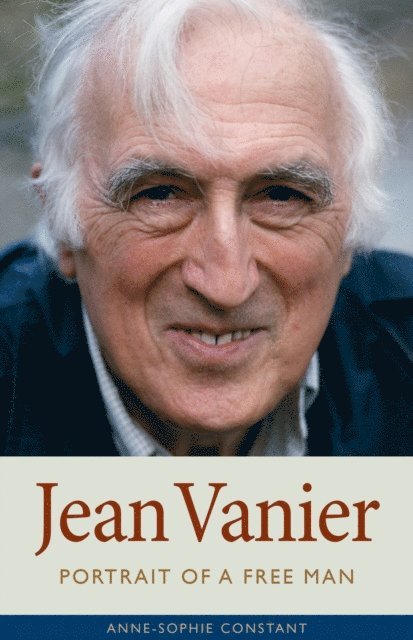
The life of Jean Vanier, founder of l’Arche, who changed the way the world views disabilityIt’s a crazy story. In August 1964 a thirty-six-year-old Canadian from a famous family – one who has already joined the navy during war at age thirteen, become an officer, earned a PhD, and taught ethics at the University of Toronto -- takes up residence in a little house he just bought in the village of Trosly, France, with two mentally disabled men he has removed from a care home. The house, which he calls l’Arche (the Ark), has neither water nor electricity. His plan? None. He is just convinced he has to do it, touched by the silent cry of these men shut up in the gloomy, violent institution where he found them. His example is contagious; within months the community has grown to over fifty.Jean Vanier is known and loved around the world for having created L''Arche, those unique communities of people with disabilities and their volunteer caregivers in more than one hundred and fifty sites on five continents. But Vanier is also a philosopher, a spiritual master who touches believers and nonbelievers alike, a tireless messenger of peace and ecumenism, and an adventurer with life full of twists and turns. Anne-Sophie Constant''s literary biography paints a rare portrait of this extraordinary man and the events and influences that shaped his destiny.“The story of Jean Vanier is the story of a free man – a man who knew how to become himself, who knew how to free himself from restraints, opinions, and prejudices; from intellectual, religious or moral habits; from his epoch; from popular opinion. . . . Jean Vanier has transformed the lives of thousands and thousands of mentally disabled people. And he has transformed the understanding of thousands of people regarding the disabilities of their own children and of people with disabilities. Where we see only failure, disgrace, impossibility, limit, weakness, ugliness, and suffering, Jean Vanier sees beauty. And he knows how to open the eyes of others to see it.”
E-bok
PDF, Engelska, 2019125 kr
Läs direkt efter köp
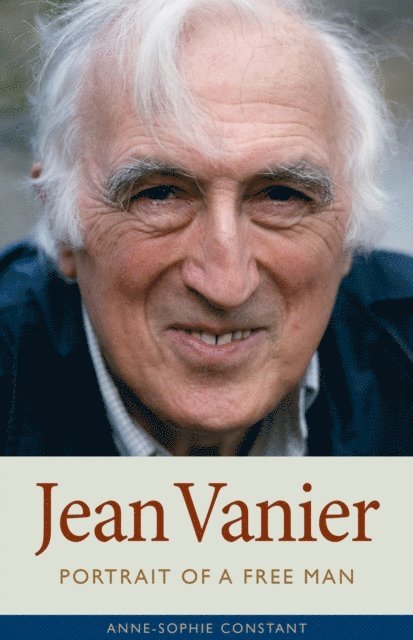
The life of Jean Vanier, founder of l’Arche, who changed the way the world views disabilityIt’s a crazy story. In August 1964 a thirty-six-year-old Canadian from a famous family – one who has already joined the navy during war at age thirteen, become an officer, earned a PhD, and taught ethics at the University of Toronto -- takes up residence in a little house he just bought in the village of Trosly, France, with two mentally disabled men he has removed from a care home. The house, which he calls l’Arche (the Ark), has neither water nor electricity. His plan? None. He is just convinced he has to do it, touched by the silent cry of these men shut up in the gloomy, violent institution where he found them. His example is contagious; within months the community has grown to over fifty.Jean Vanier is known and loved around the world for having created L''Arche, those unique communities of people with disabilities and their volunteer caregivers in more than one hundred and fifty sites on five continents. But Vanier is also a philosopher, a spiritual master who touches believers and nonbelievers alike, a tireless messenger of peace and ecumenism, and an adventurer with life full of twists and turns. Anne-Sophie Constant''s literary biography paints a rare portrait of this extraordinary man and the events and influences that shaped his destiny.“The story of Jean Vanier is the story of a free man – a man who knew how to become himself, who knew how to free himself from restraints, opinions, and prejudices; from intellectual, religious or moral habits; from his epoch; from popular opinion. . . . Jean Vanier has transformed the lives of thousands and thousands of mentally disabled people. And he has transformed the understanding of thousands of people regarding the disabilities of their own children and of people with disabilities. Where we see only failure, disgrace, impossibility, limit, weakness, ugliness, and suffering, Jean Vanier sees beauty. And he knows how to open the eyes of others to see it.”
Del 22 - Plough Quarterly No. 22 - Vocation
Plough Quarterly No. 22 - Vocation
Why We Work
Häftad, Engelska, 2019
96 kr
Skickas inom 5-8 vardagar
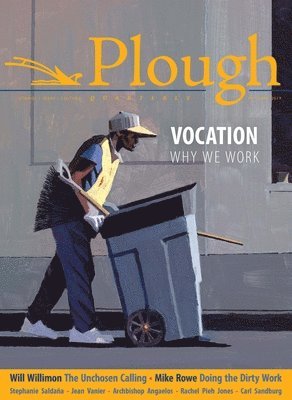
Your job is not your vocation.Everyone hungers for work that has meaning and purpose. But what gives work meaning? Vocation, or “calling,” is the answer Protestant Christianity offers: each person is called by God to serve the common good in a particular line of work. Your vocation, evidently, might be almost anything: as a nurse, a wilderness guide, a calligrapher, a missionary, an activist, a venture capitalist, a politician, an executioner… Yet, as Will Willimon writes in this issue, the New Testament knows only one form of vocation: discipleship. And discipleship is far more likely to mean leaving father and mother, houses and land, than it is to mean embracing one’s identity as a fisherman or tax collector.This issue of Plough focuses on people who lived their lives with that sense of vocation. Such a life demands self-sacrifice and a willingness to recognize one’s own supposed strengths as weaknesses, as it did for the Canadian philosopher Jean Vanier. It involves a lifelong commitment to a flesh-and-blood church, as Coptic Archbishop Angaelos describes. It may even require a readiness to give up one’s life, as it did for Annalena Tonelli, an Italian humanitarian who pioneered the treatment of tuberculosis in the Horn of Africa. But as these stories also testify, it brings a gladness deeper than any self-chosen path.Also in this issue: - Scott Beauchamp on mercenaries- Nathan Schneider on cryptocurrencies- Stephanie Saldaña on Syrian refugee art- Peter Biles on loneliness at college- Phil Christman on Bible translation- Michael Brendan Dougherty on fatherhood- Insights on vocation from C. S. Lewis, Thérèse of Lisieux, Mother Teresa, Eberhard Arnold, Dorothy Sayers, Jean Vanier, and Gerard Manley Hopkins- poetry by Devon Balwit and Carl Sandburg- reviews of books by Robert Alter, Edwidge Danticat, Matthew D. Hockenos, Amy Waldman, and Jeremy Courtney- art and photography by Pola Rader, Dean Mitchell, Mark Freear, Timothy Jones, Paweł Filipczak, Mary Pal, Harley Manifold, Sami Lalu Jahola, Marc Chagall, and Russell Bain.Plough Quarterly features stories, ideas, and culture for people eager to put their faith into action. Each issue brings you in-depth articles, interviews, poetry, book reviews, and art to help you put Jesus’ message into practice and find common cause with others.