Annelou Ypeij – författare
Visar alla böcker från författaren Annelou Ypeij. Handla med fri frakt och snabb leverans.
3 produkter
3 produkter
736 kr
Skickas inom 10-15 vardagar
Through an in-depth analysis of the multifaceted manifestations of gender and conflict, this book shows how cognition and behaviour, agency and victimization, are gendered beyond the popular stereotypes. Conflict not only reconfirms social hierarchies and power relations, but also motivates people to transgress cultural boundaries and redefine their self-images and identities. The contributions are a mix of classical ethnography, performance studies and embodiment studies, showing ’emotions and feelings’ often denied in scientific social research. Strong in their constructivist approach and unorthodox in theory, the articles touch upon the dynamic relation between the discourses, embodiments and symbolic practices that constitute the gendered world of conflict. The localities and research sites vary from institutional settings such as a school, rebel movements, public toilets and the military to more artistic domains of gendered conflicts such as prison theatre classes and the capoeira ring. At the same time, these conflicts and domains appropriate wider discourses and practices of a global nature, demonstrating the globalised and institutionalised nature of the nexus gender-conflict. A first set of chapters deals with ’breaking the gender taboos’ and renegotiating the stereotypical gender roles - masculinities or femininities - during conflict. A second set of chapters focuses more explicitly on the bodily experience of conflict either physically of symbolically, while the last set straddle body and narrative. The inductive quality of the work leads to unexpected insights and does give access to worlds that are new, and often surprising and unconventional.
2 133 kr
Skickas inom 10-15 vardagar
Through an in-depth analysis of the multifaceted manifestations of gender and conflict, this book shows how cognition and behaviour, agency and victimization, are gendered beyond the popular stereotypes. Conflict not only reconfirms social hierarchies and power relations, but also motivates people to transgress cultural boundaries and redefine their self-images and identities. The contributions are a mix of classical ethnography, performance studies and embodiment studies, showing ’emotions and feelings’ often denied in scientific social research. Strong in their constructivist approach and unorthodox in theory, the articles touch upon the dynamic relation between the discourses, embodiments and symbolic practices that constitute the gendered world of conflict. The localities and research sites vary from institutional settings such as a school, rebel movements, public toilets and the military to more artistic domains of gendered conflicts such as prison theatre classes and the capoeira ring. At the same time, these conflicts and domains appropriate wider discourses and practices of a global nature, demonstrating the globalised and institutionalised nature of the nexus gender-conflict. A first set of chapters deals with ’breaking the gender taboos’ and renegotiating the stereotypical gender roles - masculinities or femininities - during conflict. A second set of chapters focuses more explicitly on the bodily experience of conflict either physically of symbolically, while the last set straddle body and narrative. The inductive quality of the work leads to unexpected insights and does give access to worlds that are new, and often surprising and unconventional.
Del 96 - CEDLA Latin America Studies (CLAS)
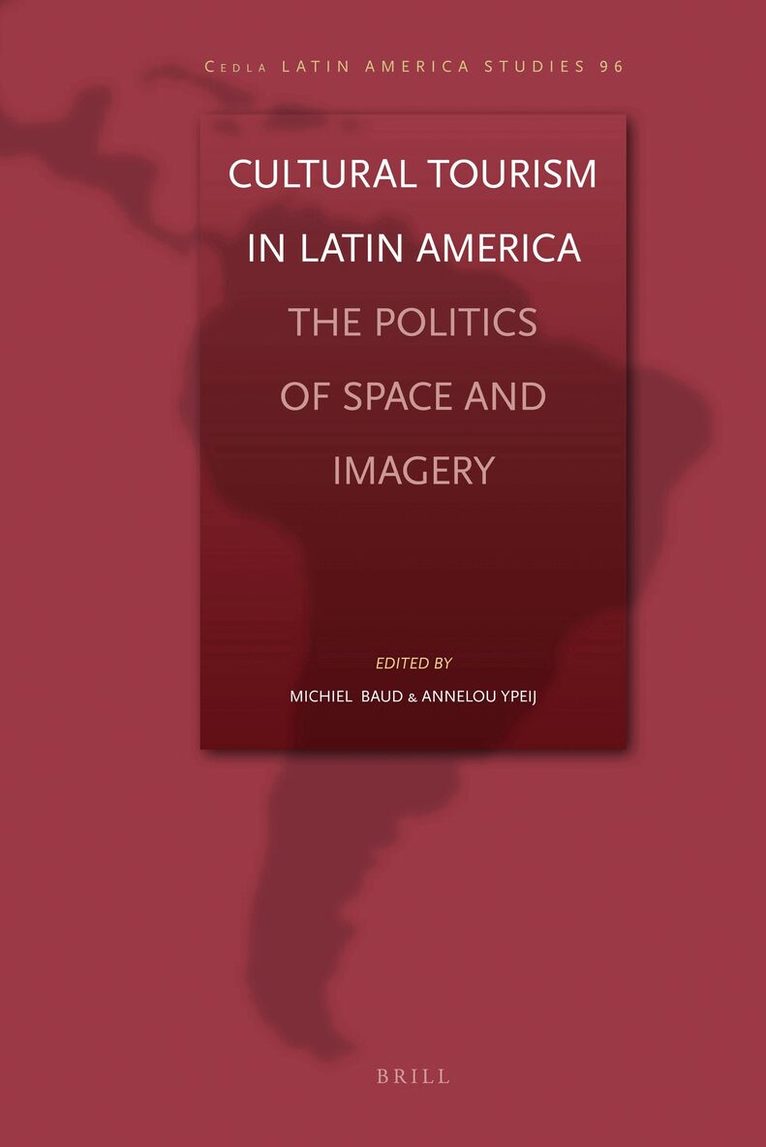
Cultural Tourism in Latin America
The Politics of Space and Imagery
Inbunden, Engelska, 2009
1 593 kr
Skickas inom 3-6 vardagar
Cultural tourism has become an important source of revenue for Latin American countries, especially in the Andes and Meso-America. Tourists go there looking for authentic cultures and artefacts and interact directly with indigenous people. Cultural tourism therefore takes place in close engagement with local societies. This book analyse the effects of cultural tourism and the processes of change it provokes in local societies. It analyses the intricacies of informal markets, the consequences of enforcing tourist policies, the varied encounters of foreign tourists with local populations, and the images and identities that result from the development of tourism. The contributors convincingly show that the tourist experience and the reactions to tourist activities can only be understood if analysed from within local contexts.Contributors: Michiel Baud, Annelou Ypeij, Lisa Breglia, Quetzil E. Castañeda, Ben Feinberg, Carla Guerrón Montero, Walter E. Little, Keely B. Maxwell, Lynn A. Meisch, Zoila S. Mendoza, Alan Middleton, Beatrice Simon, Griet Steel, Gabriela Vargas-Cetina.“Tourism in Latin America – especially the sort of cultural tourism that plays to desires for authentic experiences – has become a key foreigner currency earner for many countries. This important volume examines the impact of tourism across the region, providing a rich survey of the range of experiences and teasing out the theoretical implications. From the almost surreal Mi Pueblito theme park in Panama to mushroom-hunting tourists in Oaxaca to the eco-trail leading to Machu Pichu, these chapters present compelling cases that speak to identity formation, nationalism, and economic impacts. As the contributors show, benefits are differentially accrued to various actors – and often not to the communities that tourists come to see. Yet, the contributors also make it clear that in struggles over ownership, authenticity, and political representation, local communities actively shape the contours and meanings of tourism, at times successfully leveraging cultural capital into economic gains.”Edward F. Fischer,Director Center for Latin American Studies, Vanderbilt University