Annemie Bogaerts - Böcker
Visar alla böcker från författaren Annemie Bogaerts. Handla med fri frakt och snabb leverans.
3 produkter
3 produkter
2 014 kr
Skickas inom 7-10 vardagar
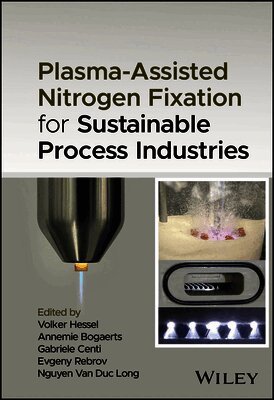
Enables readers to use plasma technology in the ammonia and NOx production process for greater efficiency, resiliency, and sustainability Bridging the gap between chemistry, physics, and engineering, Plasma-Assisted Nitrogen Fixation for Sustainable Process Industries provides in-depth insights into plasma-assisted nitrogen fixation, plasma technology, plasma reactors, and ammonia and NOx production, covering fundamental principles, advanced topics, economic viability, and emerging trends. Real-world applications and case studies are included throughout to elucidate key concepts and help readers put theory into practice in order to increase efficiency, sustainability, and industrial resilience. Plasma-Assisted Nitrogen Fixation for Sustainable Process Industries discusses: Reactor designs and industrial feasibility, including decentralized production to make nitrogen fixation accessible to remote areas and smaller-scale operationsThe Haber-Bosch process and its limitations and alternatives and plasma generation, ionization, and applicationsPlasma-assisted NOx synthesis with a focus on reaction pathways, energy efficiency, and the role of catalystsCutting-edge innovations such as microplasma technology, plasma-liquid interactions for nitrogen fixation, and plasma-electrochemistry for nitrate-to-ammonia conversionPlasma-based fertilizer applications and analytical methods in plasma diagnostics as a tool to enable innovation Plasma-Assisted Nitrogen Fixation for Sustainable Process Industries is an essential reference on the subject for engineers, plant managers, and decision-makers seeking to optimize their ammonia and NOx manufacturing processes.
2 117 kr
Skickas inom 10-15 vardagar
This book presents the current status of CO2 utilization from fundamental studies to industrial tests. With the development of renewable energy, carbon dioxide will become an important feedstock for the synthesis of fuels and chemicals, and CO2 utilization must be the final solution for the carbon dioxide issues. This book discusses the effective techniques for activating inert carbon dioxide and various approaches for CO2 conversion, such as homogeneous catalytic conversion, homogeneous catalytic conversion, heterogeneous catalytic conversion, photocatalytic conversion, electrocatalytic conversion, photo-thermal catalytic conversion, plasma-chemical/plasma-catalytic conversion, and bio-catalytic conversion. It also addresses the electronic and geometric structural effects of the supported catalyst on the activity and selectivity of the conversion of carbon dioxide. The significant effects from single atom catalyst to nanoparticle are also discussed, and process intensification in catalyst preparation and reaction is highlighted. Furthermore, this book contains chapters with theoretical studies, including functional theory, which has played an important role in the catalyst design, the explanation of the reaction mechanism, and in understanding the synergy of reaction and heat and mass transfer. Given its scope, this book appeals to a wider readership, especially for researchers in the field of CO2 utilization.
2 117 kr
Skickas inom 10-15 vardagar
This book presents the current status of CO2 utilization from fundamental studies to industrial tests. With the development of renewable energy, carbon dioxide will become an important feedstock for the synthesis of fuels and chemicals, and CO2 utilization must be the final solution for the carbon dioxide issues. This book discusses the effective techniques for activating inert carbon dioxide and various approaches for CO2 conversion, such as homogeneous catalytic conversion, homogeneous catalytic conversion, heterogeneous catalytic conversion, photocatalytic conversion, electrocatalytic conversion, photo-thermal catalytic conversion, plasma-chemical/plasma-catalytic conversion, and bio-catalytic conversion. It also addresses the electronic and geometric structural effects of the supported catalyst on the activity and selectivity of the conversion of carbon dioxide. The significant effects from single atom catalyst to nanoparticle are also discussed, and process intensification in catalyst preparation and reaction is highlighted. Furthermore, this book contains chapters with theoretical studies, including functional theory, which has played an important role in the catalyst design, the explanation of the reaction mechanism, and in understanding the synergy of reaction and heat and mass transfer. Given its scope, this book appeals to a wider readership, especially for researchers in the field of CO2 utilization.