Annick De Houwer - Böcker
Visar alla böcker från författaren Annick De Houwer. Handla med fri frakt och snabb leverans.
14 produkter
14 produkter
227 kr
Skickas inom 7-10 vardagar
In the first decade of life, children become bilingual in different language learning environments. Many children start learning two languages from birth (Bilingual First Language Acquisition). In early childhood hitherto monolingual children start hearing a second language through daycare or preschool (Early Second Language Acquisition). Yet other hitherto monolingual children in middle childhood may acquire a second language only after entering school (Second Language Acquisition). This Element explains how these different language learning settings dynamically affect bilingual children's language learning trajectories. All children eventually learn to speak the societal language, but they often do not learn to fluently speak their non-societal language and may even stop speaking it. Children's and families' harmonious bilingualism is threatened if bilingual children do not develop high proficiency in both languages. Educational institutions and parental conversational practices play a pivotal role in supporting harmonious bilingual development.
509 kr
Skickas inom 7-10 vardagar
This book deals with the question of how children exposed to two languages simultaneously from birth learn to speak those two languages. After a critical and comprehensive survey of most of the literature on the subject, the author concludes that empirically well-documented knowledge in this area is very scant indeed. The core of the book concerns a naturalistic study of a Dutch-English bilingual girl around the age of three. The study's main aim is to explore the nature of early bilingual morphosyntactic development. Detailed analyses of most aspects of this development show that a child who hears two separate languages spoken to her reflects this distinctness in the utterances she produces: each language is handled as a system in its own right. Furthermore, the young bilingual three-year-old greatly resembles her monolingual peers in either language. Both these findings, the author concludes, highlight the language-specific nature of the morphosyntactic development process. This book will interest linguists, psycholinguists, developmental psychologists, and child language specialists.
1 811 kr
Skickas inom 7-10 vardagar
This book deals with the question of how children exposed to two languages simultaneously from birth learn to speak those two languages. After a critical and comprehensive survey of most of the literature on the subject, the author concludes that empirically well-documented knowledge in this area is very scant indeed. The core of the book concerns a naturalistic study of a Dutch-English bilingual girl around the age of three. The study's main aim is to explore the nature of early bilingual morphosyntactic development. Detailed analyses of most aspects of this development show that a child who hears two separate languages spoken to her reflects this distinctness in the utterances she produces: each language is handled as a system in its own right. Furthermore, the young bilingual three-year-old greatly resembles her monolingual peers in either language. Both these findings, the author concludes, highlight the language-specific nature of the morphosyntactic development process. This book will interest linguists, psycholinguists, developmental psychologists, and child language specialists.
2 059 kr
Skickas inom 7-10 vardagar
The ability to speak two or more languages is a common human experience, whether for children born into bilingual families, young people enrolled in foreign language classes, or mature and older adults learning and using more than one language to meet life's needs and desires. This Handbook offers a developmentally oriented and socially contextualized survey of research into individual bilingualism, comprising the learning, use and, as the case may be, unlearning of two or more spoken and signed languages and language varieties. A wide range of topics is covered, from ideologies, policy, the law, and economics, to exposure and input, language education, measurement of bilingual abilities, attrition and forgetting, and giftedness in bilinguals. Also explored are cross- and intra-disciplinary connections with psychology, clinical linguistics, second language acquisition, education, cognitive science, neurolinguistics, contact linguistics, and sign language research.
461 kr
Skickas inom 7-10 vardagar
The ability to speak two or more languages is a common human experience, whether for children born into bilingual families, young people enrolled in foreign language classes, or mature and older adults learning and using more than one language to meet life's needs and desires. This Handbook offers a developmentally oriented and socially contextualized survey of research into individual bilingualism, comprising the learning, use and, as the case may be, unlearning of two or more spoken and signed languages and language varieties. A wide range of topics is covered, from ideologies, policy, the law, and economics, to exposure and input, language education, measurement of bilingual abilities, attrition and forgetting, and giftedness in bilinguals. Also explored are cross- and intra-disciplinary connections with psychology, clinical linguistics, second language acquisition, education, cognitive science, neurolinguistics, contact linguistics, and sign language research.
489 kr
Skickas inom 5-8 vardagar
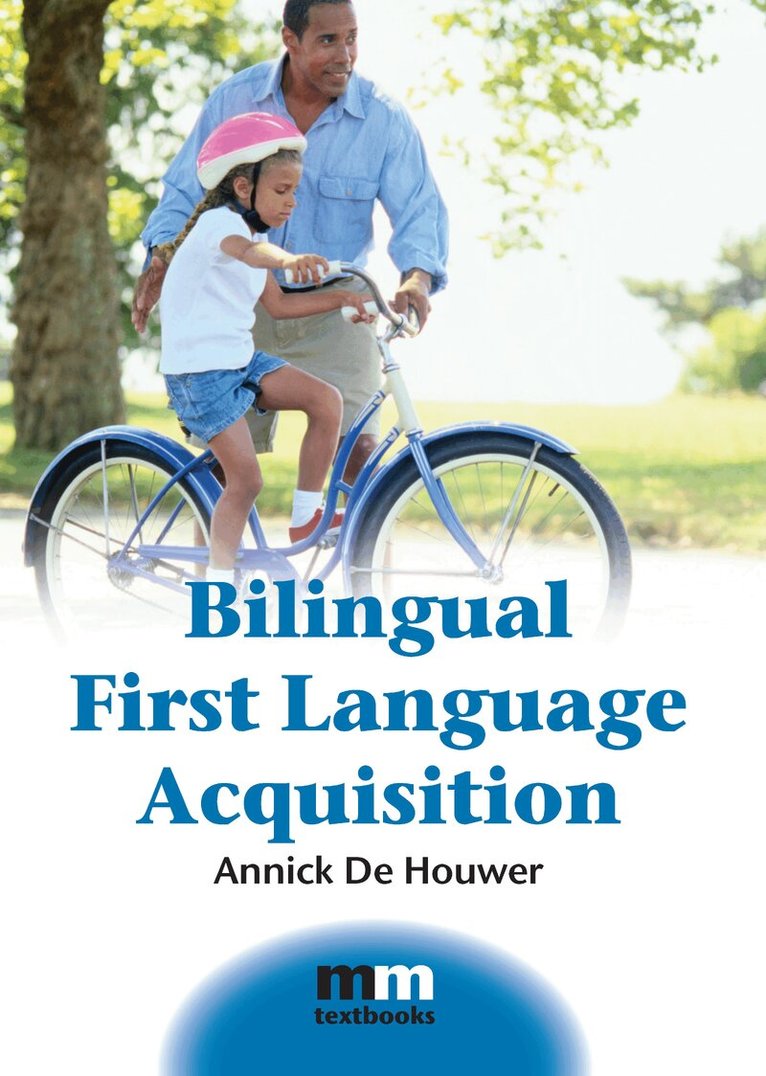
A comprehensive textbook on bilingual language acquisition.Increasingly, children grow up hearing two languages from birth. This comprehensive textbook explains how children learn to understand and speak those languages. It brings together both established knowledge and the latest findings about different areas of bilingual language development. It also includes new analyses of previously published materials. The book describes how bilingually raised children learn to understand and use sounds, words and sentences in two languages. A recurrent theme is the large degree of variation between bilingual children. This variation in how children develop bilingually reflects the variation in their language learning environments. Positive attitudes from the people in bilingual children's language learning environments and their recognition that child bilingualism is not monolingualism-times-two are the main ingredients ensuring that children grow up to be happy and expert speakers of two languages.
1 247 kr
Tillfälligt slut
A comprehensive textbook on bilingual language acquisition.Increasingly, children grow up hearing two languages from birth. This comprehensive textbook explains how children learn to understand and speak those languages. It brings together both established knowledge and the latest findings about different areas of bilingual language development. It also includes new analyses of previously published materials. The book describes how bilingually raised children learn to understand and use sounds, words and sentences in two languages. A recurrent theme is the large degree of variation between bilingual children. This variation in how children develop bilingually reflects the variation in their language learning environments. Positive attitudes from the people in bilingual children's language learning environments and their recognition that child bilingualism is not monolingualism-times-two are the main ingredients ensuring that children grow up to be happy and expert speakers of two languages.
1 738 kr
Tillfälligt slut
293 kr
Skickas
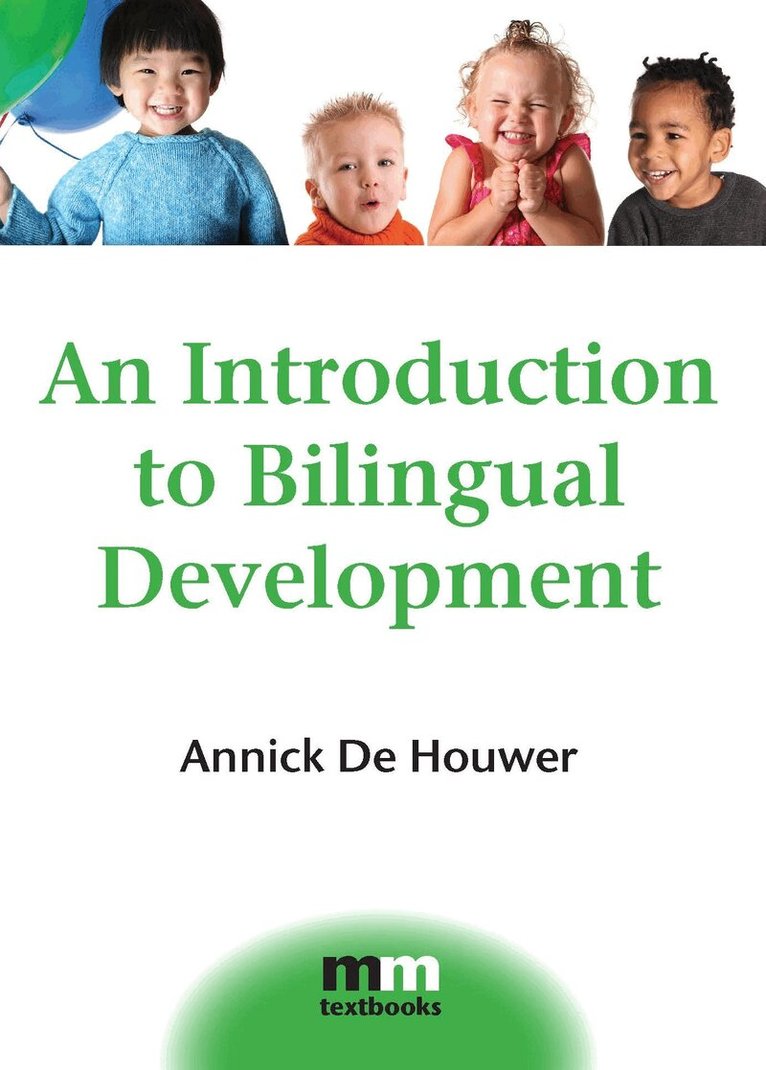
Increasingly, children grow up hearing two languages from birth. This introductory textbook shows how children learn to understand and speak those languages against the backdrop of their language learning environments. A narrative around the bilingual development of four young children with different language profiles helps to explain the latest research findings in a lively and accessible manner. The narrative describes how bilingually raised children learn to understand and use sounds, words and sentences in two languages, and how they are able to use each of their languages in socially appropriate ways. Positive attitudes towards bilingual development from the people in bilingual children's environments and their recognition that child bilingualism is not monolingualism-times-two are the main ingredients ensuring that children grow up to be happy and expert speakers of two languages.
1 151 kr
Skickas inom 5-8 vardagar
Increasingly, children grow up hearing two languages from birth. This introductory textbook shows how children learn to understand and speak those languages against the backdrop of their language learning environments. A narrative around the bilingual development of four young children with different language profiles helps to explain the latest research findings in a lively and accessible manner. The narrative describes how bilingually raised children learn to understand and use sounds, words and sentences in two languages, and how they are able to use each of their languages in socially appropriate ways. Positive attitudes towards bilingual development from the people in bilingual children's environments and their recognition that child bilingualism is not monolingualism-times-two are the main ingredients ensuring that children grow up to be happy and expert speakers of two languages.
1 642 kr
Tillfälligt slut
1 738 kr
Tillfälligt slut
1 738 kr
Tillfälligt slut
1 700 kr
Tillfälligt slut