AntA³nio Costa Pinto – författare
2 078 kr
Läs direkt efter köp
2 078 kr
Läs direkt efter köp
2 640 kr
Skickas inom 5-8 vardagar
406 kr
Läs direkt efter köp
Latin American Dictatorships in the Era of Fascism focuses on the reverse-wave of dictatorships that emerged in Latin America during the 1930s and the transnational dissemination of authoritarian institutions in the era of fascism.
António Costa Pinto revisits the study of authoritarian alternatives to liberal democracy in 1930s Latin America from the perspective of the diffusion of corporatism in the world of inter-war dictatorships. The book explores what drove the horizontal spread of corporatism in Latin America, the processes and direction of transnational diffusion, and how social and political corporatism became a central set of new institutions utilized by dictatorships during this era. These issues are studied through a transnational and comparative research design to reveal the extent of Latin America’s participation during the corporatist wave which by 1942 had significantly reduced the number of democratic regimes in the world.
This book is essential reading for students studying Latin American history, 1930s dictatorships and authoritarianism, and the spread of corporatism.
406 kr
Läs direkt efter köp
Latin American Dictatorships in the Era of Fascism focuses on the reverse-wave of dictatorships that emerged in Latin America during the 1930s and the transnational dissemination of authoritarian institutions in the era of fascism.
António Costa Pinto revisits the study of authoritarian alternatives to liberal democracy in 1930s Latin America from the perspective of the diffusion of corporatism in the world of inter-war dictatorships. The book explores what drove the horizontal spread of corporatism in Latin America, the processes and direction of transnational diffusion, and how social and political corporatism became a central set of new institutions utilized by dictatorships during this era. These issues are studied through a transnational and comparative research design to reveal the extent of Latin America’s participation during the corporatist wave which by 1942 had significantly reduced the number of democratic regimes in the world.
This book is essential reading for students studying Latin American history, 1930s dictatorships and authoritarianism, and the spread of corporatism.
706 kr
Läs direkt efter köp
This book takes a transnational and comparative approach that analyses the process of diffusion of a third way in selected transitions to authoritarianism in Europe and Latin America.
When looking at the authoritarian wave of the 1930s, it is not difficult to see how some regimes appeared to offer an authoritarian third way somewhere between democracy and fascism. It is in this context that some Iberian dictatorships, such as those of Primo de Rivera in Spain, Salazar’s New State in Portugal and the short-lived Dollfuss regime in Austria are mentioned frequently. Especially during the 1930s, and in those parts of Europe under Axis control, these models were discussed and often adopted by several dictatorships. This book considers how and why these dictatorships on the periphery of Europe, especially Salazar’s New State in Portugal, inspired some of these regimes’ new political institutions particularly within Europe and Latin America. It pays special attention to how, as they proposed and pursued these authoritarian reforms, these domestic political actors also looked at these institutional models as suitable for their own countries.
The volume is ideal for students and scholars of comparative fascism, authoritarian regimes, and European and Latin American modern history and politics.
706 kr
Läs direkt efter köp
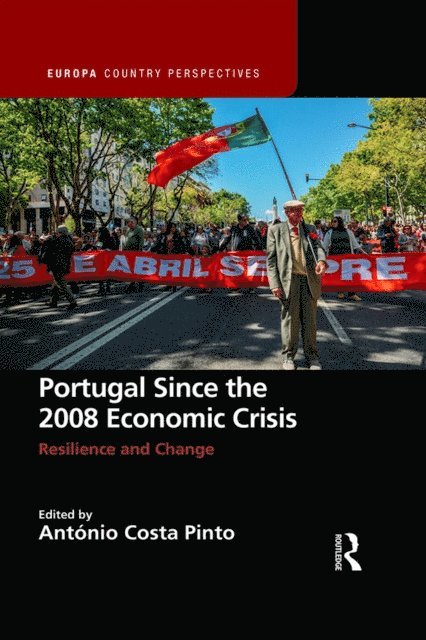
Portuguese democracy is now celebrating its 50th anniversary. Portugal joined the European Union (EU) in 1986, but the enduring legacies of the country’s transition process from authoritarianism to democracy became apparent during the European sovereign debt crisis, when Portugal experienced its third bailout since the institutionalization of democratic government. Although the first decade after EU accession was one of slight growth and investment, Portugal’s economy has, in effect, been performing poorly since the beginning of the 21st century. Among the major changes in Portuga - as in much of Southern Europe - as a result of the ‘great recession’, was the emergence of important new actors, including populist parties, new social movements and the polarization of attitudes toward the EU. In some of these areas, the phrase ‘with the exception of Portugal’ was always present. This book explores the factors that might explain why this is no longer the case, presenting a global overview, with an interdisciplinary focus, of the processes of economic, social and political changes in Portuguese democracy since the 2008 economic crisis.
The volume is accessible to a broad academic audience, with chapters examining economic, political, social and foreign policy issues, for scholars interested in an analysis of Portugal’s emergence from the economic crisis.
706 kr
Läs direkt efter köp
Portuguese democracy is now celebrating its 50th anniversary. Portugal joined the European Union (EU) in 1986, but the enduring legacies of the country’s transition process from authoritarianism to democracy became apparent during the European sovereign debt crisis, when Portugal experienced its third bailout since the institutionalization of democratic government. Although the first decade after EU accession was one of slight growth and investment, Portugal’s economy has, in effect, been performing poorly since the beginning of the 21st century. Among the major changes in Portuga - as in much of Southern Europe - as a result of the ‘great recession’, was the emergence of important new actors, including populist parties, new social movements and the polarization of attitudes toward the EU. In some of these areas, the phrase ‘with the exception of Portugal’ was always present. This book explores the factors that might explain why this is no longer the case, presenting a global overview, with an interdisciplinary focus, of the processes of economic, social and political changes in Portuguese democracy since the 2008 economic crisis.
The volume is accessible to a broad academic audience, with chapters examining economic, political, social and foreign policy issues, for scholars interested in an analysis of Portugal’s emergence from the economic crisis.
639 kr
Läs direkt efter köp
What drove the horizontal spread of authoritarianism and corporatism between Europe and Latin America in the 20th century? What processes of transnational diffusion were in motion and from where to where? In what type of ‘critical junctures’ were they adopted and why did corporatism largely transcend the cultural background of its origins? What was the role of intellectual-politicians in the process? This book will tackle these issues by adopting a transnational and comparative research design encompassing a wide range of countries.
639 kr
Läs direkt efter köp
What drove the horizontal spread of authoritarianism and corporatism between Europe and Latin America in the 20th century? What processes of transnational diffusion were in motion and from where to where? In what type of ‘critical junctures’ were they adopted and why did corporatism largely transcend the cultural background of its origins? What was the role of intellectual-politicians in the process? This book will tackle these issues by adopting a transnational and comparative research design encompassing a wide range of countries.