Anthea Butler – författare
Visar alla böcker från författaren . Handla med fri frakt och snabb leverans.
11 produkter
11 produkter
Häftad, Engelska, 2024
172 kr
Skickas inom 5-8 vardagar
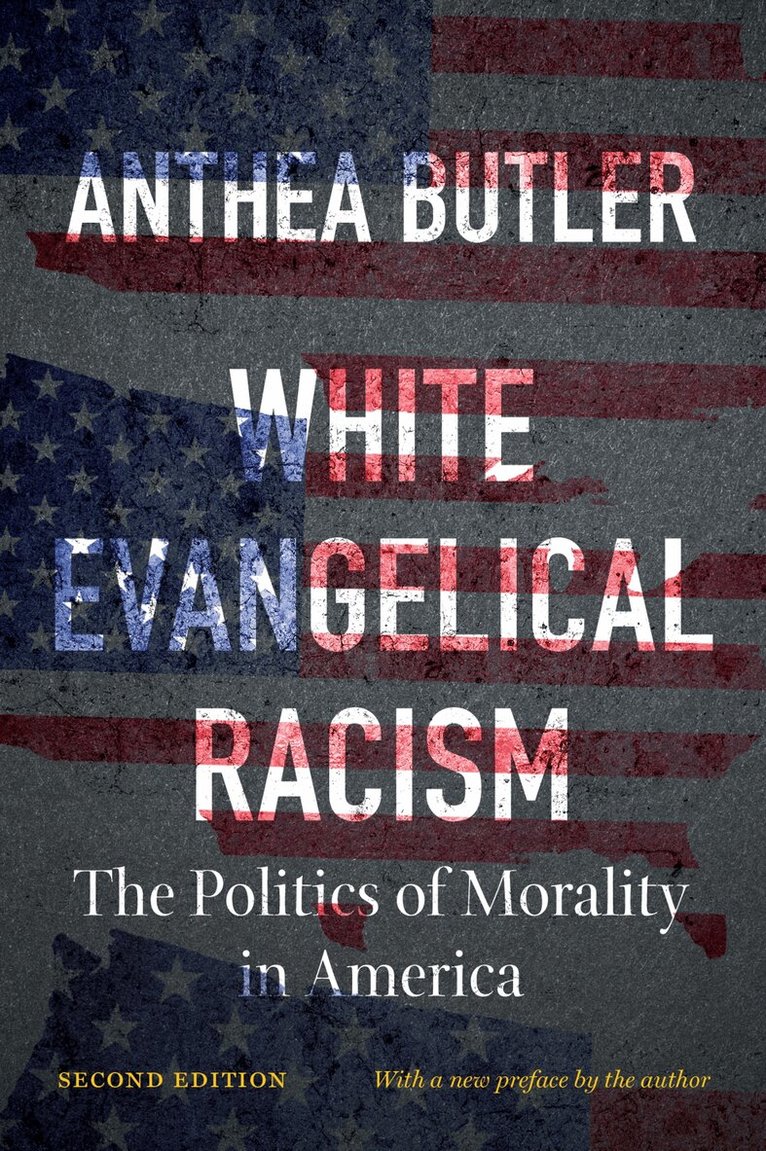
The American political scene today is poisonously divided, and the vast majority of white evangelicals play a strikingly unified, powerful role in the disunion. In this clear-eyed, hard-hitting chronicle of American religion and politics, Anthea Butler argues that racism is at the core of conservative evangelical activism and power. Propelled by the benefits of whiteness, white evangelicals used scripture to defend slavery and nurture the Confederacy during the Civil War era. During Reconstruction, they used it to deny the vote to newly emancipated blacks. In the twentieth century, they sided with segregationists in avidly opposing movements for racial equality and civil rights. White evangelicals today, cloaked in a vision of Christian patriarchy and nationhood, form a staunch voting bloc in support of white leadership. Evangelicalism's racial history festers, splits America, and needs a reckoning now.In a new preface to the second edition, Butler takes stock of how the trends she identified have expanded as Donald Trump mounts a third campaign for the presidency, evangelicals celebrate and respond to the overturning of Roe v. Wade, and ferocious backlash against racial equity has injected new venom into evangelicalism's role in American politics.
E-bok
Engelska, 2012337 kr
Läs direkt efter köp
The Church of God in Christ (COGIC), an African American Pentecostal denomination founded in 1896, has become the largest Pentecostal denomination in the United States today. In this first major study of the church, Anthea Butler examines the religious and social lives of the women in the COGIC Women’s Department from its founding in 1911 through the mid-1960s. She finds that the sanctification, or spiritual purity, that these women sought earned them social power both in the church and in the black community.Offering rich, lively accounts of the activities of the Women’s Department founders and other members, Butler shows that the COGIC women of the early decades were able to challenge gender roles and to transcend the limited responsibilities that otherwise would have been assigned to them both by churchmen and by white-dominated society. The Great Depression, World War II, and the civil rights movement brought increased social and political involvement, and the Women’s Department worked to make the “sanctified world” of the church interact with the broader American society. More than just a community of church mothers, says Butler, COGIC women utilized their spiritual authority, power, and agency to further their contestation and negotiation of gender roles in the church and beyond.
E-bok
PDF, Engelska, 20121 854 kr
Läs direkt efter köp
The Church of God in Christ (COGIC), an African American Pentecostal denomination founded in 1896, has become the largest Pentecostal denomination in the United States today. In this first major study of the church, Anthea Butler examines the religious and social lives of the women in the COGIC Women''s Department from its founding in 1911 through the mid-1960s. She finds that the sanctification, or spiritual purity, that these women sought earned them social power both in the church and in the black community.Offering rich, lively accounts of the activities of the Women''s Department founders and other members, Butler shows that the COGIC women of the early decades were able to challenge gender roles and to transcend the limited responsibilities that otherwise would have been assigned to them both by churchmen and by white-dominated society. The Great Depression, World War II, and the civil rights movement brought increased social and political involvement, and the Women''s Department worked to make the "sanctified world" of the church interact with the broader American society. More than just a community of church mothers, says Butler, COGIC women utilized their spiritual authority, power, and agency to further their contestation and negotiation of gender roles in the church and beyond.
E-bok
Engelska, 20211 299 kr
Läs direkt efter köp
The American political scene today is poisonously divided, and the vast majority of white evangelicals play a strikingly unified, powerful role in the disunion. These evangelicals raise a starkly consequential question for electoral politics: Why do they claim morality while supporting politicians who act immorally by most Christian measures? In this clear-eyed, hard-hitting chronicle of American religion and politics, Anthea Butler answers that racism is at the core of conservative evangelical activism and power.Butler reveals how evangelical racism, propelled by the benefits of whiteness, has since the nation’s founding played a provocative role in severely fracturing the electorate. During the buildup to the Civil War, white evangelicals used scripture to defend slavery and nurture the Confederacy. During Reconstruction, they used it to deny the vote to newly emancipated blacks. In the twentieth century, they sided with segregationists in avidly opposing movements for racial equality and civil rights. Most recently, evangelicals supported the Tea Party, a Muslim ban, and border policies allowing family separation. White evangelicals today, cloaked in a vision of Christian patriarchy and nationhood, form a staunch voting bloc in support of white leadership. Evangelicalism’s racial history festers, splits America, and needs a reckoning now.
E-bok
Engelska, 20242 164 kr
Läs direkt efter köp
The American political scene today is poisonously divided, and the vast majority of white evangelicals play a strikingly unified, powerful role in the disunion. In this clear-eyed, hard-hitting chronicle of American religion and politics, Anthea Butler argues that racism is at the core of conservative evangelical activism and power. Propelled by the benefits of whiteness, white evangelicals used scripture to defend slavery and nurture the Confederacy during the Civil War era. During Reconstruction, they used it to deny the vote to newly emancipated blacks. In the twentieth century, they sided with segregationists in avidly opposing movements for racial equality and civil rights. White evangelicals today, cloaked in a vision of Christian patriarchy and nationhood, form a staunch voting bloc in support of white leadership. Evangelicalism’s racial history festers, splits America, and needs a reckoning now.In a new preface to the second edition, Butler takes stock of how the trends she identified have expanded as Donald Trump mounts a third campaign for the presidency, evangelicals celebrate and respond to the overturning of Roe v. Wade, and ferocious backlash against racial equity has injected new venom into evangelicalism’s role in American politics.
E-bok
PDF, Engelska, 20242 164 kr
Läs direkt efter köp
The American political scene today is poisonously divided, and the vast majority of white evangelicals play a strikingly unified, powerful role in the disunion. In this clear-eyed, hard-hitting chronicle of American religion and politics, Anthea Butler argues that racism is at the core of conservative evangelical activism and power. Propelled by the benefits of whiteness, white evangelicals used scripture to defend slavery and nurture the Confederacy during the Civil War era. During Reconstruction, they used it to deny the vote to newly emancipated blacks. In the twentieth century, they sided with segregationists in avidly opposing movements for racial equality and civil rights. White evangelicals today, cloaked in a vision of Christian patriarchy and nationhood, form a staunch voting bloc in support of white leadership. Evangelicalism’s racial history festers, splits America, and needs a reckoning now.In a new preface to the second edition, Butler takes stock of how the trends she identified have expanded as Donald Trump mounts a third campaign for the presidency, evangelicals celebrate and respond to the overturning of Roe v. Wade, and ferocious backlash against racial equity has injected new venom into evangelicalism’s role in American politics.
E-bok
PDF, Engelska, 2009219 kr
Läs direkt efter köp
PCPJ MISSION STATEMENT To encourage, enable, and sustain peacemaking and justice seeking as authentic and integral aspects of Pentecostal Charismatic Christianity, witnessing to the conviction that Jesus Christ is relevant to all tensions, crises, and brokenness in the world. The PCPJ seeks to show that addressing injustice and making peace as Jesus and his followers did is theologically sound, biblically commanded, and realistically possible. Editorial Board Cheryl Bridges-Johns Pentecostal Theological Seminary Anthea Butler University of PennsylvaniaJong Hyun JungUniversity of Southern California Martin Mittelstadt Evangel University Dario Lopez RodriguezGamaliel Biblical Seminary of the Church of God, Lima, Peru Paul Alexander, Managing Editor Azusa Pacific University Assistant Editors Erica RamirezWheaton College Brian K. Pipkin Mennonite Disaster Services Robert G. Reid Brite Divinity School
E-bok
PDF, Engelska, 2009185 kr
Läs direkt efter köp
PCPJ MISSION STATEMENTTo encourage, enable, and sustain peacemaking and justice seeking as authentic and integral aspects of Pentecostal Charismatic Christianity, witnessing to the conviction that Jesus Christ is relevant to all tensions, crises, and brokenness in the world. The PCPJ seeks to show that addressing injustice and making peace as Jesus and his followers did is theologically sound, biblically commanded, and realistically possible. Editorial Board Cheryl Bridges-Johns Pentecostal Theological Seminary Anthea Butler University of PennsylvaniaJong Hyun JungUniversity of Southern California Martin Mittelstadt Evangel University Dario Lopez RodriguezGamaliel Biblical Seminary of the Church of God, Lima, Peru Paul Alexander, Managing Editor Azusa Pacific University Assistant Editors Erica RamirezWheaton College Brian K. Pipkin Mennonite Disaster Services Robert G. Reid Brite Divinity School
E-bok
PDF, Engelska, 2012219 kr
Läs direkt efter köp
PCPJ MISSION STATEMENT To encourage, enable, and sustain peacemaking and justice seeking as authentic and integral aspects of Pentecostal Charismatic Christianity, witnessing to the conviction that Jesus Christ is relevant to all tensions, crises, and brokenness in the world. The PCPJ seeks to show that addressing injustice and making peace as Jesus and his followers did is theologically sound, biblically commanded, and realistically possible. Editorial Board Cheryl Bridges-Johns Pentecostal Theological Seminary Anthea Butler University of PennsylvaniaJong Hyun JungUniversity of Southern California Martin Mittelstadt Evangel University Dario Lopez RodriguezGamaliel Biblical Seminary of the Church of God, Lima, Peru Paul Alexander, Managing Editor Azusa Pacific University Assistant Editors Erica RamirezWheaton College Brian K. Pipkin Mennonite Disaster Services Robert G. Reid Brite Divinity School
E-bok
PDF, Engelska, 20211 320 kr
Läs direkt efter köp
The American political scene today is poisonously divided, and the vast majority of white evangelicals play a strikingly unified, powerful role in the disunion. These evangelicals raise a starkly consequential question for electoral politics: Why do they claim morality while supporting politicians who act immorally by most Christian measures? In this clear-eyed, hard-hitting chronicle of American religion and politics, Anthea Butler answers that racism is at the core of conservative evangelical activism and power.Butler reveals how evangelical racism, propelled by the benefits of whiteness, has since the nation’s founding played a provocative role in severely fracturing the electorate. During the buildup to the Civil War, white evangelicals used scripture to defend slavery and nurture the Confederacy. During Reconstruction, they used it to deny the vote to newly emancipated blacks. In the twentieth century, they sided with segregationists in avidly opposing movements for racial equality and civil rights. Most recently, evangelicals supported the Tea Party, a Muslim ban, and border policies allowing family separation. White evangelicals today, cloaked in a vision of Christian patriarchy and nationhood, form a staunch voting bloc in support of white leadership. Evangelicalism’s racial history festers, splits America, and needs a reckoning now.
E-bok
PDF, Engelska, 2012337 kr
Läs direkt efter köp
The Church of God in Christ (COGIC), an African American Pentecostal denomination founded in 1896, has become the largest Pentecostal denomination in the United States today. In this first major study of the church, Anthea Butler examines the religious and social lives of the women in the COGIC Women’s Department from its founding in 1911 through the mid-1960s. She finds that the sanctification, or spiritual purity, that these women sought earned them social power both in the church and in the black community.Offering rich, lively accounts of the activities of the Women’s Department founders and other members, Butler shows that the COGIC women of the early decades were able to challenge gender roles and to transcend the limited responsibilities that otherwise would have been assigned to them both by churchmen and by white-dominated society. The Great Depression, World War II, and the civil rights movement brought increased social and political involvement, and the Women’s Department worked to make the “sanctified world” of the church interact with the broader American society. More than just a community of church mothers, says Butler, COGIC women utilized their spiritual authority, power, and agency to further their contestation and negotiation of gender roles in the church and beyond.