Anthony E. Mansueto – författare
Visar alla böcker från författaren Anthony E. Mansueto. Handla med fri frakt och snabb leverans.
20 produkter
20 produkter
Inbunden, Engelska, 2017
1 762 kr
Skickas inom 10-15 vardagar
This title was first published in 2002. Knowing God presents an innovative analysis of one of the most difficult and intractable philosophical questions of the past 350 years: the problem of knowledge, and specifically knowledge of God and the transcendental principles of value. This book situates the problem within the context of current social and political struggles, as well as within the contemporary search for meaning and value. Mansueto revisits ancient debates regarding the agent intellect, intentional being, and connatural knowledge, while drawing on recent discussions in neuropsychology (Luria and Damasio), cognitive development theory (Piaget and Luria), and the sociology of knowledge or "ideological criticism" (especially Durkheim, Lukacs, and Gramsci). Including a chapter on forms of religious knowledge and concluding with a ’guide for the perplexed’ intended to help overcome nihilism and despair, Knowing God reconciles epistemological and metaphysical realism with a recognition of the role of social structure in shaping knowledge.
E-bok
Engelska, 2018605 kr
Läs direkt efter köp
This title was first published in 2002. Knowing God presents an innovative analysis of one of the most difficult and intractable philosophical questions of the past 350 years: the problem of knowledge, and specifically knowledge of God and the transcendental principles of value. This book situates the problem within the context of current social and political struggles, as well as within the contemporary search for meaning and value. Mansueto revisits ancient debates regarding the agent intellect, intentional being, and connatural knowledge, while drawing on recent discussions in neuropsychology (Luria and Damasio), cognitive development theory (Piaget and Luria), and the sociology of knowledge or "ideological criticism" (especially Durkheim, Lukacs, and Gramsci). Including a chapter on forms of religious knowledge and concluding with a ’guide for the perplexed’ intended to help overcome nihilism and despair, Knowing God reconciles epistemological and metaphysical realism with a recognition of the role of social structure in shaping knowledge.
E-bok
PDF, Engelska, 2018605 kr
Läs direkt efter köp
This title was first published in 2002. Knowing God presents an innovative analysis of one of the most difficult and intractable philosophical questions of the past 350 years: the problem of knowledge, and specifically knowledge of God and the transcendental principles of value. This book situates the problem within the context of current social and political struggles, as well as within the contemporary search for meaning and value. Mansueto revisits ancient debates regarding the agent intellect, intentional being, and connatural knowledge, while drawing on recent discussions in neuropsychology (Luria and Damasio), cognitive development theory (Piaget and Luria), and the sociology of knowledge or "ideological criticism" (especially Durkheim, Lukacs, and Gramsci). Including a chapter on forms of religious knowledge and concluding with a ’guide for the perplexed’ intended to help overcome nihilism and despair, Knowing God reconciles epistemological and metaphysical realism with a recognition of the role of social structure in shaping knowledge.
Häftad, Engelska, 2016
363 kr
Skickas inom 5-8 vardagar
E-bok
Engelska, 2016568 kr
Läs direkt efter köp
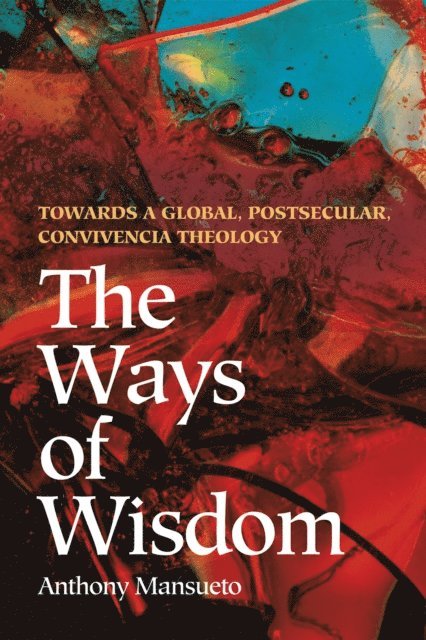
The Ways of Wisdom answers the demand for a new kind of theology appropriate for a postsecular, global civilization, showing how to engage questions of meaning and value across as well as within traditions. Arguing that humanity is the desire to be God, The Ways of Wisdom analyzes the diverse ways in which humanity has pursued this aim, and argues for a synthesis that draws on the great spiritual traditions of the Axial Age as well as on the humanistic secular commitment to innerworldly civilizational progress and social justice. At the same time, it rejects both the technocratic god-building that it argues is the hegemonic ideal of the Saeculum in which we live and the radical immanentism that imagined that we could create a collective political subject that would make us the masters of our own destiny, proposing instead what it calls Sanctuary, a way of life centered on seeking wisdom, doing justice, and ripening Being.
Inbunden, Engelska, 2010
624 kr
Skickas inom 5-8 vardagar
Inbunden, Engelska, 2011
493 kr
Skickas inom 5-8 vardagar
Inbunden, Engelska, 2012
739 kr
Skickas inom 5-8 vardagar
Inbunden, Engelska, 2010
700 kr
Skickas inom 5-8 vardagar
Inbunden, Engelska, 2016
593 kr
Skickas inom 5-8 vardagar
Häftad, Engelska, 2012
511 kr
Skickas inom 5-8 vardagar
Häftad, Engelska, 2010
450 kr
Skickas inom 5-8 vardagar
Häftad, Engelska, 2010
376 kr
Skickas inom 5-8 vardagar
E-bok
Engelska, 2010601 kr
Läs direkt efter köp
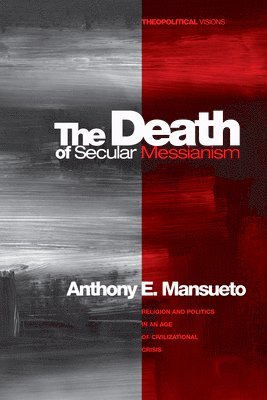
The Death of Secular Messianism argues that, the claims of secularists notwithstanding, modernity did not so much abandon humanity''s historic search for the divine, but rather transposed it into a new, innerworldly key. This secret religion of high modernity came in both positivistic and humanistic variants. The first sought to overcome finitude by means of scientific and technological progress. The second sought to overcome contingency by creating a collective Subject--the Modern Democratic State or the Communist Party--in and through which human beings would become the masters of their own destiny. In making his case for this thesis, the author outlines a new political-theological and social-theoretical perspective which saves what is best in modernity--its focus on human creative activity and its commitment to rational autonomy and democratic citizenship--while re-engaging humanity''s great spiritual traditions.
E-bok
Engelska, 2012811 kr
Läs direkt efter köp
Is the universe ultimately meaningful, ordered to an end of transcendental value? Or is it merely the product of random interactions in which organization emerges only locally and by chance and is conserved only so long as rare and improbable conditions prevail? There can, in fact, be no more important question, for on the resolution of this question depends the significance of all our worldly labors. The Ultimate Meaningfulness of the Universe represents a new departure in this debate, arguing that because it describes rather than explains the universe, mathematical physics is radically incapable of addressing this question. The book argues for a new scientific research paradigm that while incorporating and building on the description of the universe supplied by modern mathematical physics, goes beyond it in a restored discipline of teleological explanation. The book sketches applications in the physical, biological, and social domains, and shows that powerful evidence already points toward the ultimate meaningfulness of the universe.
E-bok
Engelska, 2010747 kr
Läs direkt efter köp
No discipline has been more uniformly derided for a longer period than metaphysics. Of the ancient and medieval sciences now in disrepute, even astrology and alchemy get better press. The most devastating--and currently the most influential--attack on metaphysics has come from a broad spectrum of thinkers including Kierkegaard, Nietzsche, Heidegger, Arendt, Levinas, Derrida, and Milbank, who have argued that metaphysics is the root of modern nihilism and totalitarianism. Anthony Mansueto puts this claim to the test, developing a historical sociology of metaphysics that analyzes the social basis and political valence of metaphysical systems. Mansueto does this globally and cross-culturally, engaging not only the Hellenic tradition and its extension into medieval Christendom and Dar-al-Islam, but also the Indian and Chinese traditions. Specifically, Mansueto argues that far from representing the roots of nihilism or modern state terror, metaphysics emerges (and continues to be necessary) as a way to ground meaning and value in societies--especially in market societies in which these have become problematic. Metaphysics tends to restrain exploitation and to encourage the redirection of surplus toward activities that promote development of human capacities. Knowing God: The Journey of the Dialectic concludes with an outline of a new dialectical metaphysics that reconciles a Buddhist metaphysics of interdependence in the Hua-yen tradition with a historicized metaphysics of Esse, yielding results that look startlingly like the dao xue, or neo-Confucianism of Song China. Mansueto shows how such a metaphysics can ground meaning and value while answering postmodern concerns to safeguard difference.
E-bok
Engelska, 2011538 kr
Läs direkt efter köp
Doing Justice: Knowing God represents a fundamentally new departure in ethical theory. Drawing on the work of Alasdair MacIntyre, John Milbank, and Franklin Gamwell, it argues that that modern and postmodern moral theory is fundamentally inadequate, and that the current crisis of values can be resolved only on the basis of a substantive vision of the Good. But it goes beyond these thinkers to argue that such a vision must be grounded metaphysically in a revitalized doctrine of Being. The result is a radically historicized natural-law ethics. This ethics argues that not only human individuals but human societies and indeed the universe as a whole grow and develop toward God. The fundamental moral law is to act in such a way as to promote this development. The book draws out the implications of this insight for our understanding of the virtues as well as for social justice.
Häftad, Engelska, 2025
363 kr
Skickas inom 5-8 vardagar
Inbunden, Engelska, 2025
545 kr
Skickas inom 5-8 vardagar
E-bok
Engelska, 2025690 kr
Läs direkt efter köp
Mounting a searing critique of Martin Heidegger and Carl Schmidt--and their broader influence on the contemporary Left, including the work of Giorgio Agamben, Alain Badiou, and Slavoj Žižek--Anthony Mansueto''s The Metaphysics of Power argues that the common flaw of all contemporary political projects--Left and Right--is a narrow strategic focus on achieving and holding state power. This focus is grounded in a doctrine of sovereignty (divine and human) rooted in a decisionist political theology, which derives ultimately from Paul of Tarsus and which made historic Christianity from the beginning an ideology of empire. In the place of this decisionist political theology he proposes that we understand Being--and thus God--as a relational, transformative generativity that acts only as final cause and only from outside space and time, making even divine sovereignty logically impossible. Seeking to become God, but trapped in a contingency that cannot be transcended, we create structures that attempt divinity by means of exploiting and oppressing others, structures which, like the commodification of labor power, ultimately strip us of our humanity, making resistance impossible. And yet we are also lured by the incredible beauty of God to mend the torn fabric of the universe, to build and rebuild relationships and institutions which challenge and nurture us, and thus to ripen a contingent being that will always fall short of its end but is capable of finding meaning and joy nonetheless.