Anthony Ince - Böcker
Visar alla böcker från författaren Anthony Ince. Handla med fri frakt och snabb leverans.
5 produkter
5 produkter
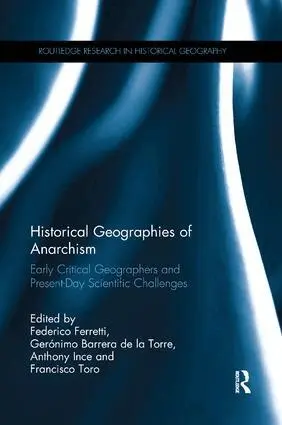
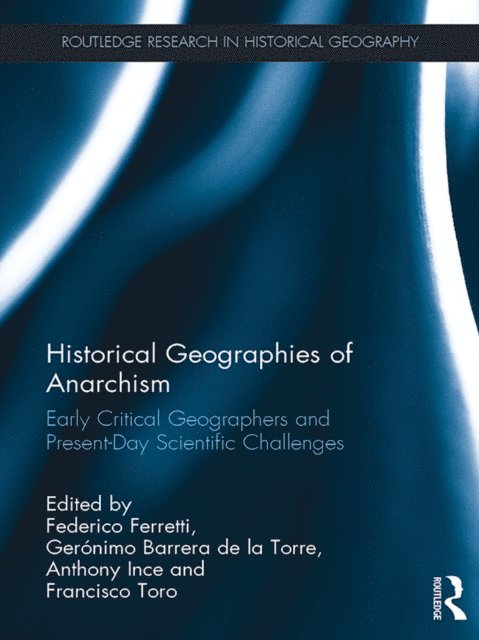
Historical Geographies of Anarchism
Early Critical Geographers and Present-Day Scientific Challenges
Häftad, Engelska, 2019
691 kr
Skickas inom 10-15 vardagar
In the last few years, anarchism has been rediscovered as a transnational, cosmopolitan and multifaceted movement. Its traditions, often hastily dismissed, are increasingly revealing insights which inspire present-day scholarship in geography. This book provides a historical geography of anarchism, analysing the places and spatiality of historical anarchist movements, key thinkers, and the present scientific challenges of the geographical anarchist traditions.This volume offers rich and detailed insights into the lesser-known worlds of anarchist geographies with contributions from international leading experts. It also explores the historical geographies of anarchism by examining their expressions in a series of distinct geographical contexts and their development over time. Contributions examine the changes that the anarchist movement(s) sought to bring out in their space and time, and the way this spirit continues to animate the anarchist geographies of our own, perhaps often in unpredictable ways. There is also an examination of contemporary expressions of anarchist geographical thought in the fields of social movements, environmental struggles, post-statist geographies, indigenous thinking and situated cosmopolitanisms.This is valuable reading for students and researchers interested in historical geography, political geography, social movements and anarchism.
617 kr
Skickas inom 10-15 vardagar
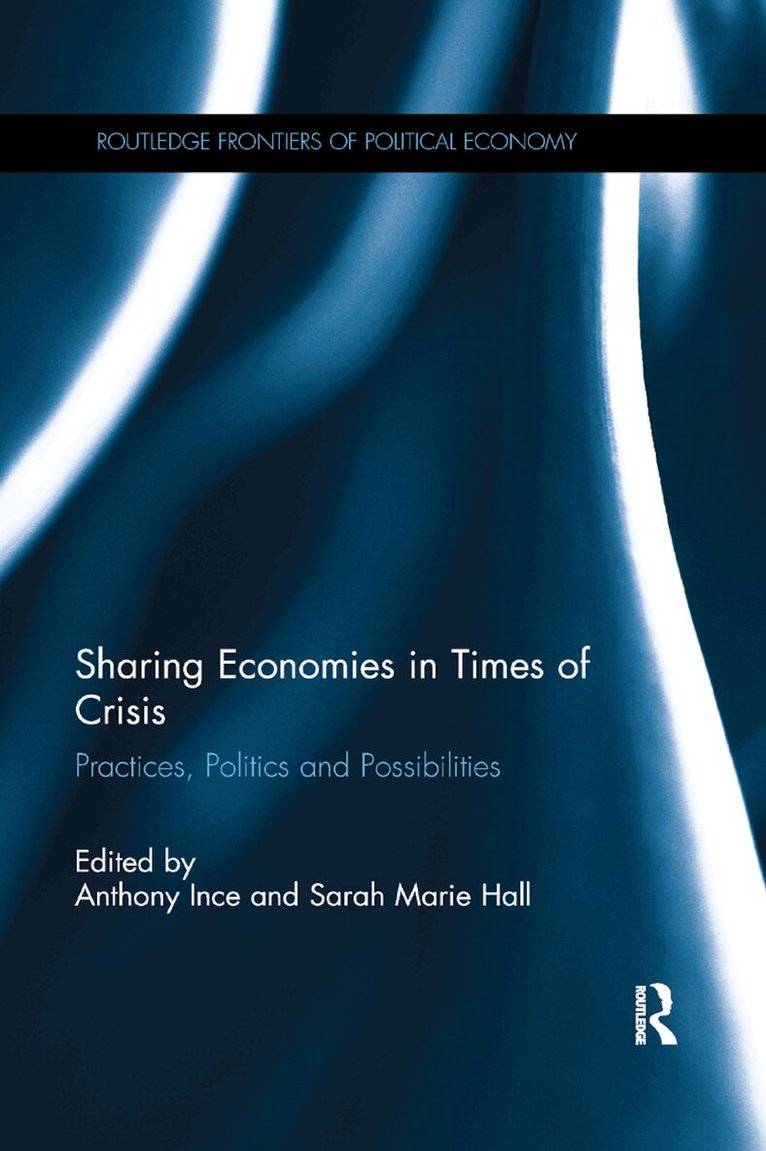
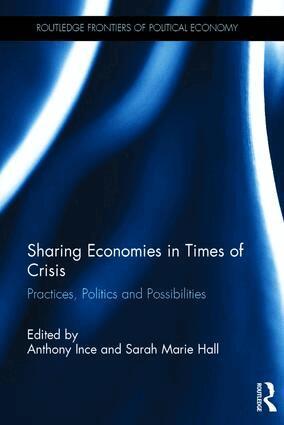
The ‘new sharing economy’ is a growing phenomenon across the Global North. It claims to transform relationships of production and consumption in a way that can improve our lives, reduce environmental impacts, and reduce the cost of living. Amidst various economic, environmental, and other crises, this message has strong resonance. Yet, it is not without controversy, and there have been heated debates over negative dimensions for workers and consumers alike. This book stretches far beyond the sharing economy as it is popularly defined, and explores the complex intersections of ‘sharing’ and ‘the economy’, and how a better understanding of these relationships might help us address the multiple crises that confront contemporary societies.The contributors to this book explore a wide diversity of sharing systems and practices from various empirical case studies, ranging from hospitality to seed-swapping, and from indigenous land rights to alcohol consumption. In each chapter, a different crisis or vulnerability frames and shapes the study, allowing contributors to unpick the ways in which crisis and sharing relate to each other in real life. The book is divided into three thematic sections. Following an extended introduction to the themes and ideas of the book by the editors, the first section foregrounds the shaping of sharing practices by already existing or anticipated crises. The second section focuses on the lived relations between sharing and economic practice. In the third section, authors conclude the book by exploring the possibilities and challenges for creating alternative economic forms grounded in practices of sharing. This edited volume makes a major, original contribution towards academic understandings of sharing economies in the context of crises. It is suitable for both students and academics who are interested in political economy, economic geography and consumption.
254 kr
Skickas inom 7-10 vardagar
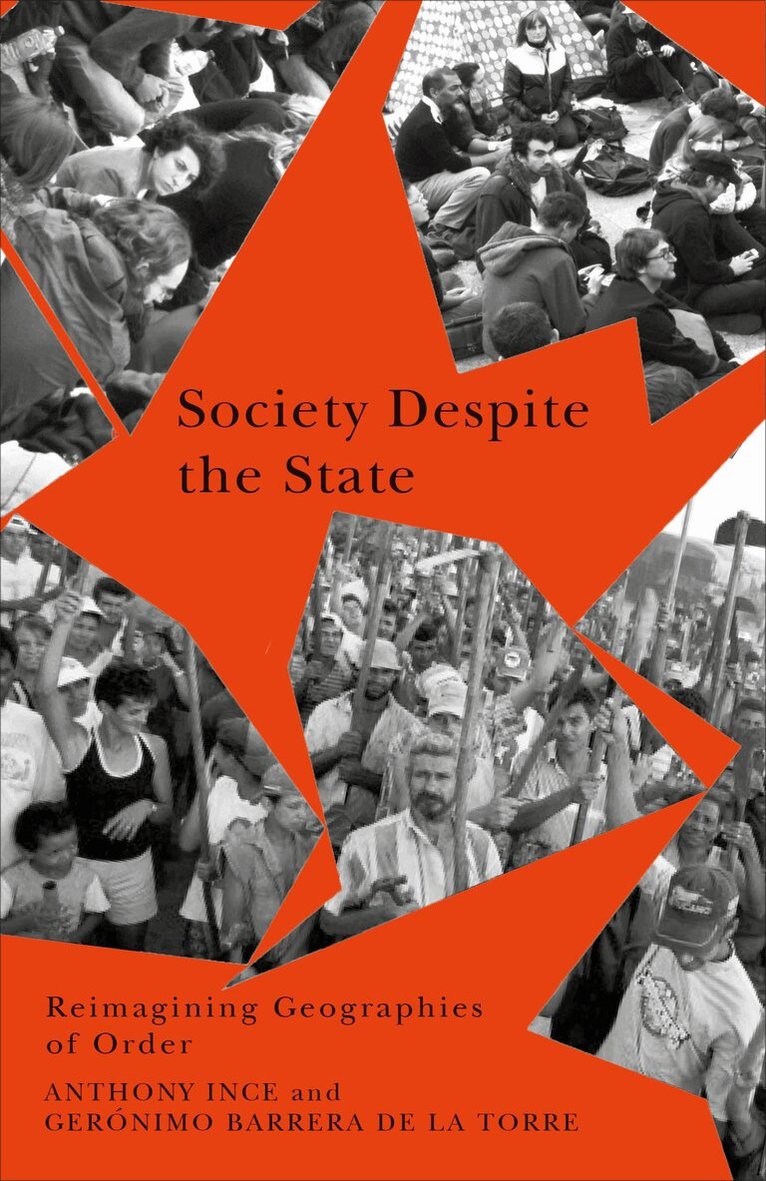
'An accessible, expansive and beautifully written intervention in critical social theory' Alex Prichard, Associate Professor of International Political Theory, University of ExeterThe logic of the state has come to define social and spatial relations, embedding itself into our understandings of the world and our place in it. Anthony Ince and Gerónimo Barrera de la Torre challenge this logic as the central pivot around which knowledge and life orbit, by exposing its vulnerabilities, contradictions and, crucially, alternatives.Society Despite the State disrupts the dominance of state-centred ways of thinking by presenting a radical political geography approach inspired by anarchist thought and practice. The book draws on a broad range of voices that have affinities with Western anarchism but also exceed it.This book challenges radicals and scholars to confront and understand the state through a way of seeing and a set of intellectual tools that the authors call 'post-statism' In de-centring the state’s logics and ways of operating, the authors incorporate a variety of threads to identify alternative ways to understand and challenge statism’s effects on our political imaginations.
Historical Geographies of Anarchism
Early Critical Geographers and Present-Day Scientific Challenges
Inbunden, Engelska, 2017
2 357 kr
Skickas inom 10-15 vardagar
In the last few years, anarchism has been rediscovered as a transnational, cosmopolitan and multifaceted movement. Its traditions, often hastily dismissed, are increasingly revealing insights which inspire present-day scholarship in geography. This book provides a historical geography of anarchism, analysing the places and spatiality of historical anarchist movements, key thinkers, and the present scientific challenges of the geographical anarchist traditions.This volume offers rich and detailed insights into the lesser-known worlds of anarchist geographies with contributions from international leading experts. It also explores the historical geographies of anarchism by examining their expressions in a series of distinct geographical contexts and their development over time. Contributions examine the changes that the anarchist movement(s) sought to bring out in their space and time, and the way this spirit continues to animate the anarchist geographies of our own, perhaps often in unpredictable ways. There is also an examination of contemporary expressions of anarchist geographical thought in the fields of social movements, environmental struggles, post-statist geographies, indigenous thinking and situated cosmopolitanisms.This is valuable reading for students and researchers interested in historical geography, political geography, social movements and anarchism.
2 088 kr
Skickas inom 10-15 vardagar
The ‘new sharing economy’ is a growing phenomenon across the Global North. It claims to transform relationships of production and consumption in a way that can improve our lives, reduce environmental impacts, and reduce the cost of living. Amidst various economic, environmental, and other crises, this message has strong resonance. Yet, it is not without controversy, and there have been heated debates over negative dimensions for workers and consumers alike. This book stretches far beyond the sharing economy as it is popularly defined, and explores the complex intersections of ‘sharing’ and ‘the economy’, and how a better understanding of these relationships might help us address the multiple crises that confront contemporary societies.The contributors to this book explore a wide diversity of sharing systems and practices from various empirical case studies, ranging from hospitality to seed-swapping, and from indigenous land rights to alcohol consumption. In each chapter, a different crisis or vulnerability frames and shapes the study, allowing contributors to unpick the ways in which crisis and sharing relate to each other in real life. The book is divided into three thematic sections. Following an extended introduction to the themes and ideas of the book by the editors, the first section foregrounds the shaping of sharing practices by already existing or anticipated crises. The second section focuses on the lived relations between sharing and economic practice. In the third section, authors conclude the book by exploring the possibilities and challenges for creating alternative economic forms grounded in practices of sharing. This edited volume makes a major, original contribution towards academic understandings of sharing economies in the context of crises. It is suitable for both students and academics who are interested in political economy, economic geography and consumption.